Bempedoic Acid Gout Risk Calculator
This tool helps you assess your risk of developing gout while taking bempedoic acid (Nexletol) based on your medical history and current medications. Gout is a significant side effect of bempedoic acid, with clinical data showing increased risk of up to 2.3% for people with prior gout history.
Note: This calculator provides general guidance only. Always consult your healthcare provider for personalized medical advice.
Your Gout Risk Assessment
Recommendations
When you're trying to lower your cholesterol and can't take statins because of muscle pain or other side effects, bempedoic acid (sold as Nexletol) might seem like a lifesaver. But it's not without its own risks. If you're considering this drug-or already taking it-you need to know about the real dangers: gout flares, tendon injuries, and a few other surprises that don't always show up on the label.
What Is Bempedoic Acid?
Bempedoic acid is a cholesterol-lowering drug approved by the FDA in 2020. It works differently than statins. While statins block an enzyme called HMG-CoA reductase, bempedoic acid stops ATP-citrate lyase, another key player in cholesterol production. This means it works mainly in the liver and doesn’t get into muscle tissue the way statins do. That’s why it’s often prescribed to people who can’t tolerate statins due to muscle aches, weakness, or cramps.
It’s taken as a 180 mg tablet once daily, with or without food. You’ll usually see it in two forms: Nexletol (bempedoic acid alone) and Nexlizet (bempedoic acid plus ezetimibe, another cholesterol drug). About 5-10% of people on statins can’t keep taking them, and for them, this is one of the few real alternatives.
Common Side Effects You Might Experience
Most people tolerate bempedoic acid okay. But in clinical trials, some side effects showed up more often than with a placebo. Here’s what you might notice:
- Muscle spasms (about 6 out of 100 people)
- Back pain (nearly 5 out of 100)
- Pain in hands or feet (3 out of 100)
- Upper respiratory infections (like colds or bronchitis)
- Stomach pain or diarrhea
- Fatigue or flu-like symptoms
These usually aren’t serious. Many fade within a few weeks. Only about 1 in 100 people stop taking it because of these issues.
The Big Warnings: Gout and Tendon Damage
These two risks are what make bempedoic acid different from other cholesterol drugs. They’re not rare. They’re not theoretical. They’re documented, measured, and backed by clinical data.
Gout: More Than Just a Flare-Up
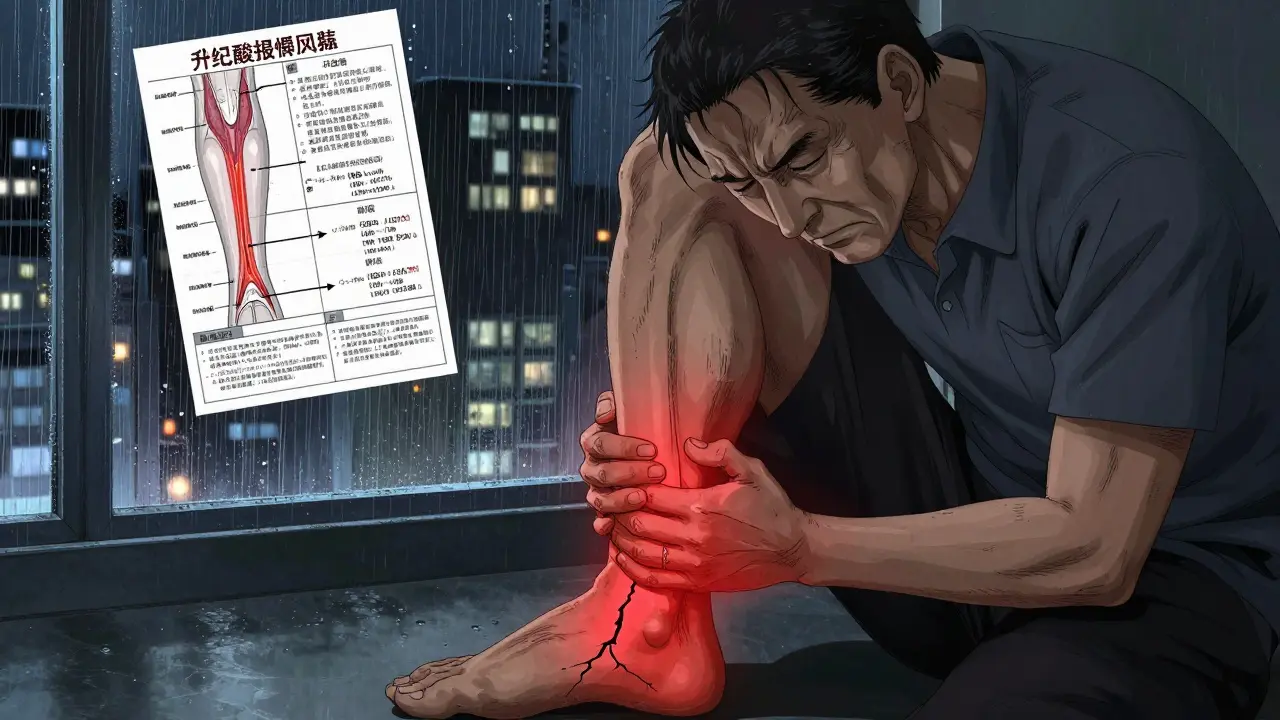
Bempedoic acid raises uric acid levels in your blood. That’s normal-it’s part of how the drug works. But when uric acid climbs too high, it can form sharp crystals in your joints. That’s gout.
In trials, 1.5% of people taking bempedoic acid had a gout attack. That’s three times higher than the placebo group (0.5%). For people who already had gout before starting the drug, the risk jumped to 2.3%. That’s more than 1 in 50.
The big toe is the most common spot. But gout can hit ankles, knees, or fingers. Symptoms? Sudden, intense pain, swelling, redness, heat. It often hits within the first month. If you’ve had gout before, this isn’t just a risk-it’s a red flag.
Doctors now recommend checking your uric acid levels before you start and again at 4 weeks. If it’s high, they may prescribe allopurinol (a gout-prevention drug). Studies show this cuts gout risk by about two-thirds.
Tendon Rupture: A Silent Danger
Here’s where it gets scary. Bempedoic acid increases the risk of tendon injuries-especially rupture. In trials, 0.7% of users had a tendon problem. That’s 7 out of 1,000. The placebo group? Only 0.1%.
But here’s the kicker: if you’re taking bempedoic acid and a statin together, your risk goes up 3.5 times. One study found tendon rupture rates jumped to 1.8% in combo users.
What does a tendon rupture feel like? A loud “snap” or “pop.” Sudden pain. Bruising. Inability to move the joint. Common sites? Achilles tendon (back of the ankle), rotator cuff (shoulder), and biceps tendon (front of the elbow).
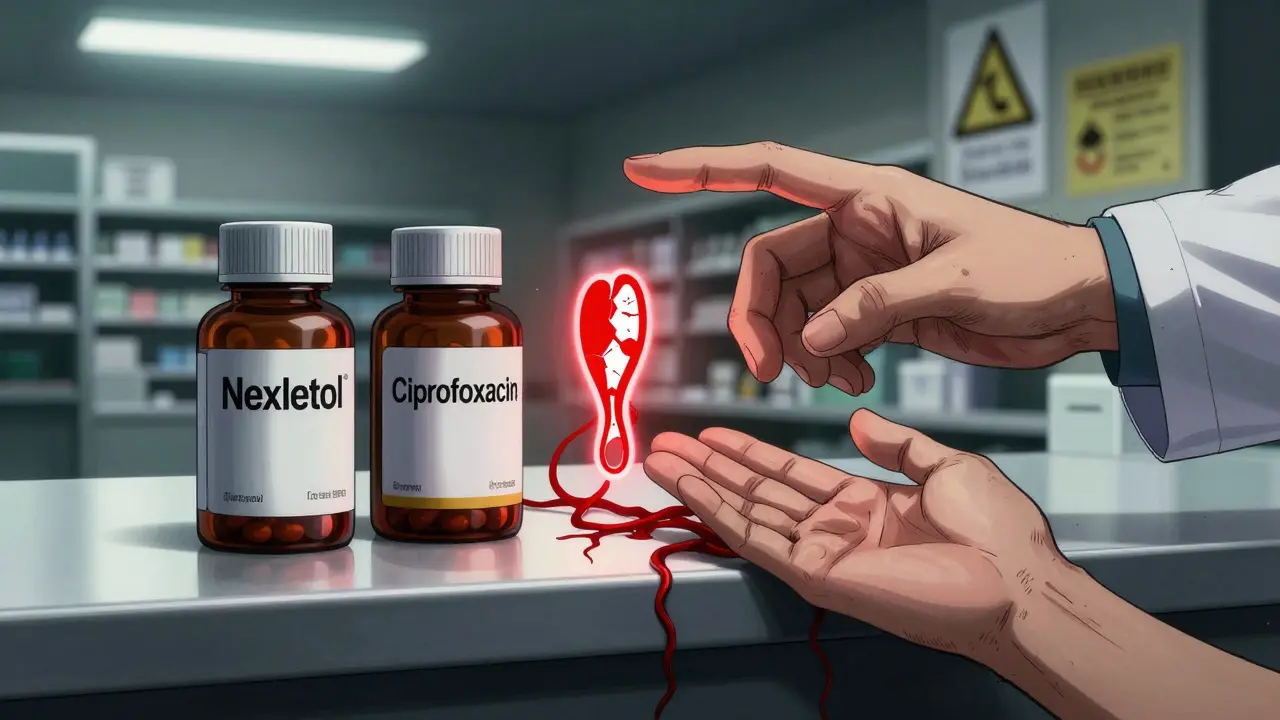
The FDA and European guidelines warn: don’t take bempedoic acid if you’re already on fluoroquinolone antibiotics (like ciprofloxacin or levofloxacin). These drugs also raise tendon rupture risk. Together? It’s a dangerous combo.
If you feel tendon pain, swelling, or weakness-stop the drug and call your doctor immediately. Don’t wait. Don’t assume it’s just soreness. Tendon damage can become permanent if not caught early.
Other Risks You Can’t Ignore
Liver Enzyme Elevations
2.2% of people on bempedoic acid had higher liver enzymes (ALT or AST). That’s more than double the placebo rate. In 1.6% of cases, levels went above three times the normal limit. Your doctor should check liver function before you start and again at 3 months. If levels stay high, they’ll likely stop the drug.
Anemia
1.8% of users developed mild anemia-lower hemoglobin levels. This isn’t common, and it’s usually not severe. Most people don’t need treatment. But if you’re already anemic, or have kidney disease, your doctor should monitor this closely.
Allergic Reactions
Though rare, some people develop rashes, swelling, or trouble breathing. If this happens, stop the drug and get emergency care.
How It Compares to Other Cholesterol Drugs
Let’s put this in perspective. Here’s how bempedoic acid stacks up against statins and ezetimibe:
| Side Effect | Bempedoic Acid | Statins | Ezetimibe |
|---|---|---|---|
| Muscle pain | 5.8% | 10-15% | 2-3% |
| Gout | 1.5% | 0.5-1.0% | 0.7% |
| Tendon rupture | 0.7% | 0.1-0.3% | 0.2% |
| Liver enzyme rise | 2.2% | 1-2% | 1% |
| Anemia | 1.8% | 0.5% | 0.3% |
So yes-bempedoic acid is better for muscle pain. But worse for gout and tendons. That’s the trade-off.
Who Should Avoid It?
Not everyone should take bempedoic acid. Avoid it if you:
- Have a history of gout (especially frequent flares)
- Have had a tendon injury or rupture before
- Are taking fluoroquinolone antibiotics (cipro, levaquin, etc.)
- Have severe liver disease
- Are pregnant or breastfeeding
If you’re unsure, ask your doctor to check your uric acid levels and review your tendon history. It’s not just about cholesterol-it’s about your whole body.
What to Do If You’re Already Taking It
If you’re on bempedoic acid right now, here’s what to do:
- Check your uric acid level. If it’s above 7 mg/dL, talk to your doctor about allopurinol.
- Watch for tendon pain-especially in your heels, shoulders, or elbows. Don’t ignore it.
- Stop the drug immediately if you hear a pop, feel sudden pain, or can’t move a joint.
- Get liver tests at 3 months. Don’t skip them.
- Don’t take it with fluoroquinolones. If you need an antibiotic, ask for something else.
- Keep moving, but avoid sudden, high-impact exercise. Tendons need time to adapt.
Most side effects are manageable. But you need to be proactive. This isn’t a drug you can take and forget about.
The Bigger Picture: Is It Worth It?
The CLEAR Outcomes trial (2023) showed bempedoic acid reduces heart attacks, strokes, and heart-related deaths by 13% in high-risk patients. That’s significant. For someone who can’t take statins, that’s a life-saving benefit.
But here’s the truth: it’s not for everyone. It’s for the small group of people who truly can’t tolerate statins-and who are willing to monitor their health closely. If you’re on it, you’re not just managing cholesterol. You’re managing a set of risks.
The American Heart Association says it clearly: reserve bempedoic acid for statin-intolerant patients. Don’t use it as a first choice. Don’t use it because it’s new. Use it because you have no other option.
Can bempedoic acid cause gout even if I’ve never had it before?
Yes. Clinical trials show that 1.5% of people who had never had gout before developed it while taking bempedoic acid. It’s caused by increased uric acid levels, which can trigger crystal formation in joints. Even if you’ve never had a flare, you’re still at risk-especially in the first month of treatment.
Is tendon damage from bempedoic acid reversible?
It depends. Mild tendon pain or inflammation may improve if you stop the drug and rest. But if the tendon actually ruptures, surgery is often needed. Recovery can take months. Early detection is critical-don’t wait for a snap or pop. If you feel persistent tendon pain, get it checked before it gets worse.
Can I take bempedoic acid with a statin?
Yes, but with caution. The combination (Nexlizet) is approved and effective for lowering LDL. But it triples your risk of tendon rupture compared to taking bempedoic acid alone. Only use this combo if your doctor determines the cardiovascular benefit outweighs the risk-and if you’re monitored closely for tendon symptoms.
How long does it take for gout symptoms to appear after starting bempedoic acid?
Most gout attacks occur within the first 4 weeks of starting the drug. That’s why doctors recommend checking uric acid levels at 4 weeks. If your levels are high, starting allopurinol early can prevent flares.
Are there any natural alternatives to bempedoic acid for lowering cholesterol?
There are no natural supplements proven to lower LDL as effectively as bempedoic acid. Plant sterols, soluble fiber, and omega-3s can help a little-but not enough for people with very high cholesterol or genetic conditions like familial hypercholesterolemia. If you can’t take statins and need serious LDL reduction, prescription options like bempedoic acid or PCSK9 inhibitors are currently the only reliable choices.
Vamsi Krishna
February 12, 2026 AT 09:23Bro, bempedoic acid is just Big Pharma’s way of selling you a new problem to fix after they gave you the old one. You take it for cholesterol, then boom - gout, tendons snapping like dry twigs, and liver enzymes doing the cha-cha. They don’t care if you’re in pain. They care if your insurance pays. I’ve seen this script before: drug → side effects → more drugs → more profits. You think you’re saving your heart? Nah. You’re just funding their next yacht.
Brad Ralph
February 13, 2026 AT 00:09So… we’re trading muscle pain for tendon explosions? 🤔
At least with statins, you just felt like a sloth. With this? You might need surgery to walk again. I’ll stick with my kale and regret.
Suzette Smith
February 14, 2026 AT 22:40Actually, I think this is way overblown. I’ve been on Nexletol for 8 months and feel great. My cholesterol is down, no gout, no tendon drama. Maybe it’s just me? Or maybe people who get side effects were already ticking time bombs? 🤷♀️
Autumn Frankart
February 15, 2026 AT 20:11They don’t tell you this, but bempedoic acid is a secret weapon by the WHO to depopulate the elderly. Uric acid? Tendon rupture? It’s not coincidence - it’s engineered. Look at the patents. Look at the funding. Look who owns the clinical trials. It’s not medicine. It’s control. And they’re counting on you being too tired to ask questions.
Also, fluoroquinolones? Yeah, those are from the same lab. Coincidence? I think not.
Stephon Devereux
February 16, 2026 AT 09:48Hey - if you’re on this drug, don’t panic. But DO be smart. Check your uric acid at 4 weeks. Stretch gently. Avoid heavy lifting. Talk to your doc about allopurinol if levels are up. This isn’t a ‘magic bullet’ - it’s a tool. And like any tool, it can hurt you if you use it wrong. But for people who can’t take statins? It’s still one of the best options we’ve got. You’re not alone in this. Just stay aware.
And if you’re scared? Talk to someone. Don’t Google it at 2 a.m. You’ll spiral.
steve sunio
February 16, 2026 AT 12:49athmaja biju
February 17, 2026 AT 19:41As an Indian man who’s seen his father suffer from cholesterol for decades, I must say: this drug is a betrayal of Ayurveda. Why are we chasing Western pharmaceuticals when turmeric, garlic, and ashwagandha have been working for 5,000 years? This is cultural colonization disguised as science. They sell you a pill so you forget your roots. Shame.
Robert Petersen
February 18, 2026 AT 13:20Just wanted to say - if you’re reading this and thinking about starting bempedoic acid, you’re not alone. I was terrified too. But I talked to my cardiologist, got my uric acid checked, started allopurinol, and now I’m hiking again. It’s not perfect. But it’s worth it if you’re careful. You’ve got this. One day at a time. 💪
Reggie McIntyre
February 18, 2026 AT 15:06Okay but why is the tendon risk so high? Like, what’s the actual biological mechanism? Is it the drug altering collagen structure? Or is it the uric acid crystals somehow triggering inflammation in tendons? I’ve been digging through papers and can’t find a clear answer. Someone smarter than me - help a brother out?
Carla McKinney
February 19, 2026 AT 14:12It’s obvious the FDA approved this because they’re under corporate influence. The CLEAR Outcomes trial? Sponsored by Esperion. Who funded the 2019 gout data? Same company. They cherry-picked data, silenced negative results, and now we’re all guinea pigs. This isn’t medicine - it’s a marketing campaign wrapped in a lab coat.
And you wonder why people don’t trust doctors anymore.
Sonja Stoces
February 20, 2026 AT 22:06Ugh. I took this for 3 weeks. Got gout in my big toe. Then my ankle started hurting. I thought it was from walking too much. Then I read the label. I called my doctor. He said ‘it’s probably just inflammation.’ I said ‘no, it’s the drug.’ He didn’t believe me. So I stopped. Now I’m on ezetimibe. Still high cholesterol. But at least I can walk. 🤷♀️
Annie Joyce
February 22, 2026 AT 02:55For anyone worried about tendon damage: if you’re active, stretch daily - especially calves and shoulders. Hydrate. Don’t do sudden sprints or heavy lifts. And if you feel a twinge? Rest. Don’t push through it. I’m 62, on Nexlizet, and I’ve been doing yoga and swimming. No issues. It’s not about avoiding the drug - it’s about respecting your body. You’re not a machine. Your tendons aren’t steel cables. Treat them like the living tissue they are.
Also - yes, the risk is real. But it’s manageable. Knowledge is power. Don’t let fear silence you.