
Imagine your child struggling to breathe while you watch helplessly, wondering if the medicine is actually working. For many parents of children with asthma, this fear is real. The problem isn't always the medication itself; it's often how it's delivered. According to research from the National Heart, Lung, and Blood Institute (NHLBI), using a standard inhaler alone delivers only 10-20% of the dose to the lungs in young children. That means most of the expensive, life-saving drug ends up stuck on the back of the throat or simply wasted in the air.
The solution is a specific asthma inhaler technique that uses a spacer and a mask. When done correctly, this method boosts medication delivery to over 80%. It’s not just about pressing a button; it’s a precise sequence of actions that turns a chaotic moment into an effective treatment. This guide breaks down exactly how to do it, why each step matters, and how to fix the common mistakes that keep kids’ asthma uncontrolled.
Why Standard Inhalers Fail Young Children
To understand why we need special equipment, you have to look at how children breathe compared to adults. Adults can coordinate their breath with the spray release. They inhale sharply and deeply at the exact millisecond the medication hits the air. Most children under age 5 cannot do this. Their lungs are smaller, their airways are narrower, and they lack the lung strength to pull in a deep, forceful breath on command.
This is where the Valved Holding Chamber (or spacer) comes in. A spacer is a plastic tube or chamber that attaches to the inhaler. Instead of spraying directly into the mouth, the medicine goes into the chamber first. This creates a reservoir of misted medication. The child doesn’t need to time their breath perfectly; they just need to take normal, gentle breaths through the attached mask or mouthpiece. The spacer holds the medicine there, waiting for the child to inhale it over several seconds rather than one split second.
For infants and toddlers, a face mask is essential because they can’t hold a mouthpiece in place. The mask fits over the nose and mouth, creating a seal so the medicine stays inside the system. Research from the Journal of Allergy and Clinical Immunology shows that when this setup is used correctly, medication delivery efficiency jumps from roughly 12% to nearly 78%. That difference is the gap between a child who recovers quickly and one who ends up in the emergency room.
Gathering the Right Equipment
You can’t master the technique without the right tools. Not all spacers are created equal, and using the wrong size can ruin the effectiveness of the treatment. Here is what you need to check before you start:
- Metered-Dose Inhaler (MDI): Make sure it’s clean and dry. Check the expiration date. Most MDIs contain 200 doses, so track how many you’ve used.
- Spacer Device: Choose a volume appropriate for your child’s age. Infants (under 12 months) need a spacer with a minimum volume of 200 mL. Toddlers (1-3 years) require 350 mL or more. Preschoolers (3-8 years) should use 500-750 mL chambers.
- Face Mask: The size must fit snugly. For infants, masks range from 150-350 mL. For toddlers, 350-500 mL. For older preschoolers, 500-750 mL. The mask should cover the bridge of the nose to the bottom of the chin without overlapping the cheeks too much, which can block the view and cause distress.
- Cleaning Supplies: Mild dish soap and water. You will need these to prevent static buildup, which traps the medicine on the walls of the spacer instead of letting it float to the lungs.
A pro tip from pediatric pulmonologists: avoid spacers made of materials that generate high static electricity. If you’re unsure, stick to reputable brands like AeroChamber or Vortex, which are designed to minimize this issue. Also, ensure the valve in the spacer works by blowing into it-it should be easy to blow in but hard to blow out.
Step-by-Step Administration Guide
This is the core of the process. Follow these steps every single time. Consistency is key to building muscle memory for both you and your child.
- Prepare the Inhaler: Remove the cap. Shake the inhaler vigorously for at least 10 seconds. This mixes the medicine with the propellant. If you skip this, you might get less medicine than prescribed.
- Attach the Spacer: Push the inhaler nozzle firmly into the spacer’s opening. Ensure it’s secure so no mist escapes during the puff.
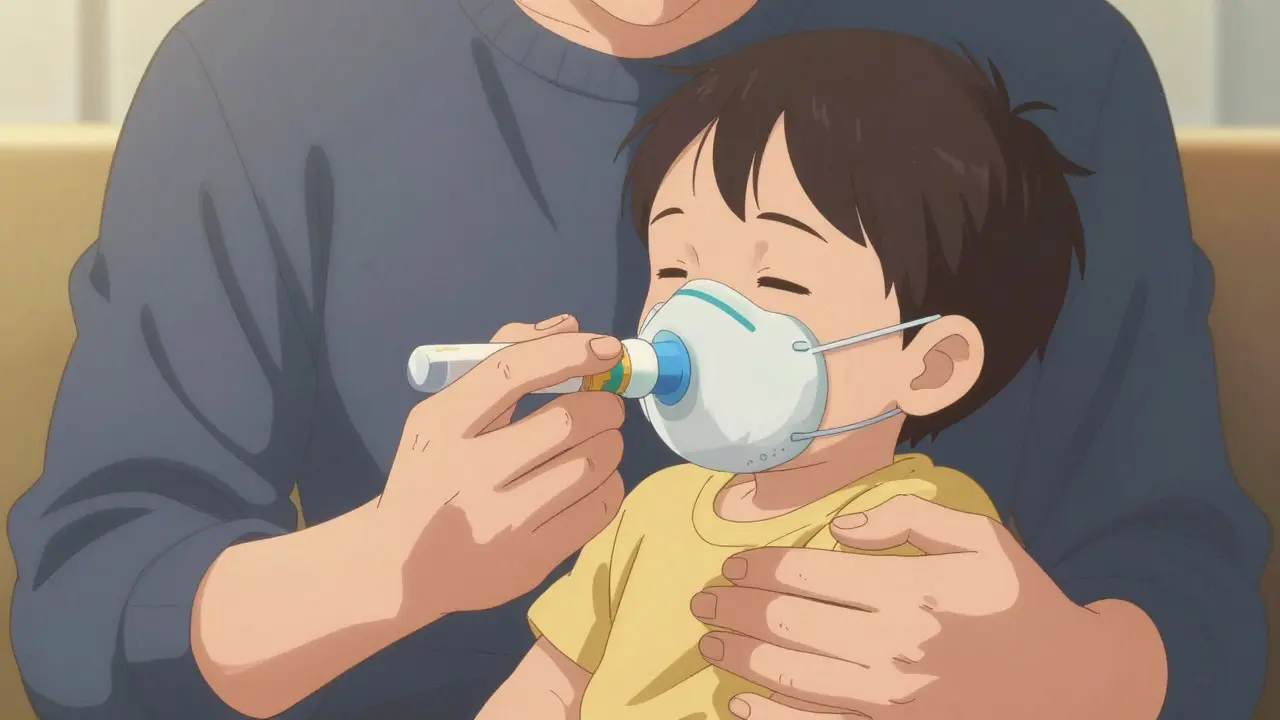
- Position the Child: Have your child sit upright or stand. Lying down makes it harder to expand the lungs fully. If they are very young, hold them securely against your chest, facing away from you, so you can control the mask placement.
- Apply the Mask: Place the mask over the child’s nose and mouth. Gently press it to create a tight seal. Use your hands to hold it in place if necessary. Avoid squeezing the sides of the mask, as this can reduce airflow.
- Deliver the Puff: Press the inhaler button once to release the medicine into the spacer. Do this while the mask is already sealed on the child’s face.
- Breathing Pattern:
- For Infants/Toddlers: Let the child take 5 to 6 normal, relaxed breaths. Don’t force deep breaths. Tidal breathing (normal breathing) is more effective for this age group because it keeps the airway open without causing coughing.
- For Older Children (5+): If they are using a mouthpiece, ask them to take one slow, deep breath and hold it for 10 seconds. If they still use a mask, 4-6 slow breaths are ideal.
- Wait Between Puffs: If the prescription requires more than one puff, wait at least 30 seconds to 1 minute before repeating. This allows the first dose to settle and prevents the child from getting dizzy or nauseous from rapid dosing.
- Rinse Mouth (If Steroids): If using a corticosteroid inhaler, have the child rinse their mouth with water and spit it out. This prevents oral thrush, a common side effect of steroid residues staying in the mouth.
Timing is critical. Studies show that improper timing-like shaking for only 2 seconds or rushing the breaths-can cut medication delivery in half. Treat the 10-second shake and the 5-6 breath cycle as non-negotiable rules.
Common Mistakes and How to Fix Them
Even experienced parents make errors. A 2022 audit found that 63% of observed administrations had at least one significant flaw. Here are the top three culprits and how to solve them:
1. Poor Mask Seal
If the mask doesn’t fit tightly, the medicine escapes into the room. This is the most common error. To fix it, choose the correct mask size. If your child moves around, try distracting them with a toy or video during the breaths. Some parents find success using character-themed masks, which increase compliance significantly. If the seal is still bad, consider switching to a different brand that offers better facial contours.
2. Static Buildup in the Spacer
Plastic spacers accumulate static electricity over time. This charge attracts the medicine particles to the walls of the chamber, meaning less reaches the lungs. The American Academy of Pediatrics recommends washing the spacer once a week with mild detergent and warm water. Let it air-dry completely. Do not towel-dry, as friction can add more static. Interestingly, some recent UK guidelines suggest that air-drying alone reduces static sufficiently, but weekly washing remains the safest bet for consistent results.
3. Wrong Breathing Technique
Many parents think the child needs to take one huge, gasping breath. This is wrong for young kids. It often causes coughing and gagging. Stick to tidal breathing-small, calm breaths-for children under 5. For older kids who can follow instructions, transition to the deep breath-and-hold method. Watch their chest rise and fall. If they are holding their breath for more than 10 seconds, they might be straining. Keep it relaxed.
Comparison: Mask vs. Mouthpiece Techniques
Should you switch from a mask to a mouthpiece? It depends on your child’s age and ability. Here’s a breakdown based on clinical data:
| Age Group | Recommended Method | Delivery Efficiency | Key Reason |
|---|---|---|---|
| Under 3 Years | Mask + Tidal Breaths | ~72% | Cannot coordinate breath with puff; mask ensures seal without cooperation. |
| 3-5 Years | Mask or Mouthpiece (Trial) | ~60-68% | Transition period. Try mouthpiece if child can hold it and breathe slowly. |
| Over 5 Years | Mouthpiece + Deep Breath/Hold | ~69% | Can generate sufficient inspiratory flow; higher precision than mask. |
Note that for children under 3, the mask method is superior because they physically cannot hold a mouthpiece securely. However, once a child is around 5 and can follow simple commands, the mouthpiece becomes more efficient. It bypasses the nasal passages entirely, delivering medicine straight to the lungs. Always consult your pediatrician before switching methods to ensure your child is ready.

When to See a Doctor or Specialist
If your child’s asthma seems uncontrolled despite perfect technique, don’t assume the medicine isn’t working. In many cases, the diagnosis needs re-evaluation, or the dosage needs adjustment. However, there are red flags that indicate immediate attention is needed:
- Wheezing that persists after two puffs of rescue inhaler.
- Difficulty speaking in full sentences due to breathlessness.
- Rib retractions (skin pulling in between ribs) or nasal flaring.
- Blue tint to lips or fingernails.
Also, schedule a regular review with your healthcare provider every 3-6 months. Bring your spacer and inhaler to the appointment. Ask the nurse or doctor to observe you giving the medicine. Many hospitals offer “Teach-to-Goal” programs where educators watch you perform the technique and provide feedback. This simple step has been shown to improve accuracy rates dramatically. If you feel confident but your child is still having flare-ups, ask for a video review. Sending a short clip of you administering the inhaler to your provider via telehealth can reveal subtle errors you can’t see yourself.
Frequently Asked Questions
How often should I wash my child’s spacer?
Wash the spacer once a week with mild detergent and warm water. Rinse thoroughly and let it air-dry completely on a clean towel. Avoid using hot water or harsh chemicals, which can degrade the plastic. Air-drying is crucial because towel-drying can reintroduce static electricity, reducing medication delivery.
What if my child refuses to wear the mask?
Distraction is your best tool. Play a favorite song, show a cartoon, or read a book during the administration. Some parents use the “blow out birthday candles” trick to encourage proper exhalation before starting. If resistance continues, try a different mask design or color. In severe cases, ask your doctor about alternative formulations like nebulizers, though spacers are generally preferred for portability and speed.
Can I use a dry powder inhaler (DPI) for my toddler?
Generally, no. Dry powder inhalers require the child to take a strong, fast breath to disperse the powder. Most children under 5 lack the inspiratory flow strength (usually >30 L/min) needed for this. Metered-dose inhalers (MDIs) with spacers are the gold standard for young children. Only switch to DPIs if your child is older (typically 6+) and can demonstrate adequate lung function under medical supervision.
How long does it take to learn the proper technique?
Most parents achieve 90% accuracy after 3 supervised practice sessions, which typically take about 20 minutes each. The key is active practice, not just reading instructions. Video demonstrations combined with in-person return demonstration (where you show the clinician how you do it) yields the best results. Don’t hesitate to ask for a repeat lesson if you feel unsure.
Does the brand of spacer matter?
While all FDA-cleared spacers meet basic safety standards, technique matters far more than brand. However, some spacers have features that aid usability, such as tapered masks for better seals or anti-static coatings. Brands like AeroChamber and Vortex are widely recommended due to their proven efficacy and comfort designs. If you are currently using a generic spacer and having trouble with static or leaks, upgrading to a premium model might help, but focus primarily on mastering the steps outlined above.