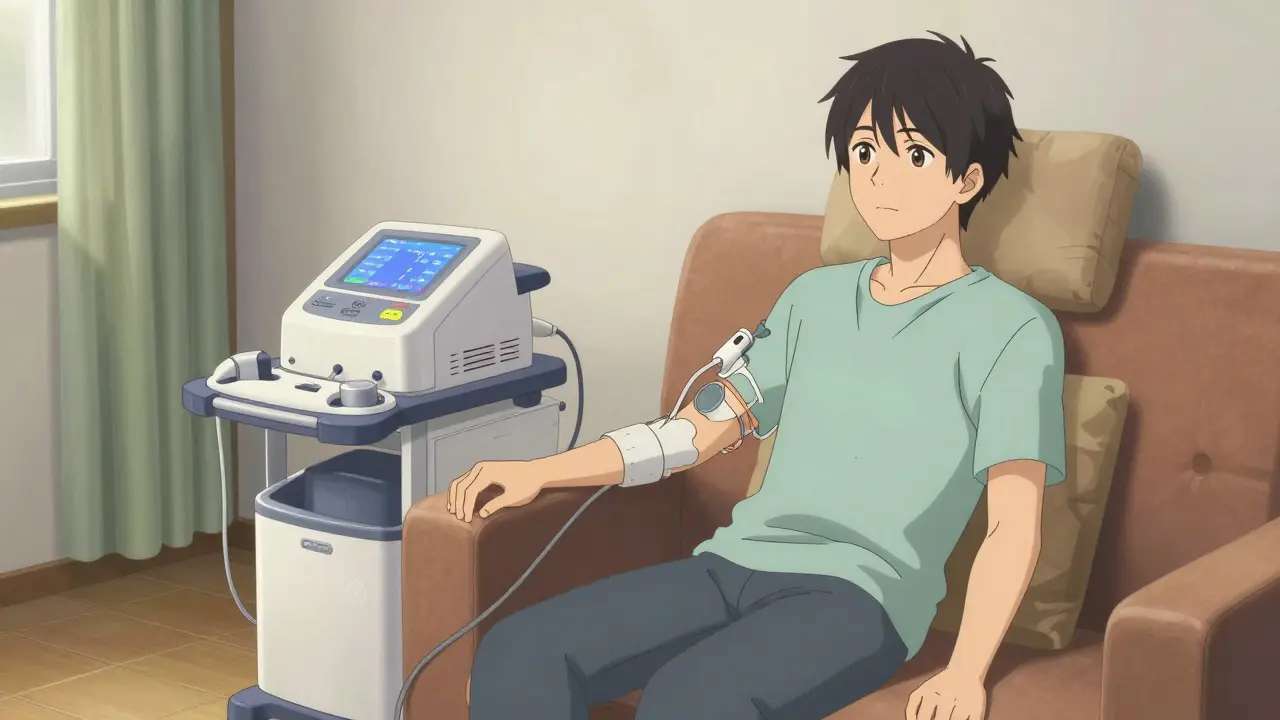
Imagine waking up not to the sound of an alarm clock, but to the quiet hum of a machine in your living room. For thousands of people with end-stage renal disease (ESRD), a condition where kidneys fail completely, this is reality. They are performing home hemodialysis (HHD), a life-saving therapy done at home rather than in a clinic. It sounds daunting, I know. But for many, it means freedom from the rigid schedule of in-center dialysis and a chance to feel more like themselves again.
If you or a loved one has been diagnosed with kidney failure, the idea of treating it at home might seem overwhelming. You probably have questions: How long does training take? Can I really do this alone? Is it safer than going to a center? This guide cuts through the medical jargon to give you the straight facts about schedules, the training process, and what the data says about outcomes.
What Exactly Is Home Hemodialysis?
Home hemodialysis isn't a new concept, but it is evolving. While the technology dates back to the 1960s when Dr. Belding Scribner developed the arteriovenous shunt, widespread adoption only happened as machines became smaller and easier to use in the 1980s and 1990s. Today, companies like Fresenius Medical Care and NxStage Medical provide compact units that fit into a dedicated space in your home.
The core purpose remains the same: filtering waste and excess fluid from your blood when your kidneys can no longer do so. However, doing it at home allows for greater flexibility. Instead of traveling to a clinic three times a week for four hours each, you can tailor the treatment to your life. In the U.S., about 12% of dialysis patients used home hemodialysis as of 2022. That number is growing, driven by better technology and changes in Medicare reimbursement that started in 2011 to encourage home-based care.
The Three Main Home Hemodialysis Schedules
One of the biggest advantages of HHD is how you can structure your treatments. There are three primary schedules, each with different benefits for your body and lifestyle.
- Conventional Home Hemodialysis: This mirrors the standard in-center schedule. You treat yourself three times a week for three to four hours per session. The main benefit here is flexibility-you choose the time of day that works best for you, avoiding traffic and waiting rooms.
- Short Daily Home Hemodialysis: As the name suggests, these sessions are shorter (two to three hours) but more frequent (five to seven days a week). Studies show this approach leads to better blood pressure control and reduces strain on the heart, specifically lowering left ventricular mass compared to conventional schedules.
- Nocturnal Home Hemodialysis: This happens while you sleep. Sessions last six to ten hours, typically three to seven nights a week. Research indicates this method offers superior clearance of phosphorus and middle molecules-waste products that are harder to remove during short sessions. It’s often considered the most physiologically gentle option.
A 2021 study in the Clinical Journal of the American Society of Nephrology found that patients on short daily hemodialysis had a 28% lower mortality risk compared to those on conventional in-center dialysis. The key takeaway? More frequent or longer treatments generally lead to better health outcomes.
The Training Process: What to Expect
You won’t be sent home with a machine and a manual. Proper training is critical for safety. The duration varies significantly depending on the program, your learning speed, and whether you already have vascular access. Generally, expect training to last between 3 to 12 weeks.
Here is a breakdown of what the data says about training timelines:
| Source/Organization | Typical Duration | Key Notes |
|---|---|---|
| Maryland Department of Health | 8-12 weeks | Average time; requires passing written and practical tests. |
| DaVita | 3-6 weeks | Depends on patient needs and equipment used. |
| Fresenius Kidney Care | 4-5 weeks | Longer than peritoneal dialysis training (1-2 weeks). |
| AAKP | 3-5 weeks | Requires reasonable medication compliance and physical ability. |
Training covers everything from setting up the treatment room to handling emergencies. You will learn:
- Vascular access care and needling techniques (self-cannulation).
- Fluid removal calculations and machine operation.
- Supply storage, ordering, and maintenance.
- How to document treatment logs and monitor blood pressure.
- Dietary adherence and recognizing problems early.
Medicare pays for up to 25 training sessions for home HD. Some programs use innovative methods, like virtual reality cannulation trainers, which the University of Washington Medical Center uses to reduce training time to 3-4 weeks while achieving higher competency rates.
The Critical Role of Care Partners
Let’s address the elephant in the room: You cannot dialyze alone-at least not initially.
Safety protocols are strict. The Maryland Department of Health explicitly states that a patient must ALWAYS have a trained partner or spouse present during treatment. This person undergoes identical training to you. They learn to set up equipment, insert needles, troubleshoot alarms, and manage complications like low blood pressure.
This requirement creates a significant barrier. About 30% of potential candidates lack a suitable care partner. If you don’t have a spouse or family member willing to step up, you might face delays. However, technology is changing this. Devices like the NxStage System One offer features that allow for "solo" home hemodialysis under specific conditions, though additional ancillary devices and specialized training are still required. Solo treatment remains the exception, not the rule.
Setting Up Your Home Dialysis Room
Home hemodialysis isn’t just about the machine; it’s about the environment. You need a dedicated space, roughly 6 feet by 6 feet, for equipment storage and operation. This area must meet strict plumbing and electrical standards.
Plumbing modifications often include installing a dedicated drain line and a water supply line with specific pressure requirements (40-80 psi). Electrically, you’ll need a dedicated 120-volt, 20-amp circuit. Water quality is non-negotiable. Regulations mandate monthly dialysate cultures, monthly water cultures, and annual chemical sampling to ensure the water is safe for entering your bloodstream.
Travel is another consideration. Standard HD machines are heavy and not portable. If you plan to travel, you’ll need to arrange dialysis with clinics at your destination. Portable systems like the NxStage System One offer more flexibility, allowing you to take your treatment on the road with proper planning.
Outcomes: Does Home Hemodialysis Work Better?
The short answer is yes, often significantly better. Here is what the evidence shows:
- Quality of Life: A 2019 systematic review in the American Journal of Kidney Diseases found home hemodialysis patients reported 37% higher quality-of-life scores compared to in-center patients.
- Survival Rates: Data from the United States Renal Data System (USRDS) indicates a 15-20% lower mortality rate for home hemodialysis patients compared to propensity-matched in-center patients.
- Better Biochemistry: Patients on nocturnal home hemodialysis had 42% lower serum phosphate levels compared to conventional in-center dialysis, reducing the need for phosphate binders by an average of 3.2 tablets daily.
Dr. Steven Weisbord, Professor of Medicine at the University of Pittsburgh, notes that the most critical factor for success isn’t technical skill, but psychological readiness and social support. When patients are mentally prepared and have a strong support system, outcomes improve dramatically.
Challenges and Barriers
It’s not all smooth sailing. Only 12% of U.S. dialysis facilities offer home hemodialysis training programs, creating geographic access challenges. Many nephrologists cite insufficient training capacity and inadequate reimbursement for staff time as primary barriers.
Patient experiences reflect both the highs and lows. On forums like the American Association of Kidney Patients (AAKP), 87% of users report improved quality of life, but 63% mention initial anxiety about handling emergencies. Common complaints include machine alarms (67%), supply management stress (58%), and relationship strain with care partners (41%).
The learning curve is steep. Most patients require 20-30 supervised treatments before feeling fully confident. Self-needling is often the hardest skill, challenging about 45% of trainees. But with structured, competency-based training, adverse events drop by 30% in the first year, according to Dr. Michael Walsh from the University of Toronto.
Is Home Hemodialysis Right for You?
Home hemodialysis is increasingly recommended as a first-line treatment option for appropriate candidates. It offers better survival, improved blood pressure control, and a life less dominated by clinic visits. However, it demands commitment, a reliable care partner, and a home that can accommodate the necessary infrastructure.
If you are considering this path, start by asking your nephrologist about local training programs. Look for centers that emphasize competency over time, and don’t hesitate to ask about solo-dialysis options if you lack a care partner. The future of kidney care is moving toward home-based solutions, with initiatives like Advancing American Kidney Health aiming to increase access significantly in the coming years.
How long does home hemodialysis training take?
Training typically lasts between 3 to 12 weeks, depending on the program and individual patient factors. Most sources cite an average of 4 to 6 weeks. Programs may use accelerated methods, such as pre-training self-needling skills, to shorten this period.
Can I do home hemodialysis alone?
Generally, no. Safety regulations require a trained care partner to be present during every treatment. However, some newer systems like the NxStage System One allow for solo dialysis under specific conditions with additional specialized training and equipment.
What are the benefits of home hemodialysis over in-center dialysis?
Benefits include higher quality of life scores (37% higher), lower mortality rates (15-20% lower), better blood pressure control, and reduced phosphorus levels. Patients also save time by avoiding travel to and from the clinic.
Does Medicare cover home hemodialysis training?
Yes, Medicare covers up to 25 training sessions for home hemodialysis. Reimbursement policies were updated in 2011 to encourage home-based modalities, making them more accessible financially.
What kind of home setup is needed for hemodialysis?
You need a dedicated space of approximately 6x6 feet, a dedicated 120-volt 20-amp electrical circuit, and plumbing modifications including a dedicated drain and water supply line meeting specific pressure requirements (40-80 psi).
Which schedule is best: short daily or nocturnal?
Nocturnal hemodialysis is often considered clinically superior for clearing waste and managing phosphate, but short daily hemodialysis offers a good balance of convenience and health benefits. The best choice depends on your lifestyle, sleep patterns, and medical goals.
Tumble Farm
June 24, 2026 AT 23:32The distinction between conventional and short daily home hemodialysis is often misunderstood by patients who just want to get it over with. You have to look at the cumulative clearance rates rather than just the session duration. Short daily treatments reduce the interdialytic weight gain significantly which puts less strain on the cardiovascular system during each individual session. The data regarding left ventricular mass reduction is particularly compelling for those with pre-existing heart conditions. It is not merely about convenience but about physiological preservation.
Hafiz Omeiza
June 25, 2026 AT 06:55It is frankly disheartening that such a basic guide is required in this day and age when medical literature has been accessible for decades. The notion that one requires extensive hand-holding to understand the mechanics of fluid removal demonstrates a profound failure in general education. One must possess a certain intellectual rigor to even consider undertaking self-cannulation without proper preparation. The reliance on care partners is not just a safety protocol but a testament to human fallibility and the necessity of oversight in critical procedures.
Alex Johnston
June 26, 2026 AT 05:58They tell you it is freedom but it is actually just another layer of surveillance in your own home. The water quality tests are not just bureaucratic hurdles they are mechanisms to ensure compliance with a system that profits from your dependency. Do you really think the machine makers are concerned with your quality of life or are they selling you a subscription to your own survival? The 'freedom' is an illusion designed to keep you docile while the real power structures tighten their grip. :)
Sam Dudgeon
June 28, 2026 AT 05:50i mean if you cant handle the pressure of sticking yourself in the arm every few days what makes you think you can handle a relationship or a job honestly it seems like a lot of people are just looking for an excuse to be taken care of by someone else and using kidney failure as a way to bind someone to them forever its kinda sad really
Kimberly Maten-ao
June 28, 2026 AT 16:06You completely ignored the financial implications of the plumbing modifications mentioned in the setup section. Who is paying for the dedicated drain line and the specific electrical circuit if you rent your home? Landlords are notoriously uncooperative with medical infrastructure changes. This creates a massive socioeconomic barrier that the article glosses over entirely. It is not just about having the will to train but having the legal right to modify your living space.
Jake Kitzmiller
June 29, 2026 AT 14:13I worked with a patient who switched to nocturnal dialysis after struggling with the daytime schedule. The biggest change was not just the health metrics but the mental shift of reclaiming daylight hours. He could go for walks and see his grandkids during the day instead of being tethered to a chair in a clinic. The training was tough but the support group helped bridge the gap between fear and competence. It really comes down to finding a program that emphasizes competency over just ticking boxes.
Sumit gupta
June 30, 2026 AT 09:23pretty interesting read overall i guess most people dont realize how much engineering goes into making water safe enough to put directly into your blood stream it is wild that we take tap water for granted until you need it for dialysis the whole concept of home based care is shifting fast though so maybe in a few years the machines will be small enough to fit in a backpack
Annemarie Kautz
June 30, 2026 AT 15:20this article is okay i guess but it feels like it was written by someone who has never actually sat through a 10 hour night session listening to the pump hum while trying to sleep. the part about anxiety is understated. also why did u mention nxstage so many times feels like a shill post lol :)
Dale Simpson
July 1, 2026 AT 03:24you got this man! do not let the stats scare you away from taking control of your health. i know it sounds scary to learn needle skills but once you get the hang of it you will feel like a superhero. trust the process and lean on your care partner because they are there for you too. stay positive and keep pushing forward!
alexander barrera
July 1, 2026 AT 09:56America leads the world in medical innovation yet only 12% of facilities offer this training? Pathetic. Other countries are miles ahead in adopting these life-saving protocols. We need to stop relying on outdated systems and embrace the superior technology available here. If you cannot adapt to modern healthcare standards then you are failing your citizens. 🇺🇸💪
Charlotte Stuart
July 3, 2026 AT 04:49The assertion that home hemodialysis is simply a matter of choice ignores the complex logistical realities faced by the average patient. The requirement for a dedicated six-by-six foot room is prohibitive for urban dwellers. Furthermore, the assumption that all patients have the cognitive bandwidth to manage supply chains and emergency protocols is deeply flawed. This modality is elitist in its practical application despite its egalitarian rhetoric.
Hema Khimasia
July 4, 2026 AT 22:59The ontological shift from patient to practitioner within the domestic sphere redefines the therapeutic alliance. By internalizing the clinical gaze, the subject engages in a continuous act of self-surveillance that transcends mere biological maintenance. The temporal structure of nocturnal dialysis disrupts the circadian hegemony imposed by institutional medicine, allowing for a renegotiation of bodily autonomy. However, this autonomy is contingent upon the technological mediation provided by corporate entities.
krystal Live
July 5, 2026 AT 19:37hey everyone remember that you are not alone in this journey! the training might seem long but every hour spent learning is an hour towards freedom. dont be afraid to ask questions and make mistakes because that is how we learn. you are stronger than you think and your future self will thank you for taking this brave step today! lets keep supporting each other 💖