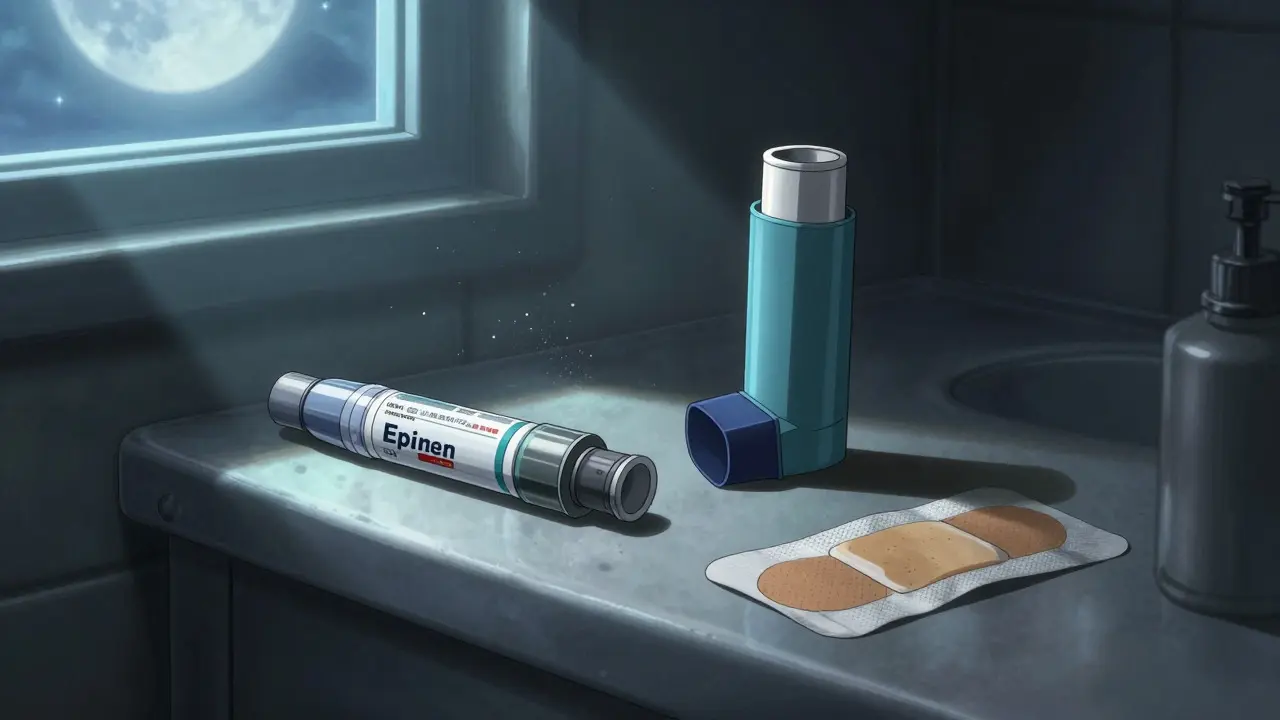
You check the date on your medicine cabinet. The EpiPen is an epinephrine auto-injector used for treating life-threatening allergic reactions expired by six months. The asthma inhaler is empty but still pressurized. The nicotine patch has been sitting there since last winter. You know you shouldn't just toss them in the bin, but do you really need to drive across town to a hospital? Do you flush them? Throw them away?
Improper disposal of these critical medical devices isn't just messy-it's dangerous. An unsecured needle can injure sanitation workers or curious pets. Pressurized canisters can explode in landfills. And potent medications like fentanyl or nicotine can leach into water supplies or be accidentally ingested by children. According to FDA reports, accidental pediatric poisonings from improperly discarded medications are a significant concern, with 12% of such incidents linked to household disposal errors.
The good news? You don't have to guess. There are clear, safe, and often free ways to get rid of these items. Here is exactly how to handle each one based on current safety protocols and environmental standards.
Disposing of Expired EpiPens: Treat Them as Sharps
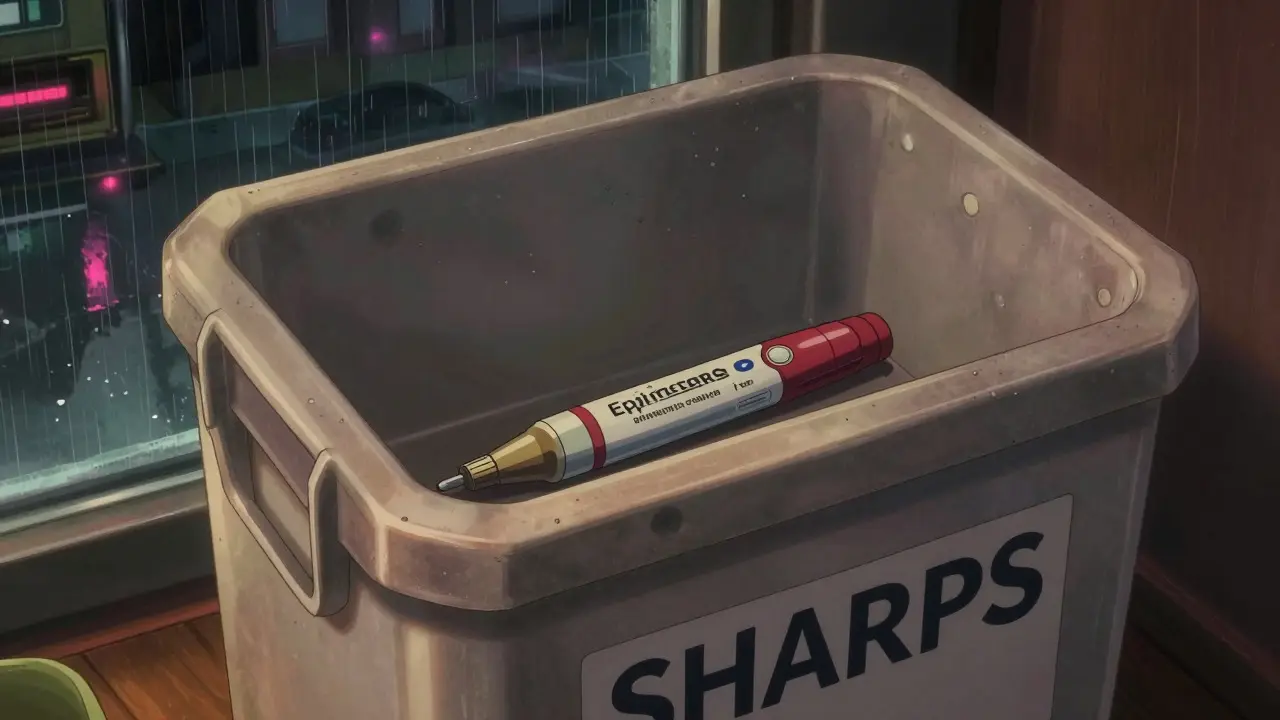
An EpiPen is a medical device containing a spring-loaded needle and epinephrine medication. Because it has a needle, it falls under the category of "sharps." This classification matters because regular trash bags aren't designed to stop a needle from poking through.
If you have an unused or expired EpiPen, here is the safest path:
- Check for Take-Back Programs First: The best option is often returning the device to your prescribing healthcare provider when you pick up a new prescription. Many hospitals and pharmacies participate in DEA-designated drug take-back programs. You can find authorized collectors near you using the DEA’s online locator tool.
- Use a Puncture-Proof Container: If you can't drop it off immediately, store it at home in a heavy-duty plastic container. A thick laundry detergent bottle works well. Make sure the lid screws on tightly.
- Label It Clearly: Write "SHARPS" and "DO NOT RECYCLE" on the outside of the container. This warns anyone handling your trash that there are needles inside.
- Dispose via Mail-Back or Local Drop-Off: Some states require specific disposal methods. For example, California mandates disposal at designated sharps collection centers or via mail-back programs. Texas allows disposal in household trash if properly contained. Check your local regulations to avoid fines.
Never try to dismantle the EpiPen yourself. Removing parts like the battery in some auto-injectors (like Auvi-Q) can be hazardous. Leave it intact and sealed in your sharps container until you can drop it off.
Handling Expired Inhalers: Mind the Pressure
Inhalers, particularly metered-dose inhalers (MDIs), contain propellants under high pressure. Throwing them directly into the trash risks explosion if crushed by garbage trucks. Incinerating them can release harmful greenhouse gases. With approximately 300 million inhalers discarded annually in the US alone, this adds up to a serious environmental issue.
Here is how to dispose of them safely:
- Read the Label: The FDA requires manufacturers to include handling instructions. Look for warnings about puncturing or fire hazards.
- Contact Local Recycling Centers: Many municipalities have special programs for aerosols. New York City, for instance, operates Household Special Waste Drop-Off Sites specifically for items like inhalers.
- Pharmacy Drop-Offs: Chains like Walgreens and CVS sometimes accept inhalers, but availability varies by state. Call ahead. A 2022 survey found only 47% of Walgreens locations accepted them.
- Empty Canisters: If the inhaler is completely empty, some areas allow you to place it in recycling bins after removing any plastic casings. However, always verify with your local waste management authority first.
When in doubt, treat it as special waste. Don't crush it, and don't throw it in the fire.
Getting Rid of Medicated Patches: Fold and Flush (Sometimes)
Medicated patches deliver drugs through the skin. Even after use, they retain residual medication. This makes them tricky. Simply throwing a used fentanyl or nicotine patch in the trash could expose children or pets to dangerous doses.
The disposal method depends on the type of patch:
| Patch Type | Recommended Disposal Method | Why? |
|---|---|---|
| Fentanyl / High-Risk Opioids | Flush down the toilet | Prevents accidental ingestion; FDA "flush list" includes these due to high potency risk. |
| Nicotine / General Pain Patches | Fold sticky sides together, seal in bag, trash | Reduces exposure risk; not potent enough to warrant flushing unless specified. |
| Hormone Replacement Patches | Drug Take-Back Event or Pharmacy Drop-Off | Prevents endocrine disruptors from entering water systems. |
For most non-opioid patches, fold them in half with the sticky sides touching. Place them in a sealed plastic bag or an old sock before tossing them in the household trash. This minimizes contact risk. However, for high-risk medications like fentanyl, the FDA explicitly recommends flushing them immediately to prevent accidental exposure.
Avoid using DisposeRx® packets for patches. These packets turn pills into gel, but they aren't designed for transdermal adhesives. Stick to folding and sealing or using a take-back program.
Leveraging Drug Take-Back Events
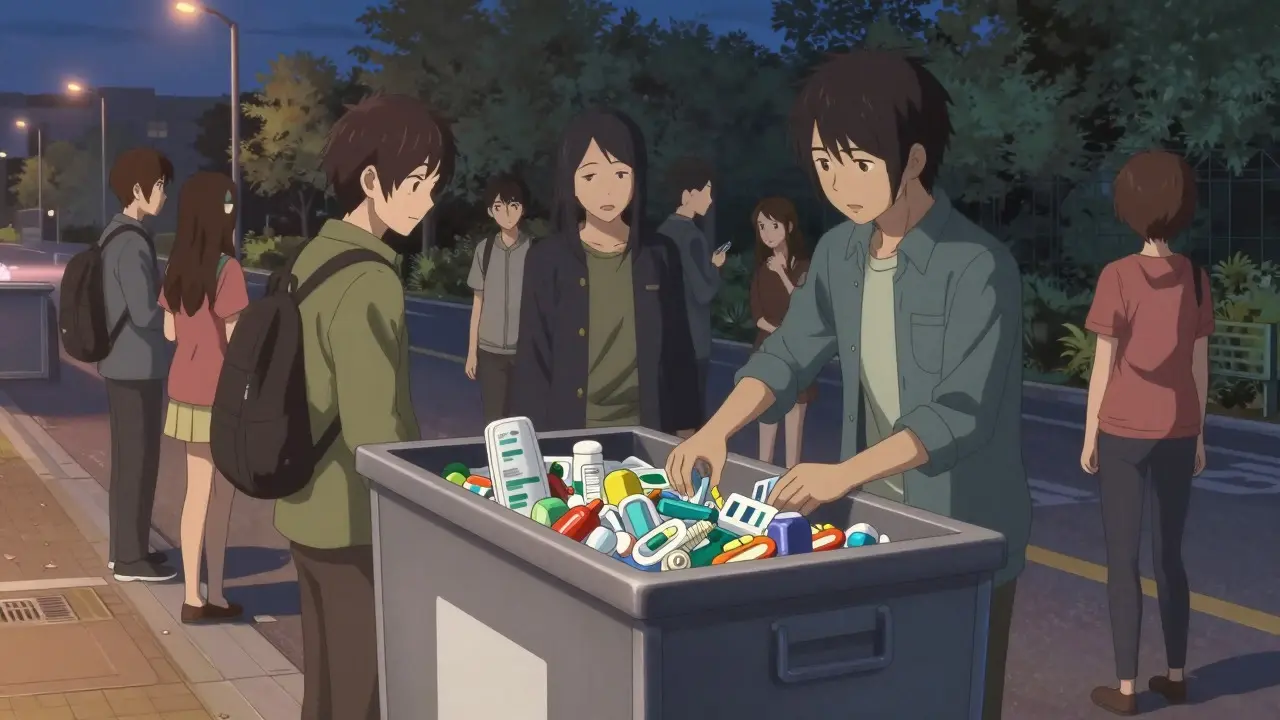
If you have a mix of expired meds, sharps, and patches, the easiest solution might be a community take-back event. The DEA hosts National Prescription Drug Take Back Days twice a year, usually in April and October. During these events, law enforcement agencies across the country set up collection boxes.
These events are incredibly effective. In October 2022, over 985,000 pounds of medication were collected nationwide. You can bring almost anything: pills, liquids, inhalers, and even some sharps (check local rules). It’s free, anonymous, and ensures professional destruction.
Between national events, many communities have permanent drop-off kiosks at police stations or pharmacies. Use the DEA’s online locator to find one near you. It takes five minutes and gives you peace of mind.
Common Mistakes to Avoid
Even well-meaning people make errors when disposing of medical waste. Here are three pitfalls to steer clear of:
- Mixing Sharps with Regular Trash: Never put an EpiPen loose in your bin. Always use a puncture-proof container. Sanitation workers face thousands of needle sticks annually; help protect them.
- Flushing Everything: While fentanyl patches should be flushed, most other medications shouldn’t. Flushing general drugs contributes to pharmaceutical contamination in waterways. The USGS has found pharmaceuticals in 80% of sampled waterways, affecting aquatic ecosystems.
- Ignoring Expiration Dates: Set a reminder to check your emergency meds monthly. Expired EpiPens may lose potency, putting you at risk during an allergic reaction. Proper disposal is part of maintaining readiness.
Remember, proper disposal protects your family, your community, and the environment. It’s a small effort with a big impact.
Can I throw an expired EpiPen in the regular trash?
Only if it is placed in a puncture-proof container labeled "SHARPS." Otherwise, it poses a risk to sanitation workers and others. Best practice is to return it to a pharmacy or hospital sharps container.
Should I flush my nicotine patch?
Generally, no. Unless the label specifically says to flush, fold the patch sticky-side together, seal it in a bag, and dispose of it in household trash. Flushing is reserved for high-risk opioids like fentanyl.
Where can I find a drug take-back location near me?
Use the DEA’s Controlled Substance Public Collection Locator online. It lists permanent and temporary collection sites across the US, including police stations and pharmacies.
Is it safe to recycle an empty inhaler?
It depends on your local municipality. Some areas accept empty metal canisters in recycling bins after removing plastic parts. Others require special aerosol drop-off. Always check with your local waste management authority first.
What happens if I don't dispose of medical waste correctly?
Improper disposal can lead to accidental injuries from sharps, environmental contamination from chemicals, and potential poisoning of children or pets. It also violates local health codes in many jurisdictions.
Earl Oleary
July 25, 2026 AT 11:57Most people here are clearly operating at a sub-optimal cognitive level regarding waste management protocols. The article is technically accurate but lacks the necessary granularity for true compliance. You don't just 'toss' things. You engage in a systematic decontamination process. If you're still asking if you can flush an inhaler, you probably don't deserve to have one.
It is absolutely critical that individuals understand the thermodynamic implications of pressurized canisters in anaerobic landfill environments. Methane generation is exacerbated by improper disposal of aerosolized propellants. This isn't just about being 'nice' to sanitation workers; it's about maintaining the structural integrity of our municipal waste infrastructure. I've seen too many lazy consumers treat their medicine cabinets like a black hole rather than a regulated hazardous material storage unit. Take some responsibility.
Laura Odom
July 25, 2026 AT 18:05oh my god another lecture on how to throw away trash its like we dont have bigger problems to worry about like the fact that the sky is falling or whatever
but sure lets talk about epi pens like theyre the end of the world
i mean fine i guess i shouldnt flush them idk who cares really
life is so complicated now isnt it
Sean Allwurden
July 27, 2026 AT 15:37Hey everyone! Great discussion starting here. I think Earl makes a valid point about the technical aspects, though maybe a bit intense. Laura, don't sweat it, these things can be confusing.
I work in clinical logistics and I see this all the time. The key takeaway for most folks is the 'sharps' classification. It’s not just semantics; it’s about occupational safety standards for the sanitation teams. When we talk about epinephrine auto-injectors, we’re dealing with biohazard potential even if the drug is expired.
If you want to optimize your workflow, keep a dedicated puncture-resistant container in your kitchen cabinet specifically for this. It reduces the cognitive load when expiration dates roll around. Let me know if you need help finding a local drop-off site, happy to assist!
Katie Caruthers
July 28, 2026 AT 11:31It honestly breaks my heart that we have to explain basic human decency to adults. Think of the poor garbage collectors who get stuck with needles because someone was too lazy to drive five minutes to a pharmacy. It’s selfish. Purely selfish.
I found three used patches in the woods near my house last week. Three! Who does that? They’re poisoning our water supply while sipping lattes. We need stricter laws. People need to feel guilty before they throw anything away. It’s a moral failing of society that we treat medical waste like confetti. Shame on us all.
Megan Crossland
July 28, 2026 AT 18:06people really need to stop making excuses
it takes two seconds to fold a patch
if you cant do that what else are you messing up
just do the right thing
no big deal
really
Jairam Prasad
July 28, 2026 AT 21:42In my country, we have a different relationship with waste, often dictated by resource scarcity rather than regulatory abundance. Here, recycling is a survival skill, not a hobby.
The irony is palpable when Western nations complain about 'convenience' while simultaneously creating complex bureaucratic hurdles for disposal. Is it truly difficult to locate a DEA collection site? Or is it merely inconvenient for the ego?
We must consider the philosophical implication of discarding life-saving tools. An EpiPen represents hope. To discard it improperly is to disrespect that hope. Perhaps we should view our medicine cabinets as temples of health, requiring ritualistic cleansing, rather than mere storage units for chemical compounds. Just a thought from across the ocean.
Gary Hull
July 29, 2026 AT 04:23nah i think flushing everything is fine
why make it hard on yourself
the government wants you to drive around wasting gas going to drop off points
its all a conspiracy to sell more cars
i flushed my dad's insulin once and nothing happened
so yeah
do what you want
not my problem
Vineet Hawelia
July 30, 2026 AT 04:12While the sentiment expressed by Mr. Hull may stem from a desire for simplicity, it is factually incorrect and potentially dangerous. Flushing medications other than those explicitly listed by the FDA contributes significantly to aquatic toxicity.
Furthermore, the assertion that regulatory bodies aim to increase vehicular emissions through waste management protocols is a logical fallacy lacking empirical support. The primary objective is public health preservation.
I would respectfully suggest consulting the official guidelines provided by the Environmental Protection Agency rather than relying on anecdotal evidence from personal anecdotes. Proper disposal is a civic duty, not a burden. Let us maintain decorum and accuracy in this discourse.