
Spilling medicine all over the kitchen floor is a nightmare every parent knows. But there is another hidden cost to liquid medications: they are notoriously hard to measure accurately. Studies show that up to 20% of parents make dosing errors with liquids, often leading to under-dosing or dangerous overdoses. If your child is growing out of their baby phase, transitioning from liquid medication to chewable tablets or solid forms might be the smartest move for safety and convenience. It’s not just about avoiding spills; it’s about ensuring your child gets exactly the right amount of medicine, every single time.
Why Make the Switch?
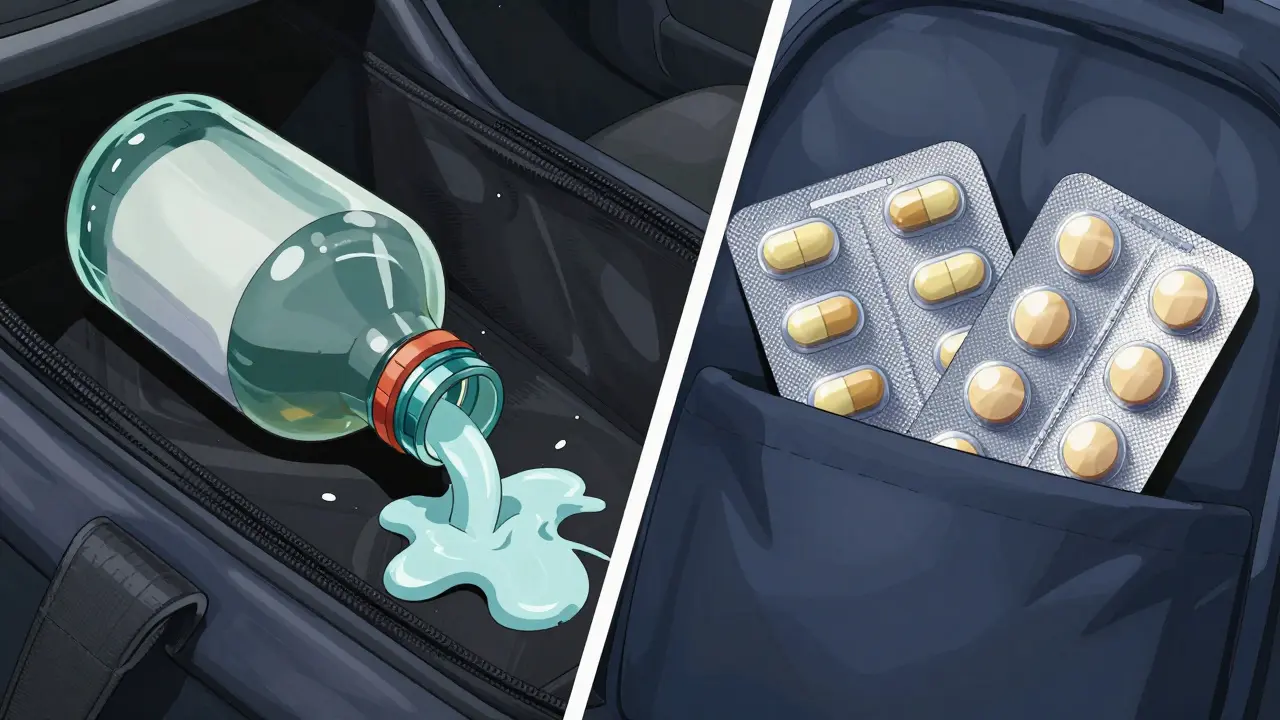
You might wonder if it’s worth the hassle of changing habits. The data says yes. Liquid medicines, especially those requiring refrigeration like certain antibiotics or suspensions, have a short shelf life-often just 12 to 18 months after opening. Once opened, they degrade quickly. In contrast, chewable tablets solid oral dosage forms designed to be masticated before swallowing stay potent for 24 to 36 months. They don’t need fridges, they don’t spill in the car, and they eliminate the guesswork of measuring cups.
Consider the portability factor. When you’re traveling or rushing to school, a small bottle of chewables fits in a pocket. A liquid requires a bulky container, a measuring spoon, and constant worry about leaks. For families on the go, this shift reduces stress significantly. Plus, many children aged 6 to 12 prefer the control of chewing a tablet over having a syringe poked into their mouth. It gives them agency, which can drastically improve compliance.
Step-by-Step: Calculating the Correct Dose
The biggest mistake people make is assuming a 5ml dose equals one tablet. It doesn’t always work that way. You must look at the milligram (mg) strength, not the volume. Here is how to do it safely:
- Check the Milligrams: Look at your current liquid prescription. Does it say 160mg per 5ml? Now look at the chewable box. Does it say 160mg per tablet? If the numbers match, one tablet equals 5ml of liquid.
- Consult the Weight Chart: Pediatric dosing is based on weight, not age. Use the chart on the packaging or ask your pharmacist. For example, Tylenol Children’s Chewables often provide a clear guide: a child weighing 12-17 lbs needs 80mg (which might be half a tablet or a specific smaller size), while a 48-59 lb child needs 320mg (two 160mg tablets).
- Verify Bioequivalence: Not all forms are created equal. Ensure the chewable version is bioequivalent to the liquid. This means it releases the drug into the bloodstream at the same rate. For most common OTC meds like ibuprofen or acetaminophen, this is standard. For prescription drugs, you must get explicit approval from your doctor.
If the math feels confusing, stop. Call your pharmacist. They can walk you through the conversion instantly. Never guess when it comes to medication potency.

Teaching Your Child to Chew Properly
Buying the tablets is only half the battle. Many parents assume their child will automatically chew them, but studies show that 17% of transition failures happen because kids swallow the tablet whole. This is dangerous. Some chewables contain disintegrants that help them break down, but others rely entirely on mechanical chewing to release the active ingredient. If swallowed whole, the drug might not absorb properly, or worse, it could cause irritation in the esophagus.
Here is a simple training routine:
- The Candy Test: Start with a sugar-free gumdrop or a soft candy. Ask your child to chew it until it turns into a paste, then swallow. Explain that the medicine works the same way.
- Count to Twenty: Teach them to count slowly to twenty while chewing. This ensures the tablet is broken down into small particles (ideally 100-300 microns) for proper absorption.
- Water Follow-Up: Always follow the chewed medicine with a sip of water. This helps wash any remaining residue down and prevents dryness in the throat.
For younger children who struggle with large tablets, consider splitting the dose if the tablet has a score line. However, never crush a chewable tablet unless instructed by a professional, as this can ruin the taste masking agents and make the medicine unbearable.
Comparing Liquid vs. Chewable Forms
| Feature | Liquid Suspension | Chewable Tablet |
|---|---|---|
| Dosing Accuracy | Low (15-20% error rate) | High (<2% variance) |
| Shelf Life | Short (12-18 months) | Long (24-36 months) |
| Portability | Poor (Leak risk, heavy) | Excellent (Light, compact) |
| Absorption Speed | Fast (15-30 mins) | Moderate (30-60 mins) |
| Taste Control | Often bitter despite flavoring | Better masked, fruity flavors |
Notice the trade-off in absorption speed. Liquids hit the system faster because they are already dissolved. Chewables take a bit longer because the body has to break them down first. For acute pain or fever where you need instant relief, liquid might still win. But for daily maintenance medications, like antibiotics or allergy meds, the slight delay in chewables is negligible compared to the benefits of accuracy and stability.
Common Pitfalls to Avoid
One major issue is tablet size. A 500mg chewable tablet can be huge for a small child. If your child chokes or gags, stop immediately. Look for lower-strength versions or split the dose. Another pitfall is ignoring excipients. Chewable tablets often contain more sweeteners or binders than liquids. If your child has diabetes or specific allergies, check the inactive ingredients list carefully.
Also, beware of "swallowing without chewing." I’ve heard from nurses about cases where parents switched to chewables but didn’t educate the child, leading to therapeutic failure. The drug sat in the stomach intact, providing no relief. Always supervise the first few doses to ensure proper technique.
When to Stick with Liquid
Not every child is ready for solids. If your child has dysphagia (difficulty swallowing), is under two years old, or simply refuses to chew, force isn’t the answer. Liquids remain the gold standard for infants and toddlers. Additionally, some specialized medications only come in liquid form. Always prioritize safety over convenience. If the transition causes anxiety or refusal, revert to liquid and try again in six months.
Can I crush a chewable tablet to mix with food?
Generally, no. Crushed chewable tablets often taste extremely bitter because the coating that masks the flavor is destroyed. This can lead to vomiting or refusal. Only crush if explicitly instructed by your pharmacist or doctor, and use a pill crusher rather than a spoon for better consistency.
At what age should my child start taking chewables?
Most children can start around age 4 to 6, once they have developed adequate chewing muscles and coordination. However, every child is different. If your 3-year-old chews gum well, they might be ready. If your 7-year-old struggles, wait. Focus on ability, not age.
Do chewable tablets expire faster than liquids?
No, the opposite is true. Chewable tablets typically have a shelf life of 24 to 36 months, whereas opened liquid suspensions often expire within 12 to 18 months due to bacterial growth and chemical degradation.
What if my child swallows the tablet whole?
If they swallow a chewable whole, it may not dissolve properly, leading to reduced effectiveness. Monitor for symptoms. If the medication was critical (like an antibiotic), contact your doctor. Next time, reinforce the "chew until paste" rule.
Are chewable medications cheaper than liquids?
Often, yes. Because they require less packaging and no refrigeration, chewables can be more cost-effective over time. However, prices vary by brand and insurance coverage. Check with your pharmacy for specific pricing.