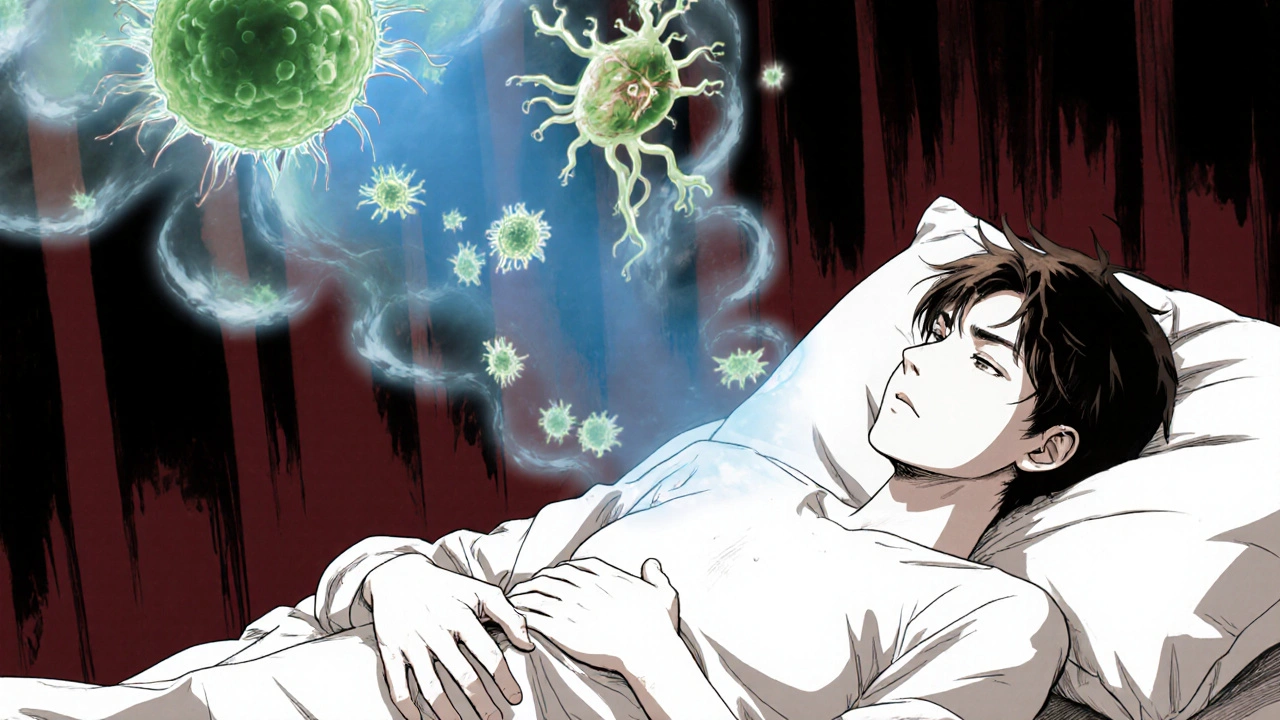
Why Antibiotics Can Cause Yeast Infections
You take antibiotics to kill a bacterial infection-maybe a sinus infection, a urinary tract infection, or strep throat. But weeks later, you’re dealing with itching, burning, and thick white discharge. That’s not a coincidence. Antibiotics don’t just target bad bacteria. They wipe out the good ones too, especially the Lactobacillus bacteria that live in your vagina and keep yeast in check.
These good bacteria normally keep your vaginal pH between 3.8 and 4.5, which is too acidic for yeast like Candida albicans to grow. When antibiotics like amoxicillin, tetracycline, or ciprofloxacin wipe out Lactobacillus, the pH rises, and suddenly, yeast has room to multiply. It’s like removing the guards from a warehouse-soon, the pests take over.
Up to 30% of people with vaginas get a yeast infection after a course of antibiotics, according to research from Evvy. And while it’s common, it’s not normal. Your body shouldn’t need to be knocked out of balance just to treat a bacterial infection.
Who’s Most at Risk
Not everyone who takes antibiotics gets a yeast infection. But some people are far more likely to. If you have uncontrolled diabetes-especially with blood sugar above 180 mg/dL-you’re at higher risk. High glucose levels feed yeast. The same goes for people on SGLT2 inhibitors like Jardiance, which dump extra sugar into urine and create a yeast-friendly environment.
Pregnancy is another big risk factor. Hormonal shifts during pregnancy raise estrogen, which boosts glycogen in vaginal tissue. Yeast loves glycogen. Combined hormonal birth control and hormone therapy can have the same effect.
People with weakened immune systems-like those with HIV and CD4 counts below 200-are also vulnerable. And if you’ve had yeast infections before, you’re more likely to get them again. About 40-45% of people with vaginas experience four or more infections a year.
Even lifestyle habits can tip the scales. Douching removes protective bacteria and raises pH. Wearing tight synthetic underwear traps heat and moisture, creating the perfect breeding ground. Scented tampons, soaps, and sprays disrupt the natural balance. These aren’t just annoyances-they’re direct contributors.
How to Prevent a Yeast Infection While on Antibiotics
Prevention isn’t about waiting until you’re itching. It’s about acting before the imbalance happens. Here’s what actually works:
- Start an antifungal at the same time as your antibiotics. Over-the-counter options like miconazole (Monistat) or clotrimazole (Gyne-Lotrimin) can be used as a 7-day cream or suppository. Studies show this cuts infection risk by 60-70%.
- Take a probiotic with proven strains. Not all probiotics are equal. Look for products containing Lactobacillus rhamnosus GR-1 and Lactobacillus reuteri RC-14-these strains have been shown to reduce yeast infections by 50% when taken at 10 billion CFU daily. Take them at least two hours before or after your antibiotic to keep them alive.
- Avoid sugar and refined carbs. Yeast feeds on glucose. Cutting out white bread, pastries, candy, and sugary drinks helps. One study found that reducing simple sugars lowered vaginal glucose levels by 20-30%, making it harder for yeast to grow.
- Wear cotton underwear. Cotton keeps things dry and cool. Synthetic fabrics trap heat and moisture, raising vaginal temperature by 2-4°C and doubling yeast growth rates.
- Stop douching and skip scented products. Your vagina cleans itself. Douching removes 70-90% of protective bacteria. Scented products can alter pH by 1.5-2.0 units-enough to trigger an infection.
Combining these steps gives you the best shot. In Mayo Clinic surveys, 78% of people who prevented yeast infections used both probiotics and antifungals. Only 45% who used one method alone had the same success.

What to Do If You Already Have a Yeast Infection
If you’re already dealing with symptoms-itching, burning, cottage cheese discharge-it’s time to treat it. But don’t assume it’s yeast. About 64% of self-diagnosed yeast infections turn out to be bacterial vaginosis, trichomoniasis, or another condition. If you’ve had yeast before and recognize the symptoms, you can try OTC treatment. If it’s your first time, see a provider.
- Uncomplicated cases: Use a 7-day OTC antifungal like clotrimazole, miconazole, or butoconazole. These work in 80-90% of cases. Single-dose treatments are less effective.
- Recurrent or severe cases: Your doctor may prescribe fluconazole (Diflucan), 150mg taken once, then repeated after 72 hours for three doses. This works in 95% of cases.
- Pregnant? Don’t take fluconazole. The FDA warns it can increase the risk of birth defects by 4.5 times in the second and third trimesters. Instead, use boric acid suppositories (600mg nightly for 14 days). They’re safe during pregnancy and effective against stubborn, non-albicans strains.
Remember: Antibiotics won’t help a yeast infection. They’ll make it worse. If you’re tempted to take another round of antibiotics because you feel “infected,” you’re only digging yourself deeper.
What Doesn’t Work (And Why)
There’s a lot of advice out there-and a lot of it’s wrong.
- Yogurt on the vulva? Putting yogurt on the outside doesn’t help. The live cultures in yogurt don’t survive the vaginal environment, and the sugar content might even feed yeast.
- Just eating yogurt? Some studies show a 35% drop in infections with daily yogurt containing Lactobacillus acidophilus. But the evidence is weak. You’d need to eat 1-2 servings daily with at least 1 billion CFU-and even then, it’s not as reliable as targeted probiotic supplements.
- Candida diet alone? Cutting sugar and carbs helps, but it’s not enough. One JAMA Dermatology review found strict diets reduced recurrence by only 15-20%. You need to combine diet with probiotics and antifungals.
- Antibiotics as treatment? This is a dangerous myth. Antibiotics target bacteria. Yeast is a fungus. Taking more antibiotics won’t fix it-it’ll make the imbalance worse.
Also, not all probiotics are created equal. Many products on the shelf don’t even contain the strains they claim. A 2021 study found 70% of vaginal probiotics didn’t match their label. Stick to brands with third-party verification and clearly listed strains.

When to See a Doctor
You don’t need to suffer through this alone. See a provider if:
- This is your first yeast infection.
- Symptoms don’t improve after 3-4 days of OTC treatment.
- You have recurrent infections (four or more a year).
- You’re pregnant.
- You have fever, pelvic pain, or foul-smelling discharge-these could signal something more serious.
Doctors can test for yeast with a simple swab. If it’s not yeast, they can treat the real cause-whether it’s bacterial vaginosis, an STI, or a skin condition. Self-diagnosis leads to mismanagement. And mismanagement leads to more problems.
The Bigger Picture: Why This Keeps Happening
Why do so many people get yeast infections after antibiotics? Because we treat antibiotics like harmless magic pills. But they’re powerful tools-and they come with consequences.
The CDC says 30% of outpatient antibiotic prescriptions in the U.S. are unnecessary. That’s 236 million prescriptions a year that could be avoided. Every one of them carries a risk of yeast infection, gut issues, and antibiotic resistance.
And here’s the real problem: vaginal health research is severely underfunded. The NIH spends $42.9 billion a year. Only 2.5% of that goes to research on vaginal health-despite the fact that 1.4 billion people worldwide have vaginas. That’s why there are no official guidelines for preventing yeast infections after antibiotics. That’s why most doctors don’t mention it.
But things are changing. Probiotic supplements are growing fast. Clinical trials for vaginal microbiome transplants are underway. And advocacy groups are pushing for 10% of NIH funding to go to women’s microbiome research by 2030.
Until then, you have power. You can ask your doctor: “Is this antibiotic necessary? Can we use a narrow-spectrum option? Should I take a probiotic or antifungal with it?” Being informed means you’re not just reacting-you’re preventing.
Final Takeaways
- Antibiotics kill good bacteria that keep yeast in check-yeast infections are a common side effect.
- Start an antifungal and a targeted probiotic on day one of your antibiotic course to prevent infection.
- Wear cotton underwear, avoid douching, and cut sugar to reduce your risk.
- Fluconazole works well-but not if you’re pregnant. Use boric acid instead.
- Don’t self-diagnose. 64% of “yeast infections” are something else.
- Not all probiotics work. Choose strains with proven results: L. rhamnosus GR-1 and L. reuteri RC-14.
- Ask your doctor about antibiotic necessity. Less is often better.
Peter Aultman
November 15, 2025 AT 10:04Ashley Durance
November 15, 2025 AT 21:01Sean Hwang
November 17, 2025 AT 09:46Jane Johnson
November 18, 2025 AT 07:35gent wood
November 18, 2025 AT 12:22Scott Saleska
November 20, 2025 AT 01:07Eleanora Keene
November 20, 2025 AT 23:51Dilip Patel
November 21, 2025 AT 06:35Barry Sanders
November 21, 2025 AT 08:23Brian Bell
November 21, 2025 AT 11:20Peter Aultman
November 21, 2025 AT 15:33