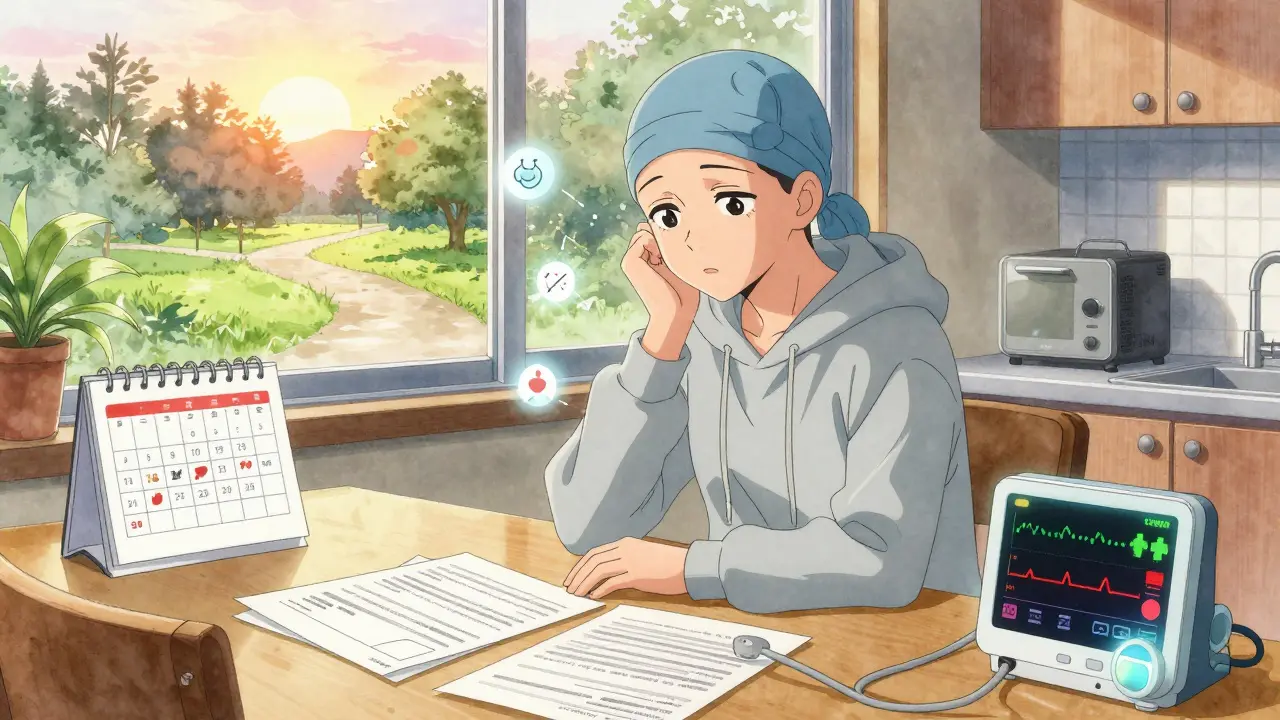
Living through cancer is only half the battle. For millions of people, the real challenge begins after treatment ends: managing the lasting impacts of cancer and its treatments, and staying alert for signs that it might come back. This phase is called cancer survivorship, and it’s not just about surviving - it’s about thriving, even when your body and life have changed forever.
More than 16 million people in the U.S. alone are cancer survivors today. By 2030, that number is expected to hit 22 million. But here’s the problem: most of them aren’t getting the care they need after treatment. Oncologists focus on beating the cancer. Primary care doctors don’t always know what to look for. And survivors? They’re left figuring out on their own how to manage fatigue that won’t go away, joint pain from chemotherapy, memory fog, or the fear that every new ache means the cancer is back.
What Happens After Treatment Ends?
Survivorship isn’t a single moment - it’s a lifelong journey. It starts the day treatment ends and lasts for the rest of your life. That’s why experts now talk about three key parts of survivorship care:
- Surveillance - Watching for cancer coming back or a new cancer forming.
- Management of late effects - Dealing with problems caused by treatment that show up months or years later.
- Health promotion - Making lifestyle changes that reduce risk and improve quality of life.
These aren’t optional. They’re medical necessities. For example, if you had breast cancer and were treated with anthracycline chemo, your heart is at higher risk. You need a cardiac check-up every 6 to 12 months. If you had Hodgkin lymphoma and got radiation to your chest, your risk of breast cancer later in life jumps to 30%. That means annual mammograms and MRIs starting 8 years after treatment. Without this, you’re flying blind.
Long-Term Side Effects You Might Not Expect
Most people think side effects disappear when treatment ends. They don’t. Some get worse. Others show up out of nowhere.
Chemotherapy and radiation can damage organs you never thought were connected to cancer. Here’s what can happen:
- Heart problems - Certain chemo drugs (like doxorubicin) weaken the heart muscle. Risk? Up to 20% over time.
- Bone loss - Hormone therapy, steroids, or radiation can cause osteoporosis. One study showed bone density dropped by 5% in just two years after treatment.
- Cognitive changes - Often called “chemo brain,” this isn’t just forgetfulness. It’s trouble focusing, slower thinking, losing words mid-sentence. The Lurie Cancer Center found that using daily planners, scheduling tasks during your most alert hours, and getting regular exercise helped 70% of survivors improve memory.
- Early menopause - Chemo can shut down ovaries. Even women in their 30s can face sudden menopause, with all its symptoms - hot flashes, sleep loss, mood swings, and bone thinning.
- Lymphedema - Swelling from damaged lymph nodes, especially after breast or pelvic cancer surgery. It can show up years later and needs lifelong management.
- Dental issues - Radiation to the head or neck can cause dry mouth, tooth decay, and jawbone damage. Regular dental checks aren’t optional - they’re life-saving.
And then there’s fatigue. Not just tiredness. The kind that makes you collapse after brushing your teeth. A 2014 study found that survivors who did 30 minutes of moderate exercise - like walking or cycling - five times a week cut their fatigue by nearly half.
The Care Gap: Who’s Really Looking Out for You?
Here’s the uncomfortable truth: after treatment, most survivors fall through the cracks.
78% of older survivors have a primary care doctor who knows their full health history. But only 12% of those doctors feel confident managing cancer-related late effects. Meanwhile, oncologists rarely see patients after treatment ends. They’re busy with new cases. So who’s keeping track?
Enter the survivorship care plan. It’s a written document that includes:
- Your exact treatment history - drugs, doses, radiation fields, surgeries.
- What to watch for - signs of recurrence or late effects.
- Recommended follow-up tests - and when.
- Who to contact - your oncologist, PCP, or specialist.
- Lifestyle advice - diet, exercise, smoking cessation, alcohol limits.
Studies show survivors with a care plan are 85% more likely to get the right follow-up. They make 32% fewer unnecessary tests. Their quality of life improves by 15-22 points on standardized scales. And they’re 27% less likely to have cancer-related complications.
Yet, only about half of survivors actually receive one. Why? Because the system isn’t built for this. Insurance doesn’t pay well for long-term follow-up. Doctors aren’t trained in it. And survivors aren’t told to ask for it.
Who Should Be in Charge of Your Care?
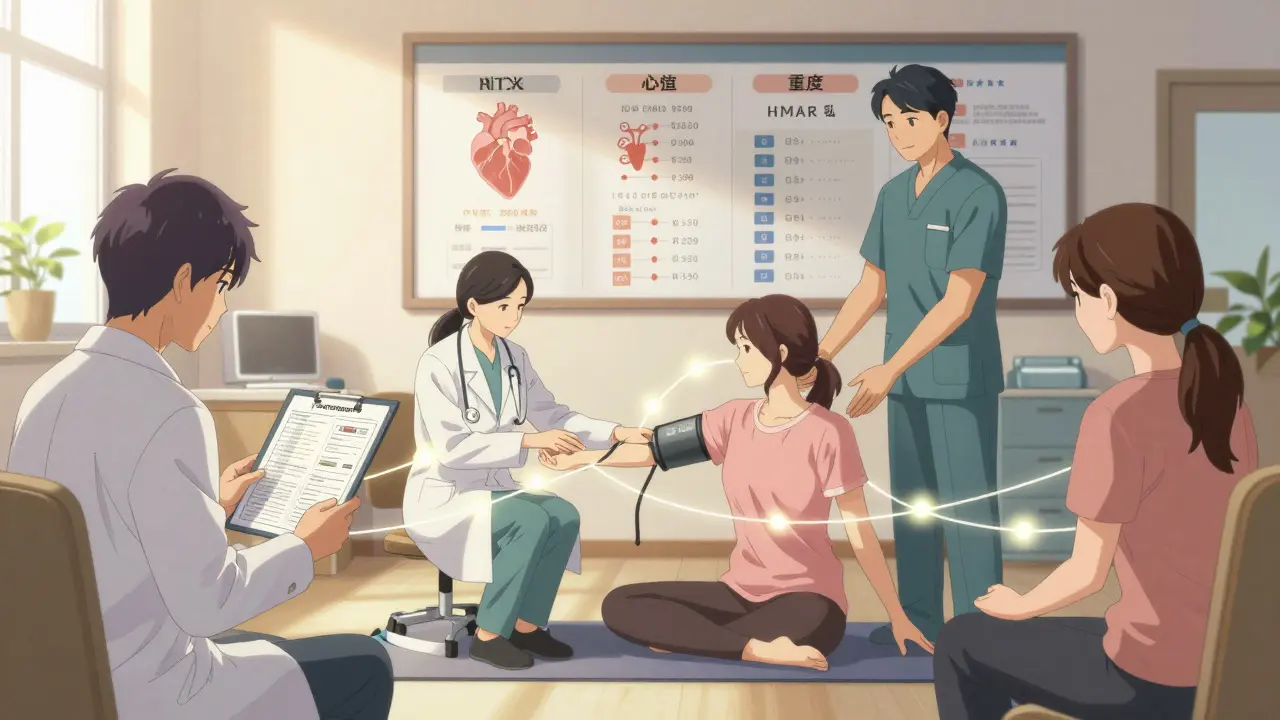
The old model - oncologist handles everything - doesn’t work. You need a team.
Think of it like this:
- Your oncologist - Handles cancer surveillance. Every 3-6 months for high-risk survivors. Once a year for moderate risk. They know your treatment history and what to monitor.
- Your primary care provider - Manages general health: blood pressure, cholesterol, diabetes, vaccines, routine screenings. They’re the ones who’ll catch heart disease or osteoporosis before it’s too late.
- Your specialists - Endocrinologist for thyroid issues, cardiologist for heart problems, physical therapist for mobility, psychologist for anxiety or depression.
- Yourself - You’re the captain. You track symptoms. You keep records. You speak up.
A Cleveland Clinic study found that when survivors had a clear plan dividing responsibilities between oncology and primary care, duplicate tests dropped by 40%. That’s less stress, less cost, and fewer delays.
What Survivors Are Really Struggling With
Beyond physical health, survivorship is emotional, social, and financial.
According to Livestrong surveys:
- 73% face financial stress - from lost wages, treatment costs, or insurance gaps.
- 68% struggle to work - due to fatigue, pain, or cognitive issues.
- 57% say relationships changed - with partners, friends, or family.
- 49% lost self-esteem - feeling like their body betrayed them.
- 32% were denied health or life insurance.
And communication? 65% say their oncologist and primary doctor never talked to each other. Imagine going to your doctor with a list of symptoms - only to find out they’ve never seen your chemo records.
That’s why some survivors turn to integrative programs. The Osher Center for Integrative Medicine at Northwestern University offers mindfulness, yoga, nutrition counseling, and acupuncture alongside medical care. Eighty-two percent of participants reported better quality of life. Not because it cured cancer - but because it helped them feel like themselves again.

What You Can Do Right Now
You don’t have to wait for the system to fix itself. Here’s how to take control:
- Get your treatment summary - Ask your oncology team for a written record of every drug, dose, radiation field, and surgery. Keep it in a folder - digital or paper. 87% of survivors who did this had better-coordinated care.
- Ask for a survivorship care plan - If they don’t offer one, request it. Say: “I need a written plan that tells me what to watch for and who to see.”
- Find your care team - Identify who handles what. Make sure your PCP has your records. Schedule a “transition visit” with them.
- Move your body - Aim for 150 minutes of walking or light exercise per week. It reduces fatigue, improves bone density, and lowers recurrence risk.
- Manage stress - Try meditation, journaling, or talking to a therapist. Anxiety isn’t normal - it’s treatable.
- Connect with others - Join a survivor group. You’re not alone. 73% of survivors say peer support helped them most.
And if you’re struggling financially? Ask for help. The Lurie Cancer Center’s financial counseling service helped 92% of survivors resolve billing issues within 30 days. Most hospitals have similar programs - you just have to ask.
The Future: Personalized Survivorship Care
Change is coming. The National Cancer Institute’s 2023 plan calls for “precision survivorship” - using your genetics, treatment history, and lifestyle to predict your risks. Instead of one-size-fits-all checkups, you’ll get a plan built just for you.
Telehealth is also growing. Mayo Clinic’s virtual survivorship clinic had 75% satisfaction among users. You can now have follow-up visits from home. No travel. No waiting rooms. Just check-ins, symptom tracking, and advice.
But none of this matters if you don’t know your own story. If you don’t ask questions. If you don’t demand a plan.
Survivorship isn’t about being cured. It’s about living - fully, safely, and with purpose - after cancer. And you deserve that.
What is a survivorship care plan, and why do I need one?
A survivorship care plan is a personalized document that summarizes your cancer treatment, lists possible long-term side effects, recommends follow-up tests, and tells you who to see for ongoing care. You need it because cancer treatment doesn’t end when therapy does. Without a plan, you risk missing early signs of recurrence, late effects like heart disease or osteoporosis, or even a second cancer. Studies show survivors with a care plan are 85% more likely to get timely follow-up and have 27% fewer cancer-related complications.
Can cancer come back years after treatment?
Yes. While most recurrences happen within the first 5 years, some cancers can return 10, 15, or even 20 years later. For example, breast cancer survivors treated with hormone therapy may face recurrence risk for up to 20 years. Hodgkin lymphoma survivors who had chest radiation have a 30% lifetime risk of developing breast cancer. That’s why lifelong monitoring - not just 5-year checks - is essential.
How do I know if my fatigue is normal or a sign of something serious?
Cancer-related fatigue doesn’t go away with rest. If you’re exhausted after simple tasks, sleeping more than usual, or feeling weak even after a full night’s sleep, it’s not just “being tired.” It could be anemia, thyroid issues, heart problems, depression, or even cancer recurrence. Track your energy levels for a week. If it’s consistently low, talk to your doctor. Blood tests and a physical exam can rule out causes. Exercise, even light walking, often helps more than rest.
Should I see my oncologist or my regular doctor for follow-up?
It depends on your risk level. High-risk survivors (those with aggressive cancers or high-dose treatments) need specialist care every 3-6 months. Moderate-risk survivors usually see an oncologist once a year. Low-risk survivors can be managed by their primary care doctor - as long as they have your treatment history and know what to watch for. The key is coordination. Make sure your PCP has your cancer records. Ask your oncologist to send a summary to your primary care team.
Is it safe to exercise after cancer treatment?
Yes - and it’s one of the most powerful tools you have. Studies show regular exercise reduces cancer-related fatigue by 40-50%, improves bone density by 3-5%, and lowers recurrence risk. Start slow: 10 minutes of walking daily. Build up to 150 minutes per week. Avoid high-impact activities if you have bone loss or nerve damage. Always check with your doctor first, especially if you’ve had surgery or radiation. Physical therapists who specialize in cancer recovery can design a safe plan for you.
Roland Silber
March 6, 2026 AT 02:39I’ve been a survivor for 8 years now. The biggest shock? No one told me I’d need to fight just as hard after treatment as I did during it. Chemo brain didn’t just make me forget where I put my keys - it made me forget who I was. I started using a digital planner, set alarms for meds, and forced myself to walk 20 minutes every day. It didn’t fix everything, but it gave me back some control. If you’re reading this and feeling lost - you’re not alone. Just keep showing up.
Patrick Jackson
March 7, 2026 AT 06:32OMG YES THIS. 😭 I thought I was just being dramatic when I cried after brushing my teeth because I was so tired. Turns out? It’s a documented side effect. I started doing yoga twice a week and suddenly I could breathe again. Not cured. Not fixed. But alive again. The system fails us, but we don’t have to fail ourselves. 💪
Adebayo Muhammad
March 8, 2026 AT 21:42Pranay Roy
March 10, 2026 AT 08:51Joe Prism
March 10, 2026 AT 10:30Bridget Verwey
March 12, 2026 AT 09:30Andrew Poulin
March 13, 2026 AT 04:06Weston Potgieter
March 14, 2026 AT 08:10Joey Pearson
March 16, 2026 AT 03:40William Minks
March 16, 2026 AT 15:21Jeff Mirisola
March 17, 2026 AT 08:12Susan Purney Mark
March 18, 2026 AT 20:01I’m a nurse who survived breast cancer. I worked in oncology. I knew all the stats. I still didn’t get a care plan. No one gave me one. I had to beg for it. And when I finally got it? It was 12 pages of jargon. So I rewrote it in plain language. I gave copies to every new survivor I met. If you’re reading this - ask for your plan. If they give you a PDF you can’t read - ask for a human. Someone who’ll sit with you. And explain it. You deserve that.
Ian Kiplagat
March 19, 2026 AT 05:05