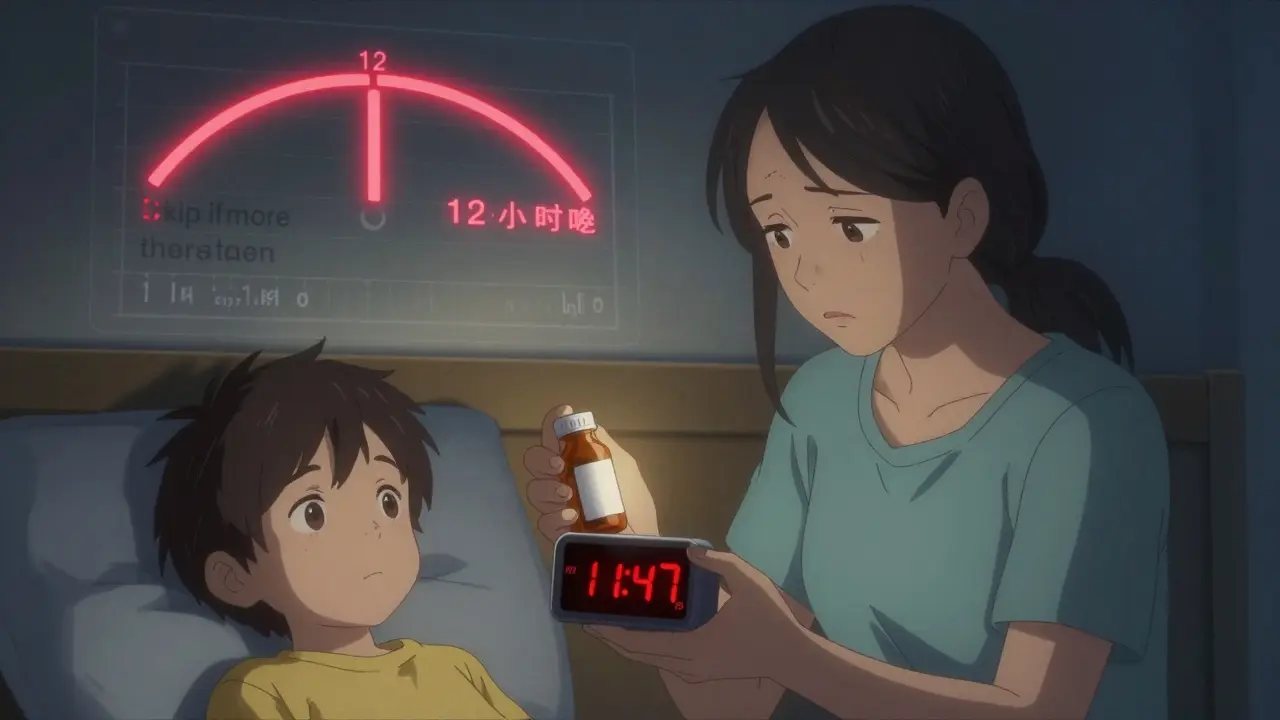
When a child misses a dose of medication, panic is common. Parents often wonder: Should I give it now? Double the next dose? Wait until tomorrow? The truth is, there’s no one-size-fits-all answer. But there is a clear, science-backed way to handle it-without risking harm. Many caregivers accidentally make dangerous choices because instructions are vague or conflicting. Some pills say "take as soon as remembered," while others give no guidance at all. And in high-risk cases-like chemotherapy or antibiotics-getting it wrong can mean treatment failure or serious side effects.
When to Give the Missed Dose
The key is timing, not urgency. Most pediatric medications follow time-based rules tied to how often they’re given. These aren’t arbitrary-they’re based on how drugs are processed in a child’s body. Here’s what major children’s hospitals recommend:- Once-daily meds: Give if missed by less than 12 hours. Skip if more than 12 hours have passed.
- Twice-daily meds (every 12 hours): Give if missed by less than 6 hours. Skip if more than 6 hours late.
- Three-times-daily meds (every 8 hours): Give if missed by less than 3 hours. Skip if more than 3 hours late.
- Four-times-daily meds (every 6 hours): Give if missed by less than 2 hours. Skip if more than 2 hours late.
- Every 2-4 hours (e.g., pain or seizure meds): Skip if more than 2 hours late. Never give extra doses to "catch up."
These thresholds are designed to keep drug levels in the body safe and effective. Giving a dose too soon after the last one can push levels into toxic range. Waiting too long risks the medication losing its effect. For example, a child on antibiotics who skips a dose by 10 hours might not get enough to kill the infection-leading to resistance or relapse.
Never Double the Dose
This is the most common-and dangerous-mistake. A parent might think, "I missed the 8 a.m. dose, so I’ll give two at 2 p.m." But children’s bodies don’t handle drug buildup like adults. Their livers and kidneys are still developing. Doubling a dose increases the risk of severe reactions by 278%, according to research from the National Center for Family Professional Partnerships. For drugs like morphine or lorazepam, even a small overdose can cause breathing problems, seizures, or coma.One parent on Reddit shared: "I doubled my son’s asthma inhaler dose because he was wheezing again. He turned blue. We went to the ER. They said it was a drug overdose." That story isn’t rare. Emergency rooms see dozens of these cases every month. The rule is simple: Never double. Never catch up. Just go back to the regular schedule.
Special Cases: High-Risk Medications
Some medications require immediate action-not because you need to give the missed dose, but because you need to call the doctor.- Oncology drugs: Missing even one dose of chemotherapy can reduce treatment effectiveness. Contact the oncology team right away. They may reschedule or adjust the next dose.
- Seizure medications: Skipping doses can trigger breakthrough seizures. If a dose is missed by more than the recommended window, call the neurologist.
- Immunosuppressants: Used after transplants or for autoimmune conditions. Missing a dose can lead to organ rejection or flare-ups. Always check with the care team.
- Insulin or diabetes meds: These require individualized plans. A missed dose might mean adjusting food intake or activity-not just giving more later.
These aren’t "wait and see" situations. They need provider input. Keep your child’s care team contact info saved in your phone-not just in a notebook.
Why Instructions Are So Confusing
You’re not imagining it: medication labels are often unclear. A 2021 review found that 25% of high-risk pediatric medications had no missed dose instructions in their patient leaflets. Even among those that did, 62% were for oral pills, while parenteral (injected) or modified-release drugs rarely had guidance.Some labels say "take as soon as remembered." That sounds helpful-until you realize it conflicts with the 12-hour rule for once-daily meds. Other instructions say "if it’s almost time for the next dose, skip it." But what does "almost" mean? Two hours? Four? Ten? This vagueness is why 41% of parents couldn’t correctly answer when to skip a twice-daily dose, and 68% got it wrong for three-times-daily regimens.
The problem isn’t just poor labeling. It’s inconsistent guidance across hospitals. Children’s Wisconsin gives exact hour thresholds. Cincinnati Children’s says "if it’s almost time," without numbers. That confusion leads to errors-especially when a child is on multiple medications. One study found that kids managing four or more drugs have a 300% higher chance of a dosing mistake.
How to Prevent Missed Doses
Prevention beats correction. Here are proven strategies:- Use a pill organizer: Color-coded by time of day. Label each compartment with the medication name and dose.
- Set phone alarms: Use multiple alarms 30 minutes before each dose. Add a second alarm 10 minutes later as a backup.
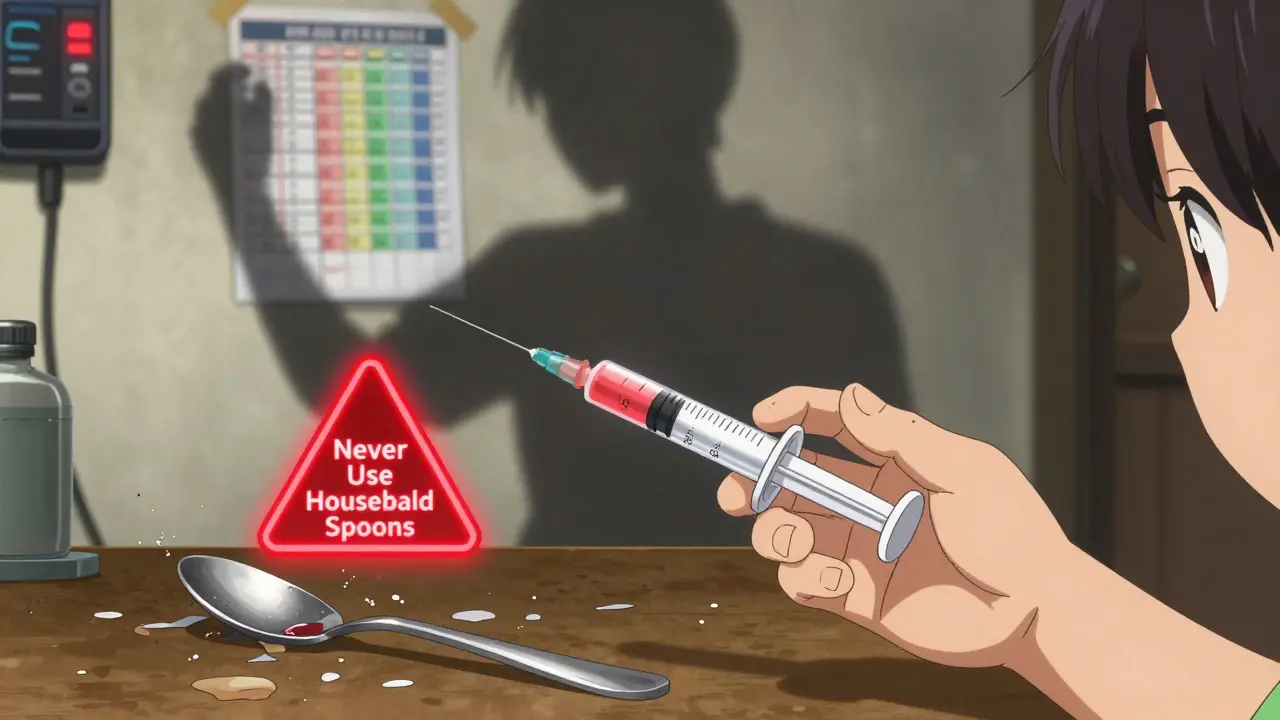
- Use oral syringes, not spoons: Household teaspoons vary by up to 50% in volume. FDA data shows this causes 22% of dosing errors. A syringe from the pharmacy is precise.
- Teach-back method: After the doctor explains the schedule, ask your child’s caregiver to repeat it back. If they can’t, ask again. This cuts errors by 37%, according to Cincinnati Children’s Hospital.
- Use a dosing chart: For complex regimens, draw a simple grid with times, meds, and doses. Color-code them. Boston Children’s Hospital reduced missed doses by 44% using this method.
Some families use smart dispensers that lock until the scheduled time and send alerts. These reduce missed doses by 68% in clinical trials. While expensive, they’re often covered by insurance for children with chronic conditions.
What to Do After a Missed Dose
If you’ve already given an extra dose or doubled up:- Stop immediately. Don’t give any more until the next scheduled time.
- Call your pediatrician or pharmacist. Tell them: the medication name, the dose given, the time given, and the time of the original dose.
- Watch for symptoms: Drowsiness, vomiting, trouble breathing, unusual behavior, or seizures. If any appear, go to the ER.
- Document it. Write down what happened. You’ll need this if you return to the clinic or if another provider sees your child.
Most missed doses don’t cause harm-but you need to know when to act. Don’t wait for symptoms. Call early.
New Tools Making a Difference
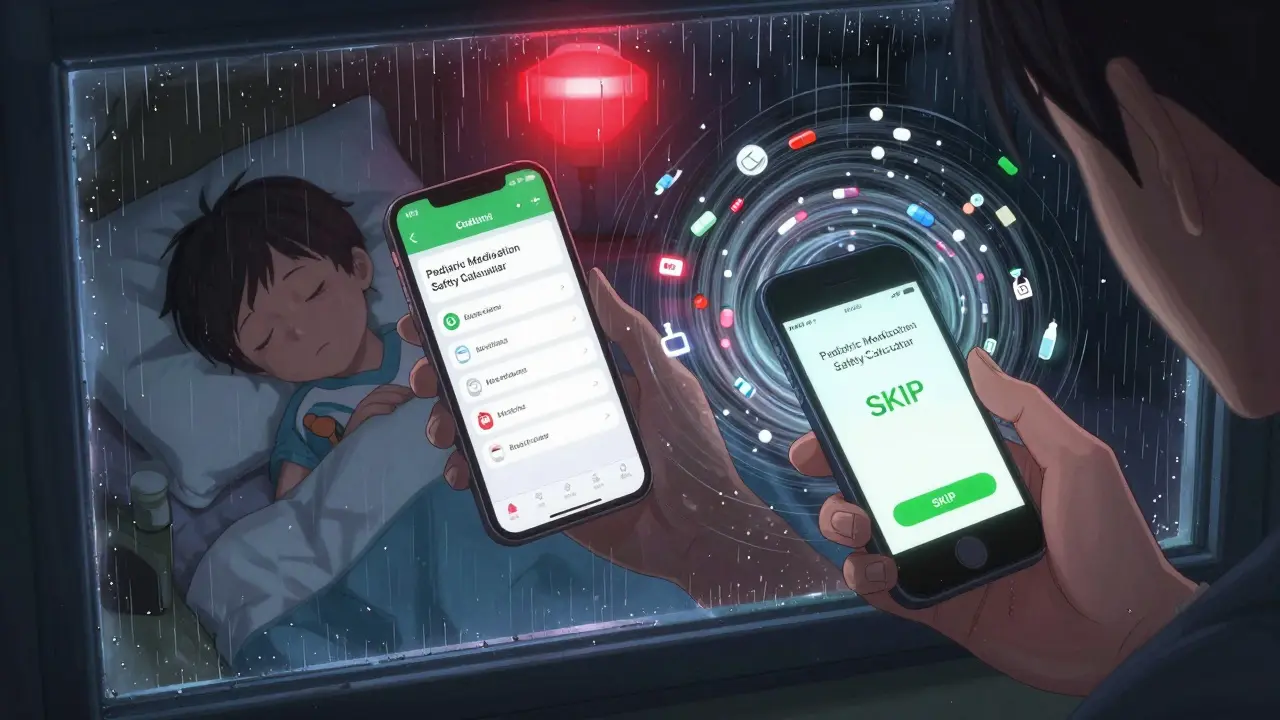
In 2023, the American Academy of Pediatrics launched a free app: the Pediatric Medication Safety Calculator. You enter the drug name, dosing frequency, and how long ago the dose was missed. The app gives you a clear: "Give now," "Skip," or "Call provider." Beta testing showed 83% improvement in caregiver decisions.Also emerging: AI-powered systems like the NIH’s PediMedAI project. These alert caregivers 30 minutes before a dose is due, using past behavior to predict missed doses. Early trials show a 68% drop in missed doses for kids with asthma, epilepsy, or diabetes.
These tools aren’t magic-but they help. And they’re designed to work where human memory fails.
Final Rule: When in Doubt, Skip It
The safest choice isn’t always the most tempting. If you’re unsure whether to give the dose:- Check the hospital’s published guidelines (most have them online).
- Use the Pediatric Medication Safety Calculator app.
- Call the pharmacy or clinic.
And remember: It’s better to miss a dose than to overdose. Children’s bodies are fragile. Their systems aren’t built to handle surprises. Every medication has a narrow window of safety. Sticking to the schedule-even when it’s imperfect-is the best way to keep them protected.
What should I do if I accidentally gave two doses of my child’s medication?
Stop giving any more doses immediately. Call your pediatrician or poison control center right away. Provide the name of the medication, the dose given, the time it was given, and the time of the previous dose. Watch for signs like drowsiness, vomiting, trouble breathing, or seizures. If any appear, go to the emergency room. Do not wait to see if symptoms develop.
Can I give a missed dose if it’s close to the next one?
No. If it’s within the time window before the next scheduled dose, skip the missed one. For example, if your child’s dose is every 8 hours and you remember 2 hours before the next one, skip it. Giving two doses too close together can cause dangerous drug buildup. The goal is to return to the regular schedule-not to make up for lost time.
Why do some medications have no missed dose instructions?
Many drug manufacturers don’t include clear missed dose guidance on labels, especially for high-risk medications. A 2021 review found that 25% of "red-category" high-risk pediatric drugs had no instructions at all. This is a known gap in safety standards. Until regulations require it, caregivers should rely on hospital guidelines or ask their provider directly-not assume the label says everything.
Is it safe to use a kitchen spoon to measure liquid medicine?
No. Household teaspoons and tablespoons vary in size by up to 50%, leading to serious under- or overdosing. The FDA estimates this causes 22% of pediatric dosing errors. Always use the oral syringe or measuring cup that came with the medicine. If you lost it, ask your pharmacy for a free replacement.
My child is on four different medications. How can I keep track?
Use a color-coded dosing chart. Assign each medication a color and create a simple grid with times (morning, afternoon, evening, night). Tape it to the fridge or bathroom mirror. Pair this with phone alarms set 30 minutes before each dose. For complex cases, ask your care team for a printed schedule or a smart dispenser. Studies show this reduces missed doses by 44% compared to relying on memory alone.
Milad Jawabra
March 3, 2026 AT 23:37Man, I’ve been there. Missed my kid’s antibiotic dose by 8 hours because the daycare forgot to call. I almost doubled it-thank god I checked this post first. The 12-hour rule for once-daily meds saved us. I printed this out and taped it to the fridge next to the pill organizer. No more guessing. Also, the app they mentioned? Downloaded it. Game changer. 🙌
marjorie arsenault
March 5, 2026 AT 12:27Just wanted to say thank you for this. As a single mom juggling three jobs, I’ve been terrified of messing up my daughter’s seizure meds. This breakdown is the clearest I’ve ever seen. I started using the color-coded chart and set three alarms-morning, 15 mins before, and 5 mins before. No more missed doses. You made my life easier. 💙
Deborah Dennis
March 6, 2026 AT 06:57Shivam Pawa
March 7, 2026 AT 02:32Donna Zurick
March 8, 2026 AT 19:40Tobias Mösl
March 9, 2026 AT 13:32Let’s be real. The whole system is rigged. Drug companies don’t put clear instructions on labels because they WANT parents to mess up. Then they sell more meds. The 'pediatric safety app'? Probably funded by Big Pharma. And why are hospitals giving conflicting advice? Because they’re all owned by the same corporate conglomerates. I’ve seen it. My cousin’s kid got hospitalized because the hospital’s guidelines contradicted the pharmacy’s. Coincidence? Nah. It’s a profit scheme. Wake up.
Justin Rodriguez
March 10, 2026 AT 14:00I’m a pediatric pharmacist. I’ve reviewed 1200+ medication leaflets in the last 5 years. The 25% without missed-dose instructions? That’s accurate. The 62% only covering oral pills? Also true. I’ve personally pushed my hospital to adopt the exact hour thresholds you listed-because they’re evidence-based. The 'when in doubt, skip' rule? That’s my mantra. I teach it to every new nurse. And yes, the app works. We use it in triage. No drama. Just data.
Raman Kapri
March 11, 2026 AT 03:01Megan Nayak
March 11, 2026 AT 03:36