
Imagine waking up with a new, deep, throbbing lump under your arm or in your groin - not a pimple, not an ingrown hair, but something that feels like a boil that won’t heal. It burns. It leaks. It makes sitting, walking, or even wearing a shirt unbearable. This isn’t just bad acne. This is hidradenitis suppurativa, a chronic skin disease that affects 1 in 25 people, yet most have never heard of it. For those living with it, the pain isn’t just physical - it’s isolating, exhausting, and often dismissed by doctors who mistake it for poor hygiene.
What Exactly Is Hidradenitis Suppurativa?
Hidradenitis suppurativa (HS) isn’t caused by dirt or stress. It starts deep in the hair follicles, where skin cells overgrow and clog the pore. That blockage triggers inflammation, turning the area into a painful nodule - sometimes a single one, sometimes dozens, linked together by tunnels under the skin called sinus tracts. These nodules don’t pop like pimples. They rupture, drain pus, scar, and come back - often worse each time.
It shows up where sweat glands and hair follicles are dense: armpits, groin, under the breasts, and around the buttocks. Women get it three times more often than men, and it usually hits between ages 20 and 29. It’s not contagious. It’s not your fault. But if left untreated, it can lead to severe scarring, restricted movement, and even increased risk of skin cancer in chronic cases.
Why Traditional Treatments Often Fail
For years, the go-to treatments were antibiotics like tetracycline or clindamycin, birth control pills for hormonal control, or surgery to cut out the affected skin. Antibiotics help temporarily - they reduce infection, but they don’t stop the inflammation driving the disease. Surgery can remove damaged tissue, but if the underlying inflammation isn’t controlled, new lesions form nearby. Many patients go through multiple surgeries, only to see the same pain return.
And then there’s the emotional toll. People with HS avoid swimming, gyms, dating, even family gatherings because of odor, drainage, and visible scarring. Studies show their quality of life drops as much as people with severe psoriasis or depression. The condition doesn’t just live on the skin - it lives in the mind.
The Biologic Revolution: Targeting Inflammation at Its Source
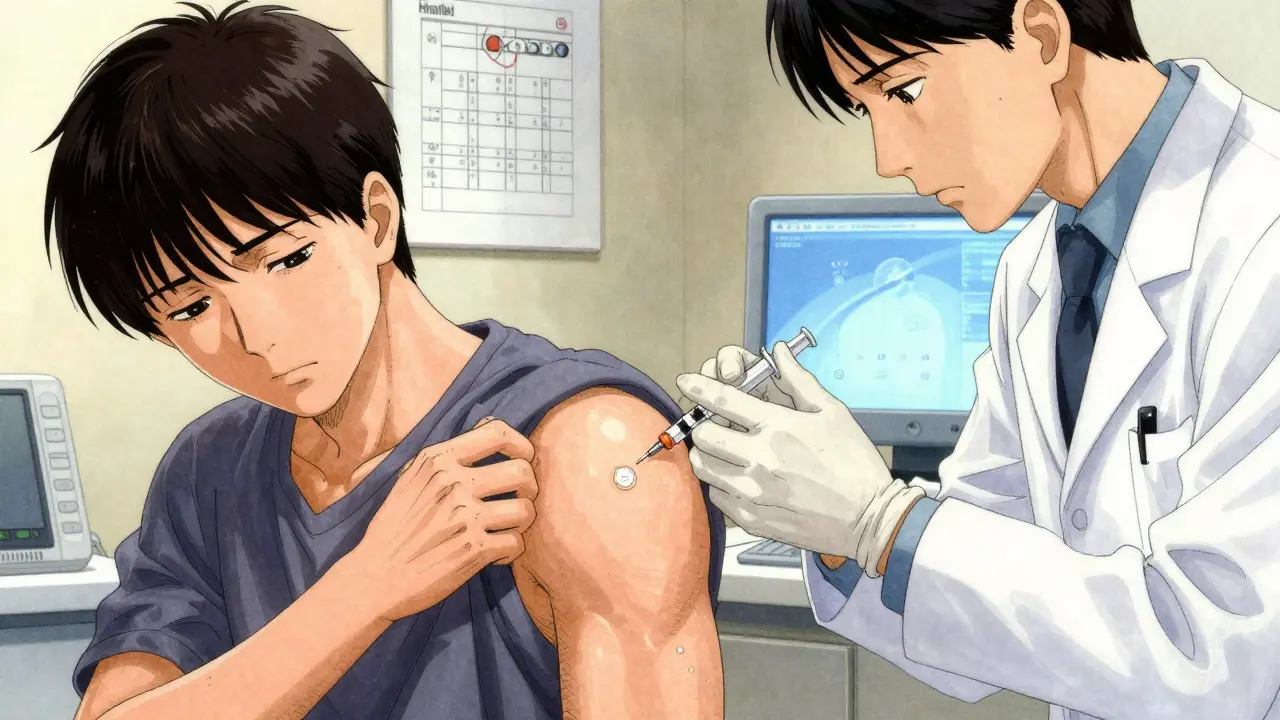
Everything changed in 2015 when the FDA approved adalimumab (Humira) as the first biologic treatment for HS. Biologics are different from traditional drugs. They’re made from living cells and designed to block specific parts of the immune system that cause inflammation. Instead of broadly suppressing immunity like steroids, they hit the exact culprits - like TNF-alpha, IL-17A, or IL-17F - that turn harmless follicles into raging abscesses.
Since then, two more biologics have joined the fight: secukinumab (Cosentyx) and bimekizumab (BIMZELX). Each works differently:
- Adalimumab blocks TNF-alpha, a key inflammatory signal. It’s given as a weekly or every-other-week injection after an initial loading dose. In clinical trials, about 42% of patients saw at least half their lesions clear by week 12.
- Secukinumab targets IL-17A, another major driver of HS inflammation. It’s injected monthly after a 5-week starter schedule. In one trial, 45% of patients hit the 50% lesion reduction mark by week 16.
- Bimekizumab is the newest and most powerful - it blocks both IL-17A and IL-17F at the same time. In the BE HEARD I trial, 67% of patients saw their lesions improve by half within 16 weeks - the highest response rate seen so far.
These aren’t just numbers. Real people report life-changing results. One patient on Reddit described going from 15 painful abscesses a week to just one in a month after starting secukinumab. Another said she could finally wear a tank top again after 12 years.
How Do These Biologics Compare?
Choosing between them isn’t about which is “best” - it’s about what fits your body, your stage of disease, and your life.
| Biologic | Target | Dosing Schedule | HiSCR50 at Week 12-16 | Monthly Cost (US) |
|---|---|---|---|---|
| Adalimumab (Humira) | TNF-alpha | 40 mg every 1-2 weeks | 41.8% | $5,800 |
| Secukinumab (Cosentyx) | IL-17A | 300 mg monthly after loading | 44.5% | $6,200 |
| Bimekizumab (BIMZELX) | IL-17A and IL-17F | 320 mg every 4 weeks after loading | 66.9% | $6,900 |
Adalimumab has the longest track record and works well for people with advanced scarring. Secukinumab tends to work faster for new, inflamed nodules. Bimekizumab shows the strongest results overall - but it’s also the most expensive and newest, so insurance approval can be harder.
Side effects are similar across all three: injection site redness, upper respiratory infections, and a small risk of reactivating tuberculosis or hepatitis. That’s why doctors test for these before starting treatment. No biologic is risk-free - but for many, the trade-off is worth it.
Who Gets Biologics - and When?
Not everyone with HS qualifies. Doctors use the Hurley staging system to decide:
- Stage I: Single or few abscesses, no scarring or tunnels - usually treated with antibiotics or lifestyle changes.
- Stage II: Recurrent abscesses with tunnels and scarring - biologics are now recommended as first-line treatment.
- Stage III: Widespread, interconnected tunnels with severe scarring - biologics help reduce inflammation, but surgery may still be needed.
Experts agree: start biologics early. Once deep scarring forms, biologics can’t undo it - they can only stop it from getting worse. One dermatologist in Bristol told me, “If you’re still getting new nodules after six months of antibiotics, you’re not just managing symptoms. You’re fighting a war you can’t win without the right weapons.”
What Patients Are Saying
Online communities like MyHSteam and Reddit’s r/hidradenitis are full of raw, honest stories. Of the 1,247 users reporting on adalimumab, 68% saw major improvement in nodules within 12 weeks. But 42% had painful injection reactions. With secukinumab, 56% reported “dramatic” relief in abscesses, and pain scores dropped from an average of 7.2 to 2.4 on a 10-point scale.
But cost is a huge barrier. The average out-of-pocket cost for these drugs is $1,200 a month in the U.S. - even with insurance. In the UK, NHS access is inconsistent. Some patients wait months for approval. Others are denied because their HS isn’t “severe enough” - even if they can’t work or sleep because of pain.
One patient wrote: “I had to choose between paying for my biologic and paying my rent. I chose rent. My skin got worse. I lost my job.”

Beyond the Injection: Lifestyle Matters Too
Biologics aren’t magic pills. They work best when paired with changes you can control:
- Quit smoking. Smokers are 2-4 times more likely to get HS, and biologics work less effectively in smokers.
- Manage weight. Obesity worsens inflammation. Losing even 10% of body weight can reduce flare-ups by up to 50%.
- Wear loose clothing. Friction from tight clothes or bras can trigger new lesions.
- Use gentle skin care. Avoid deodorants with aluminum, harsh soaps, or scrubbing. Plain water and fragrance-free moisturizers help.
One woman in Bristol started biologics and joined a weight-loss group. Within a year, her nodules dropped from 8-10 per week to 1-2. “It wasn’t just the shot,” she said. “It was the combo.”
What’s Next? The Future of HS Treatment
Three new biologics are in late-stage trials:
- Guselkumab (targets IL-23) - showed 58% improvement in early trials.
- Spesolimab (targets IL-36) - promising for patients who didn’t respond to other biologics.
- TAK-279 (TYK2 inhibitor) - an oral pill, not an injection, which could change everything.
Researchers are also developing blood tests to predict who will respond to which biologic. A 2024 study found a 12-gene signature that predicted adalimumab response with 85% accuracy. That means one day, you might get a simple blood test before starting treatment - no trial and error.
Combination therapy is another frontier. Early data shows that when biologics are used with minor surgical drainage of persistent tracts, response rates jump to nearly 90%.
Final Thoughts: Hope Is Real
Hidradenitis suppurativa used to be a sentence. Now, it’s a condition you can manage. Biologics haven’t cured it - but they’ve turned it from a life-destroying disease into something you can live with. You don’t have to suffer in silence. You don’t have to hide. You don’t have to wait until you’re “bad enough” to get help.
If you’ve been told it’s just “bad acne” or “you need to lose weight,” ask for a referral to a dermatologist who specializes in HS. Bring this information. Demand a proper diagnosis. Biologics aren’t perfect - but they’re the most effective tool we have right now.
And if you’re one of the lucky ones who’s already on a biologic? Keep going. The first few weeks are tough. The injections sting. The cost is heavy. But the relief? It’s worth it.
Can biologic therapy cure hidradenitis suppurativa?
No, biologics don’t cure hidradenitis suppurativa. They control the inflammation that causes painful nodules and abscesses. Most patients need to stay on treatment long-term to keep symptoms under control. Stopping the medication often leads to flare-ups.
How long does it take for biologics to work for HS?
Most people start noticing less pain and fewer new nodules within 4 to 8 weeks. Clearing of existing lesions takes longer - usually 12 to 16 weeks. Some patients see full improvement by 6 months. Doctors typically assess response at week 12 to decide whether to continue or switch treatments.
Are biologics safe for long-term use?
Biologics are generally safe for long-term use, but they do carry risks. The biggest concern is increased susceptibility to serious infections like tuberculosis or hepatitis B. Regular blood tests and screenings are required before and during treatment. Some patients develop mild side effects like injection site reactions or upper respiratory infections. Serious side effects are rare - about 1 in 10 people discontinue treatment due to adverse events.
Can I use biologics if I have other health conditions?
It depends. Biologics are not recommended if you have active infections, untreated tuberculosis, moderate-to-severe heart failure, or certain neurological conditions like multiple sclerosis. If you have diabetes, autoimmune diseases, or a history of cancer, your doctor will weigh risks carefully. Many patients with controlled conditions still use biologics safely with close monitoring.
What if my insurance denies coverage for a biologic?
Insurance denials are common, especially for newer biologics like bimekizumab. Your dermatologist can submit a prior authorization letter with clinical evidence of your disease severity. If denied, appeal the decision - many approvals come after appeal. Some drug manufacturers offer patient assistance programs that reduce or eliminate out-of-pocket costs. Nonprofits like the HS Foundation also provide guidance and financial aid resources.
For those living with HS, the path forward isn’t easy - but it’s clearer than ever. Biologics are changing lives. And if you’re reading this, you’re not alone.
Nupur Vimal
December 17, 2025 AT 01:28So basically its just autoimmune but in the armpits and groin and they call it a skin thing lol people have been telling me to scrub harder for years
Cassie Henriques
December 18, 2025 AT 04:24IL-17A/F dual inhibition is the real MVP here. Bimekizumab’s HiSCR50 at 66.9%? That’s not just statistically significant-it’s clinically transformative. TNF-alpha blockade was the gateway, but now we’re seeing pathway-specific precision medicine in action. The 12-gene signature predictive model? Game-changer for personalized dosing. Still, the cost-to-benefit ratio in the US is a moral crisis.
Michelle M
December 20, 2025 AT 00:59It’s funny how we treat pain like it’s optional if it doesn’t show up on an X-ray. HS doesn’t make noise, but it screams in silence. The fact that someone has to choose between rent and their biologic? That’s not a medical failure-it’s a societal one. We heal bodies, but we ignore the people inside them.
Mike Nordby
December 21, 2025 AT 08:30The data presented is methodologically sound, with clear adherence to Hurley staging criteria and standardized outcome measures such as HiSCR50. However, the absence of longitudinal data beyond 16 weeks limits conclusions regarding durability of response. Additionally, while injection-site reactions are noted, systemic immune modulation risks require more granular reporting in real-world cohorts.
John Brown
December 23, 2025 AT 05:53Man, I’ve seen this firsthand. My cousin went from hiding in hoodies to hiking in tank tops after starting bimekizumab. It’s not a cure, but it’s the first time in 15 years she didn’t feel like a monster in her own skin. Also, quitting smoking was the secret sauce-no joke.
Lisa Davies
December 25, 2025 AT 03:07For anyone reading this and feeling alone-you’re not. I’ve been on secukinumab for 11 months. The first injection felt like a gamble. Now? I wear shorts. I go to the beach. I hug my nieces without flinching. It’s not perfect, but it’s freedom. And freedom is worth every penny, every poke, every fight with insurance.
Melissa Taylor
December 25, 2025 AT 03:48It breaks my heart that people are still being told it’s just bad hygiene. HS isn’t about cleanliness-it’s biology. And if you’re struggling to afford treatment, please reach out to the HS Foundation. They helped me get adalimumab when I was unemployed. You deserve care. Always.
Sai Nguyen
December 27, 2025 AT 02:44India has better healthcare than this. Why are Americans paying $6000 a month for shots when we have Ayurveda and turmeric paste? This is capitalism exploiting pain.
Jake Sinatra
December 28, 2025 AT 00:06As someone who’s managed HS for 12 years, I want to emphasize: early intervention is non-negotiable. I waited until Stage III before seeking biologics. The scarring is permanent. Don’t make my mistake. If antibiotics haven’t worked in six months, demand a referral. Your future self will thank you.
RONALD Randolph
December 29, 2025 AT 11:58Wait-so we’re giving people $6,900/month drugs because they’re too lazy to lose weight? This is why America’s broken. Stop enabling. Stop coddling. Get off your butt. Sweat glands don’t cause this-laziness does.
Jocelyn Lachapelle
December 29, 2025 AT 14:35My mom had HS and died before biologics existed. I’m on secukinumab now. I don’t know if I’ll be here in 10 years, but I’m finally living in the now. No more hiding. No more shame. Just me, my injection pen, and the quiet joy of wearing a crop top.
John Samuel
December 29, 2025 AT 21:28Let’s not romanticize this. Biologics are miracles-but they’re also weapons of mass financial exclusion. A 67% response rate means 33% still suffer. And for those who can’t afford it? They’re not just patients-they’re casualties of a system that treats healing like a luxury. We need universal access, not just better science. The science is here. The will? Not yet.