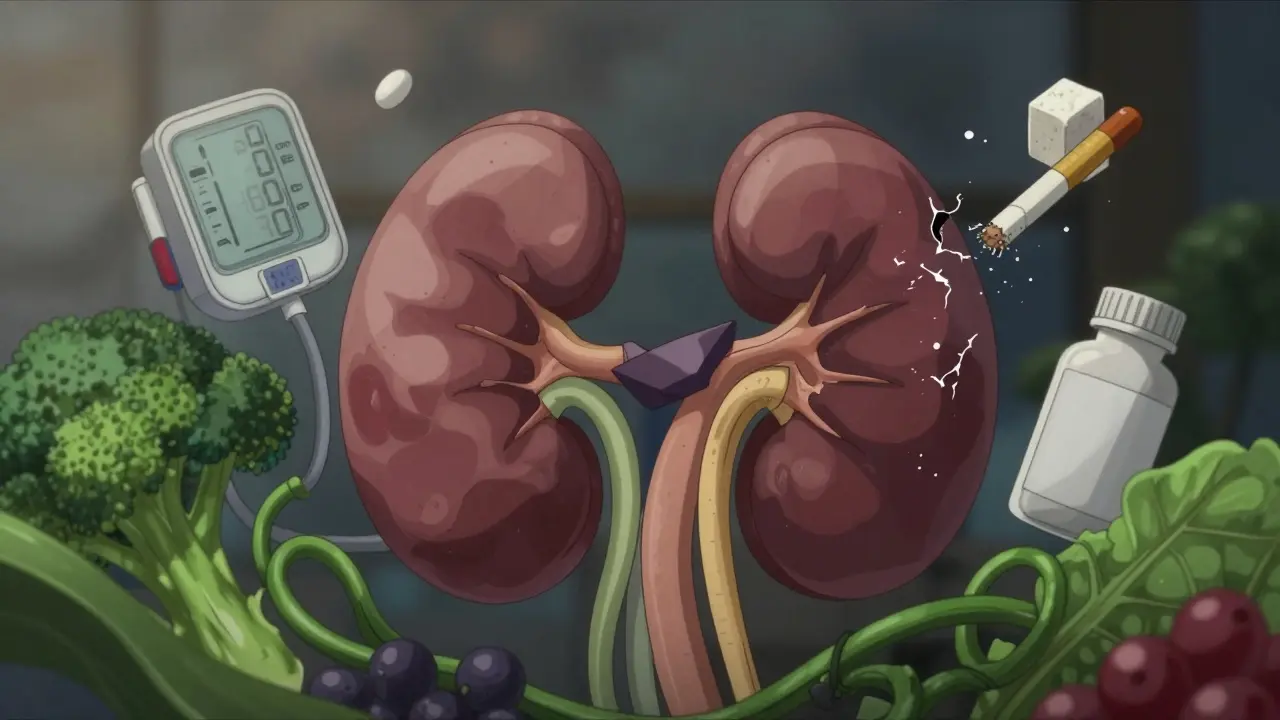
One in three adults in the U.S. is at risk for kidney disease - and most don’t know it. The kidney disease you’re trying to prevent might already be silently progressing. It doesn’t hurt. It doesn’t show up on a routine checkup unless you ask. By the time symptoms like fatigue, swelling, or foamy urine appear, the damage is often advanced. But here’s the good news: up to 85% of kidney disease cases can be prevented or delayed with simple, everyday changes. You don’t need a miracle. You need clarity, consistency, and a few practical steps.
What Actually Causes Kidney Damage?
Kidney disease isn’t caused by one thing. It’s the slow build-up of stress on your kidneys over years. The biggest culprits are high blood pressure and diabetes. Together, they’re responsible for about 75% of all chronic kidney disease cases. High blood pressure forces your kidneys to work harder to filter blood. Over time, the tiny filters inside your kidneys - called glomeruli - get damaged and start leaking. Diabetes floods your blood with sugar, which overloads those same filters. Eventually, they burn out. But it’s not just those two. Obesity, smoking, and long-term use of common painkillers like ibuprofen or naproxen also chip away at kidney function. Even if you feel fine, carrying extra weight puts pressure on your kidneys. Smoking cuts off oxygen to your kidneys and speeds up scarring. And taking NSAIDs daily for headaches or back pain? That’s a hidden risk. Studies show these drugs cause 3-5% of new kidney disease cases every year. Family history matters too. If a close relative had kidney failure, your risk goes up. But genetics aren’t destiny. Lifestyle can override inherited risk - if you act early.What You Should Eat (And What to Avoid)
Your plate is your first line of defense. The NHS and Richmond Nephrology Associates both agree: eat real food. That means filling half your plate with fruits and vegetables - at least five portions a day. Think broccoli, spinach, apples, berries, carrots. They’re low in sodium and packed with antioxidants that protect your kidneys. Cut back on salt. Aim for under 2,300 mg a day. That’s about one teaspoon. Most people eat twice that. Processed foods - canned soups, frozen meals, deli meats, chips - are the main offenders. Read labels. Choose ‘low sodium’ versions. Cook at home more often. Use herbs, lemon, or vinegar instead of salt for flavor. Watch your sugar. Sugary drinks - soda, sweet tea, energy drinks - are a major contributor to weight gain and type 2 diabetes. CDC data shows they make up 7% of the average American’s daily calories. Swap them for water, unsweetened tea, or sparkling water with a splash of lime. Even one less soda a day can make a difference. Protein isn’t the enemy - but too much is. If you’re healthy, your kidneys handle normal protein intake fine. But if you’re already at risk, eating more than 1.2 grams of protein per kilogram of body weight can strain them. Stick to lean sources: chicken, fish, beans, tofu. Skip the giant steak at dinner. A palm-sized portion is enough.Move More - It’s Not Just About Weight
You don’t need to run a marathon. The CDC and NHS both say: 150 minutes of moderate activity a week. That’s 30 minutes, five days a week. Brisk walking, cycling, swimming, dancing - anything that gets your heart pumping and makes you breathe harder. Add strength training twice a week. Lift light weights, use resistance bands, or do bodyweight exercises like squats and push-ups. Building muscle helps your body use insulin better, which lowers blood sugar. That’s huge for kidney protection. Start small if you’re out of practice. Take the stairs. Walk after dinner. Park farther away. These tiny moves add up. The American Kidney Fund found that people who started with just 10 minutes a day and built up slowly were far more likely to stick with it long-term.Control Your Blood Pressure and Blood Sugar
If you have high blood pressure, your target should be 120/80 mm Hg. That’s the sweet spot for kidney health. Many people think “under 140/90” is fine - it’s not. The higher your pressure, the more damage your kidneys take. Check it regularly. If you’re on medication, don’t skip doses. If you have diabetes, get your A1C tested at least twice a year. If you’re not at goal, your doctor might recommend quarterly tests. The goal? Usually under 7%, but it varies by age and other health factors. Every 1% drop in A1C reduces your risk of kidney complications by up to 40%. The scary part? 34.2 million Americans have diabetes. 116 million have high blood pressure. And most don’t know they’re at risk. If you’re over 40, overweight, or have a family history - get tested. A simple urine test for protein and a blood test for creatinine can catch early kidney damage before it’s too late.
Stop Smoking. Cut Back on Alcohol.
Smoking is one of the most dangerous things you can do for your kidneys. Smokers are 50% more likely to lose kidney function over time. Smoking narrows blood vessels, reduces blood flow to the kidneys, and speeds up scarring. Quitting doesn’t just help your lungs - it gives your kidneys a chance to heal. Alcohol isn’t off-limits, but moderation matters. One drink a day for women, two for men. That’s one 12-ounce beer, 5 ounces of wine, or 1.5 ounces of spirits. Excessive drinking raises blood pressure and contributes to liver damage - which puts more strain on your kidneys. Studies show alcohol is linked to 20-30% of hypertension cases.Medications Can Help - or Hurt
Don’t assume all painkillers are safe. NSAIDs like ibuprofen (Advil), naproxen (Aleve), and even aspirin in high doses can damage your kidneys, especially if you take them often or have existing risk factors. Use them only when necessary and never for long periods without talking to your doctor. Ask about kidney-safe alternatives. Acetaminophen (Tylenol) is usually safer for kidneys, but it has its own limits - don’t exceed 3,000 mg a day. Always check labels. Some cold and flu medicines contain NSAIDs you might not expect. Also, get your flu shot every year. People with kidney disease are 3-5 times more likely to end up in the hospital from the flu. Vaccination isn’t optional - it’s essential.Stress and Sleep Matter More Than You Think
Chronic stress raises cortisol, which increases blood pressure and blood sugar. Over time, that wears down your kidneys. Johns Hopkins research found that people who practiced mindfulness, meditation, or deep breathing for just 10-15 minutes a day slowed their kidney decline by 15%. Sleep is just as important. Poor sleep disrupts hormones that regulate blood pressure and fluid balance. Aim for 7-8 hours a night. If you snore loudly or wake up tired, ask your doctor about sleep apnea. It’s common in people with kidney disease and makes it worse.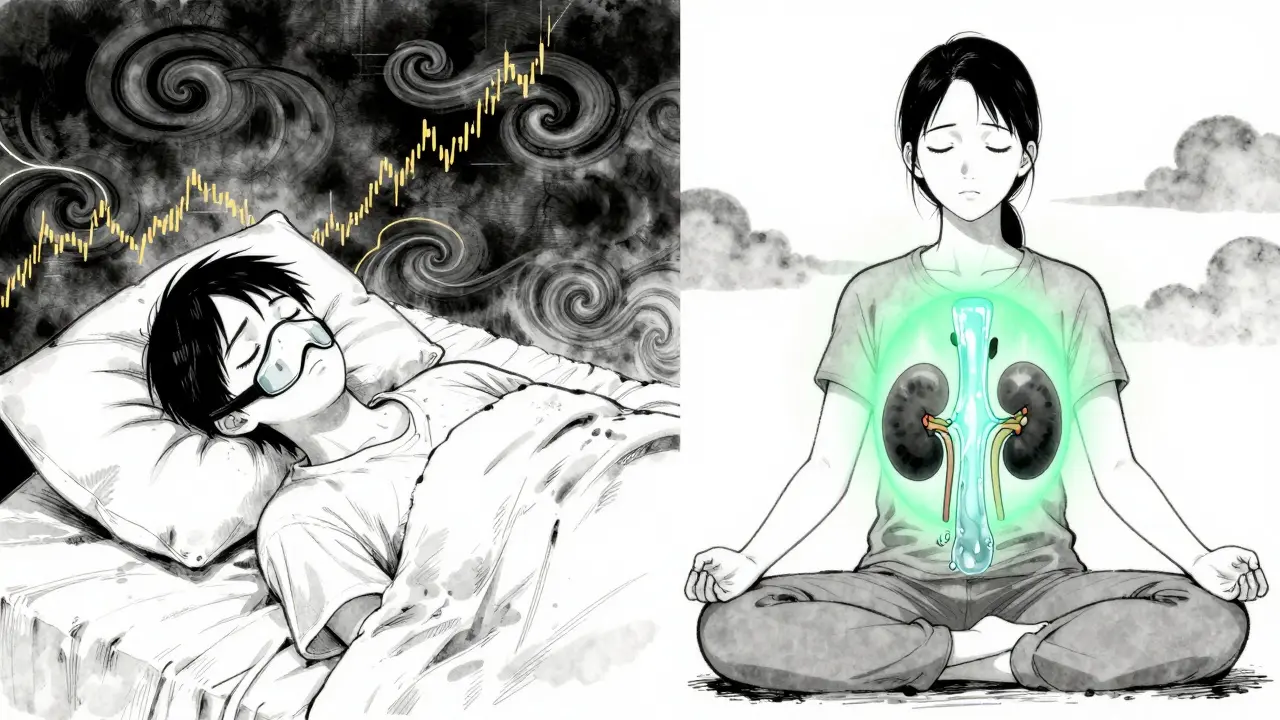
Early Detection Saves Kidneys
The biggest reason kidney disease goes undetected? It has no early symptoms. That’s why screening is critical. If you have diabetes, high blood pressure, obesity, or a family history of kidney failure - get tested yearly. A simple urine test for albumin and a blood test for creatinine can spot early damage. Your doctor can calculate your GFR (glomerular filtration rate) to see how well your kidneys are working. The CDC’s ‘Get Ahead of CKD’ initiative is pushing for more widespread screening. But you don’t have to wait for a campaign. Ask your doctor during your next checkup: “Can we test my kidney function?”What If You’re Already Diagnosed?
Even if you’re in the early stages of kidney disease (Stages 1-2), lifestyle changes still work - and they work better than most drugs. Studies show dietary changes and exercise reduce progression by 40% in early stages. The NHS’s Healthier You program, which combines diet coaching and supervised exercise, cut diabetes progression by 26% in participants. The key? Start now. Waiting until Stage 4 or 5 means your options shrink. Dialysis or transplant becomes more likely. But if you act early, you can keep your kidneys working for decades longer.It’s Not About Perfection - It’s About Progress
You don’t have to overhaul your life overnight. Pick one thing. Maybe it’s swapping soda for water. Or walking 20 minutes after dinner. Or checking your blood pressure once a week. Do that for a month. Then add another. Small steps compound. And every step protects your kidneys. The goal isn’t to be perfect. It’s to be consistent. Your kidneys don’t need a hero. They need you to show up - day after day - with a little care. And that’s something anyone can do.Can kidney disease be reversed?
Early-stage kidney damage (Stages 1-2) can often be slowed or even partially reversed with strict lifestyle changes - especially controlling blood pressure, blood sugar, and diet. Once scarring sets in (Stage 3 and beyond), the damage is permanent, but progression can still be slowed significantly. The goal isn’t always reversal - it’s prevention of further decline.
Is drinking lots of water good for kidneys?
Staying hydrated helps your kidneys filter waste, but there’s no magic number. For most people, drinking when you’re thirsty and aiming for light yellow urine is enough. Overhydrating doesn’t help and can be dangerous for people with advanced kidney disease. The NHS recommends adequate fluid intake based on individual needs - not a fixed amount like eight glasses.
What foods should I avoid if I have kidney problems?
Limit sodium, processed meats, canned foods, sugary drinks, and foods high in phosphorus or potassium if your doctor advises it. In early stages, focus on reducing salt and sugar. As kidney function declines, your diet may need to be adjusted for phosphorus and potassium - always work with a renal dietitian for personalized guidance.
Can I still drink coffee or tea?
Yes, in moderation. One to two cups of coffee or tea a day is fine for most people. Avoid adding sugar or creamers with high phosphorus. Herbal teas are generally safe, but check with your doctor if you’re on a potassium restriction.
How often should I get my kidneys checked?
If you have diabetes, high blood pressure, obesity, or a family history of kidney disease, get tested at least once a year. A simple urine test for protein and a blood test for creatinine are all that’s needed. If you’re healthy and under 40 with no risk factors, routine screening isn’t usually needed unless symptoms appear.
Are there any supplements that help kidney health?
There’s no strong evidence that supplements prevent kidney disease. Some - like vitamin D or omega-3s - may help if you’re deficient, but others can be harmful. Always talk to your doctor before taking any supplement, especially if you have kidney issues. Many herbal products can damage kidneys.
Why are Black and Hispanic populations at higher risk?
Black Americans are 3.4 times more likely to develop kidney failure than White Americans, and Hispanic Americans are 1.3 times more likely. This isn’t due to biology - it’s due to systemic factors: higher rates of diabetes and hypertension, unequal access to care, and social determinants like poverty and food insecurity. Targeted prevention programs are needed to close this gap.
Can weight loss really protect my kidneys?
Yes. Losing just 5 kg (about 11 pounds) can reduce your risk of kidney disease by 25-30%. Weight loss improves insulin sensitivity, lowers blood pressure, and reduces inflammation - all of which ease the burden on your kidneys. Even modest, sustained weight loss makes a big difference.
Next steps? Start today. Write down your top two risk factors - maybe it’s your blood pressure or your soda habit. Pick one change to make this week. And schedule that kidney test. Your kidneys won’t tell you they’re struggling. But you can still save them.
Jay Ara
December 27, 2025 AT 08:53now he walks every morning and swaps soda for water
small stuff but it's keeping him out of dialysis
Michael Bond
December 28, 2025 AT 06:03Kuldipsinh Rathod
December 28, 2025 AT 11:30he didnt even know he had high bp
now he cooks at home eats veggies and checks his numbers weekly
proof that you dont need fancy stuff just consistency
SHAKTI BHARDWAJ
December 29, 2025 AT 06:19and also why is everyone acting like kidney disease is some secret conspiracy
its just part of aging you know
Matthew Ingersoll
December 31, 2025 AT 06:13carissa projo
December 31, 2025 AT 17:38josue robert figueroa salazar
January 1, 2026 AT 23:22its a scam they want you to think you control everything
david jackson
January 3, 2026 AT 17:47the NSAID epidemic is real and no one talks about it
pharmacists are selling ibuprofen like candy and doctors don't warn patients until their creatinine is through the roof
and the worst part? The CDC's own reports show that 68% of people who develop kidney disease from painkillers were taking them for headaches or back pain-nothing life threatening
we're medicating ourselves into organ failure and calling it self care
Jody Kennedy
January 4, 2026 AT 21:52