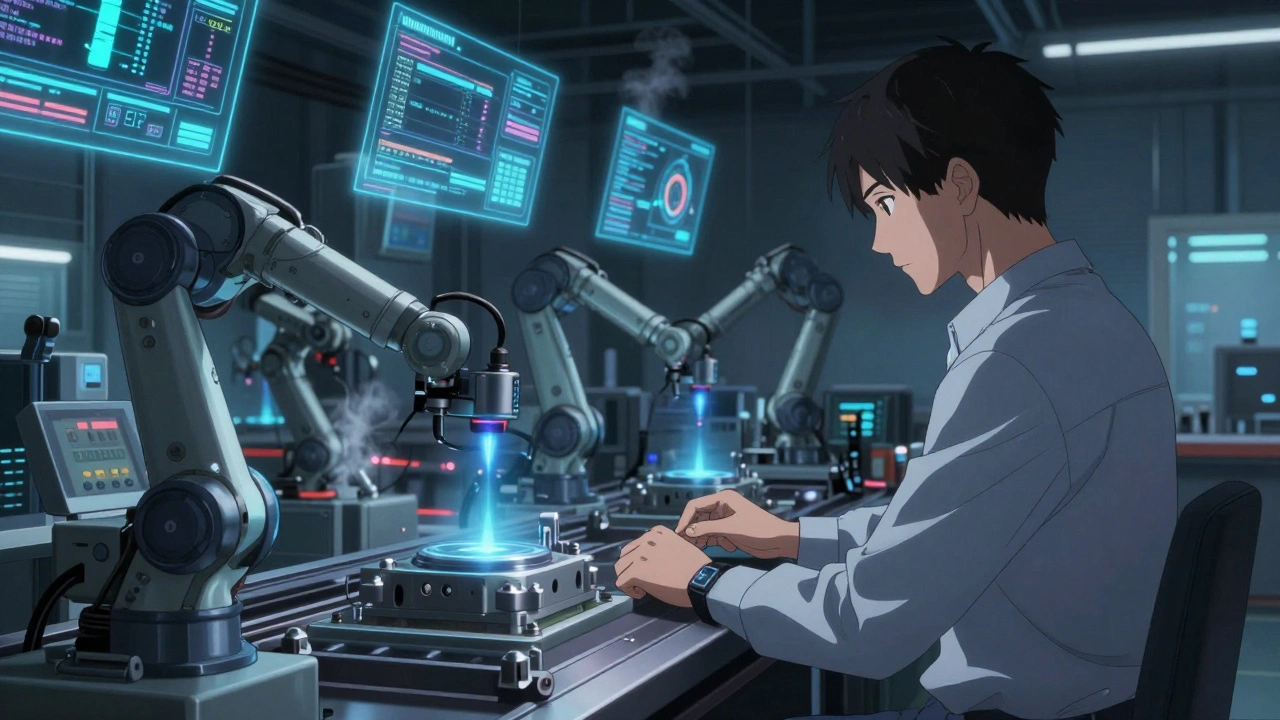
When you buy a phone, a car, or even a simple kitchen gadget, you expect it to work the first time-and stay working. That’s not luck. It’s quality control testing in action. Behind every reliable product is a system of checks, measurements, and corrections designed to catch mistakes before they reach you. In manufacturing, this isn’t optional. It’s the difference between a brand that lasts and one that gets forgotten.
Why Quality Control Testing Matters
Think of quality control testing as a safety net woven into every stage of production. It doesn’t just find broken parts-it stops them from being made in the first place. According to the American Society for Quality, companies using full QC systems cut scrap and rework costs by nearly 33% compared to those that only check products at the end. That’s not just savings. That’s survival. In industries like automotive, electronics, and pharmaceuticals, a single defect can mean recalls, lawsuits, or worse. The FDA issued over 1,200 warning letters in 2021 alone, and 43% of them pointed to poorly validated testing methods. ISO 9001:2015, the global standard for quality management, doesn’t just recommend quality control-it requires it. And it’s not just about compliance. It’s about trust.The Six Core Steps of Quality Control Testing
There’s no single way to do quality control, but the most effective manufacturers follow six clear steps. These aren’t theoretical-they’re used daily in factories from Bristol to Bangalore.- Define quality standards-Before any part is made, you need to know what “good” looks like. This isn’t vague. It’s exact: dimensions within ±0.01mm, surface roughness no higher than Ra 1.6 μm, color matching within ΔE < 2.0 on the CIELAB scale. These numbers come from engineering specs, customer expectations, and regulatory rules. In pharma, they’re locked in by FDA 21 CFR Part 211. In electronics, IPC-A-610 sets the visual inspection bar.
- Implement quality control measures-Now you choose how to check. Will you use calipers? Laser scanners? Electrical testers? Spectrometers? The tool depends on the part. For a circuit board, you might use automated optical inspection (AOI). For a metal bracket, you might measure tensile strength with a hydraulic tester. The key is matching the method to the risk. Critical safety parts? 100% inspection. Cosmetic features? Statistical sampling using ANSI/ASQ Z1.4-2013.
- Train team members-Tools don’t fix quality-people do. A machine can spot a scratch, but only a trained operator knows if that scratch came from a faulty jig or a dirty conveyor. Training isn’t a one-time event. It’s ongoing. Most manufacturers require 16 to 40 hours of certified training depending on the role. ASQ CQE certification is the gold standard for quality engineers. And in pharma, operators must pass competency checks every six months.
- Monitor processes continuously-Waiting until the end of the line to find defects is like checking your car’s brakes after it’s already crashed. Modern QC uses real-time data. Sensors on machines track temperature, pressure, vibration. Cameras scan for misalignments. X-bar and R charts show if a process is drifting. If a machine’s output starts falling outside 3σ control limits, the line stops. That’s not disruption-it’s prevention.
- Analyze results-Data without insight is noise. Quality teams use software like Minitab or JMP to turn numbers into decisions. Are defects clustering around a specific shift? Is a supplier’s batch consistently out of tolerance? Capability indices (Cp/Cpk) tell you if your process can reliably hit targets. A Cpk above 1.33 means your process is stable and capable. Below that? You’re gambling.
- Take corrective action-When something goes wrong, you don’t just fix the part-you fix the system. That’s CAPA: Corrective and Preventive Action. Every deviation triggers a 72-hour root cause investigation. Was it a tool? A training gap? A supplier change? The solution isn’t just “rework the batch.” It’s “change the fixture, retrain the team, audit the vendor.” Without this step, you’re just putting out fires.
What Gets Tested-and How
Not every product needs the same tests. But certain checks are universal.- Dimensional accuracy-Measured with micrometers, CMMs (coordinate measuring machines), or laser trackers. Tolerances vary: ±0.5mm for a plastic housing, ±0.005mm for a medical implant.
- Material properties-Tensile strength, hardness, elasticity. Tested with universal testing machines. Automotive parts must stay within ±5% of spec under stress.
- Electrical performance-Resistance, continuity, insulation. For PCBs, this means checking for open circuits, shorts, or solder bridges. Tolerances are usually ±10%.
- Chemical composition-Especially in pharma and aerospace. Spectroscopy (ASTM E415) confirms metals or alloys match their grade. A single wrong element can ruin a batch.
- Visual inspection-Still the most common method. Trained inspectors look for scratches, dents, discoloration, or misalignment. In electronics, IPC-A-610 defines what’s acceptable. A tiny solder blob? Fine. A cracked component? Reject.
Real-World Impact: What Happens When QC Fails
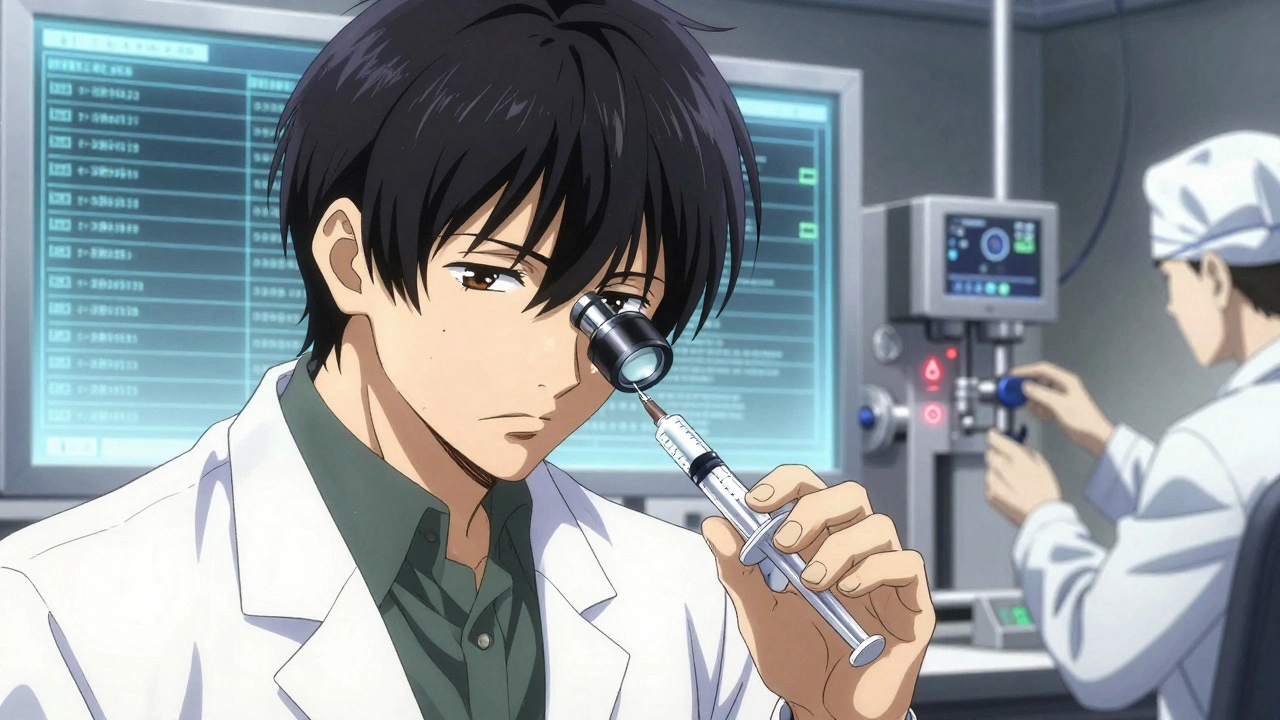
In 2022, a major electronics manufacturer shipped 12,000 smart thermostats with a faulty sensor. The defect wasn’t caught because they relied on random sampling-1 in 50 units-without understanding that the error only showed up after 48 hours of continuous use. The fix cost $4.7 million in returns, replacements, and lost customer trust. Meanwhile, a small medical device maker in Germany used real-time IoT sensors to monitor pressure in syringe assembly. When a valve began to wear, the system flagged it before a single unit was compromised. No recalls. No downtime. Just a scheduled maintenance window. The difference? One company treated QC as a checkpoint. The other treated it as a continuous feedback loop.Technology Is Changing QC-But Not Replacing It
AI-powered vision systems are now used by 37% of Fortune 500 manufacturers. They spot defects humans miss-micro-cracks, invisible misalignments, subtle color shifts. Siemens’ Amberg plant uses AI to analyze 1,000 images per second. Their defect escape rate dropped by 63%. But technology alone doesn’t work. Dr. Linda Zhang of NexPCB found that teams relying too heavily on statistical sampling had 22% more false negatives. Why? Because algorithms don’t understand context. A slightly bent pin might be normal if it’s on a non-functional connector. Only a human, trained in the product’s purpose, can tell. That’s why the best systems combine machines and people. Machines scan. Humans decide. And both are backed by documentation.Documentation: The Invisible Backbone
If it wasn’t written down, it didn’t happen. That’s the rule in regulated industries. - Pharamaceuticals: 21 CFR Part 11 requires electronic records with audit trails. Every test, every adjustment, every deviation must be timestamped and signed off. - Electronics: Master production records follow IPC standards. Change orders need approval logs. - Automotive: All QC data must be traceable to specific lots, machines, and operators. Paper logs are gone. Digital systems with version control, role-based access, and automated backups are standard. The FDA doesn’t just want results-they want proof you knew what you were doing.
How Long Does It Take to Set Up?
A small shop with under 50 employees can get a basic QC system running in 4 to 8 weeks. Larger factories? 12 to 16 weeks. The biggest hurdle isn’t the tech-it’s culture. Sixty-eight percent of manufacturers surveyed by ASQ in 2022 reported inconsistent operator adherence. Workers skip checks. Supervisors ignore minor deviations. “It’s fine, it’s just one.” That’s how recalls start. Successful QC programs spend 15-20% of production time on quality activities. That’s not wasted time. It’s insurance. And the ROI? Companies that invest properly see 4-7x returns over three years through reduced waste, fewer returns, and higher customer retention.What’s Next for Quality Control?
The future isn’t just faster inspections-it’s smarter prevention. - Digital twins simulate production before a single part is made. Boeing cut assembly defects by 31% using this. - Augmented reality guides inspectors through complex checks. Toyota saw 22% higher accuracy. - Blockchain is being tested by pharma companies to create tamper-proof quality records. - ISO 9001:2025 (draft) will require AI systems to be validated for transparency-not just performance. The goal isn’t to replace people. It’s to give them better tools to do their jobs right.Final Thought: Quality Is a Habit, Not a Step
You can’t install quality control like a new machine. You build it-day by day, check by check, correction by correction. It starts with clear standards. It grows with training. It’s sustained by data and accountability. The best manufacturers don’t just test products. They test their systems. And they never stop.What are the main steps in quality control testing for manufacturing?
The six core steps are: 1) Define quality standards with measurable tolerances, 2) Implement appropriate inspection methods and tools, 3) Train staff thoroughly on procedures and tools, 4) Monitor production in real time using sensors and data systems, 5) Analyze results with statistical software to identify trends, and 6) Take corrective and preventive actions (CAPA) to fix root causes-not just symptoms.
How often should quality control inspections be done?
It depends on the product and risk. Critical safety components (like medical devices or automotive brakes) require 100% inspection. For general manufacturing, sampling follows AQL standards-typically 0.65% for major defects and 1.5% for minor ones. In-process checks happen hourly or per batch. Final inspections occur before shipment. Real-time monitoring means inspections are continuous, not periodic.
What’s the difference between quality control and quality assurance?
Quality control (QC) is about inspecting products to find defects-checking the output. Quality assurance (QA) is about building systems to prevent defects-improving the process. QC says, "This part is broken." QA says, "Why did this part break, and how do we stop it from happening again?" Both are needed, but QA is the foundation.
Which industries have the strictest quality control requirements?
Pharmaceuticals (FDA 21 CFR Part 211), medical devices (ISO 13485), automotive (IATF 16949), and aerospace (AS9100) have the strictest rules. These industries face high risks-patient safety, vehicle failure, or aircraft crashes-so their QC systems are heavily documented, audited, and regulated. Even small deviations trigger investigations.
Can small manufacturers afford quality control testing?
Yes-and they must. You don’t need expensive AI systems to start. A basic QC program uses calipers, checklists, training, and simple data logs. Many small manufacturers begin with just three steps: define standards, train staff, and do 100% final inspection. The cost of not doing QC-returns, damaged reputation, lost customers-is far higher than the cost of starting small.
What tools are commonly used in quality control testing?
Common tools include micrometers and calipers for dimensions, CMMs for complex geometry, tensile testers for material strength, AOI (automated optical inspection) for electronics, spectrometers for chemical analysis, and statistical software like Minitab or JMP for data analysis. Even simple digital scales and go/no-go gauges are vital in many factories.
How do you know if your quality control system is working?
Look at the metrics: scrap rate, rework cost, customer returns, and internal audit findings. If your Cpk index is above 1.33, your process is capable. If your defect escape rate drops over time, your system is improving. If your team can explain every deviation and fix it quickly, your culture is strong. Real success isn’t zero defects-it’s consistent, predictable performance.
Lola Bchoudi
December 10, 2025 AT 15:45Let me tell you, if you're not using Cpk metrics to track process capability, you're flying blind. I've seen plants go from Cpk 0.8 to 1.6 in six months just by locking down their control charts and training operators on SPC fundamentals. It's not magic-it's discipline. And yeah, 1.33 is the bare minimum. Anything below that is a waiting disaster, especially in regulated spaces. Don't just check parts-understand the variation in your process.
Graham Abbas
December 12, 2025 AT 14:54There's something almost poetic about quality control, isn't there? It’s the quiet rebellion against entropy. Every calibration, every checklist, every CAPA report-it’s humanity saying ‘no’ to chaos. We build machines to make things, but it’s the human hand-trained, thoughtful, accountable-that ensures those things don’t fall apart in the hands of someone who trusted us. That’s not engineering. That’s ethics made tangible.
Haley P Law
December 13, 2025 AT 17:56OK BUT WHAT ABOUT THE GUY WHO JUST SKIPS THE FINAL INSPECTION BECAUSE ‘IT’S FINE’?? 😤 Like bro, you’re not saving time-you’re just gambling with someone’s safety. I work in med devices. One missed burr on a catheter tip = ER visit. And now I’ve got a coworker who says ‘we’ve never had a problem before’-yeah, until you do. And then it’s on the news. 🤦♀️
Andrea DeWinter
December 14, 2025 AT 23:02Small shop here with 22 people and we started with just three things: define what good looks like on a whiteboard, train everyone for 30 mins a week, and do 100% final check before shipping. No fancy software. No AI. Just checklists and accountability. We cut returns by 70% in 4 months. You don’t need a million dollars-you need consistency. And if your team doesn’t buy in? Start with one person who cares. That’s how culture changes. Not with tech. With trust.
Iris Carmen
December 15, 2025 AT 10:52Rich Paul
December 16, 2025 AT 16:35LOL you guys are overcomplicating this. AOI + X-bar R charts + CAPA = done. If your Cpk is below 1.33 you’re already failing. And no, you don’t need blockchain. You need a damn engineer who knows how to use Minitab. I’ve seen factories spend $200k on AI vision systems and still have 8% defect escape because the operator didn’t know how to interpret the alarm. Tech doesn’t fix culture. People do. And if your culture is ‘it’s fine’, you’re gonna get what you deserve.
Delaine Kiara
December 17, 2025 AT 19:26Let’s be real-QC isn’t about perfection. It’s about predictability. You want to know if your product is going to work? Then you need to know if your process is stable. That’s what control limits are for. If your machine’s output starts drifting past 3σ, you don’t wait for a recall-you shut it down. Period. And yes, I’ve seen the same operator miss the same defect for three weeks because ‘it’s just a scratch.’ Until the customer sent back 200 units with the same scratch. Then suddenly, it was a ‘critical issue.’ Wake up. It was always a critical issue. You just chose to ignore it. And now you’re paying for it.
Noah Raines
December 19, 2025 AT 13:12My cousin works at a factory that uses AR glasses for QC now. Dude says it’s like having a cheat code-he gets step-by-step visual guides on what to check, where to measure, even how to hold the tool. Accuracy went up, training time dropped by half. And yeah, AI spots things humans miss-but only if the human is still there to say ‘wait, that’s normal for this connector.’ Machines scan. Humans decide. And someone’s gotta document it. Otherwise it didn’t happen. Simple as that.