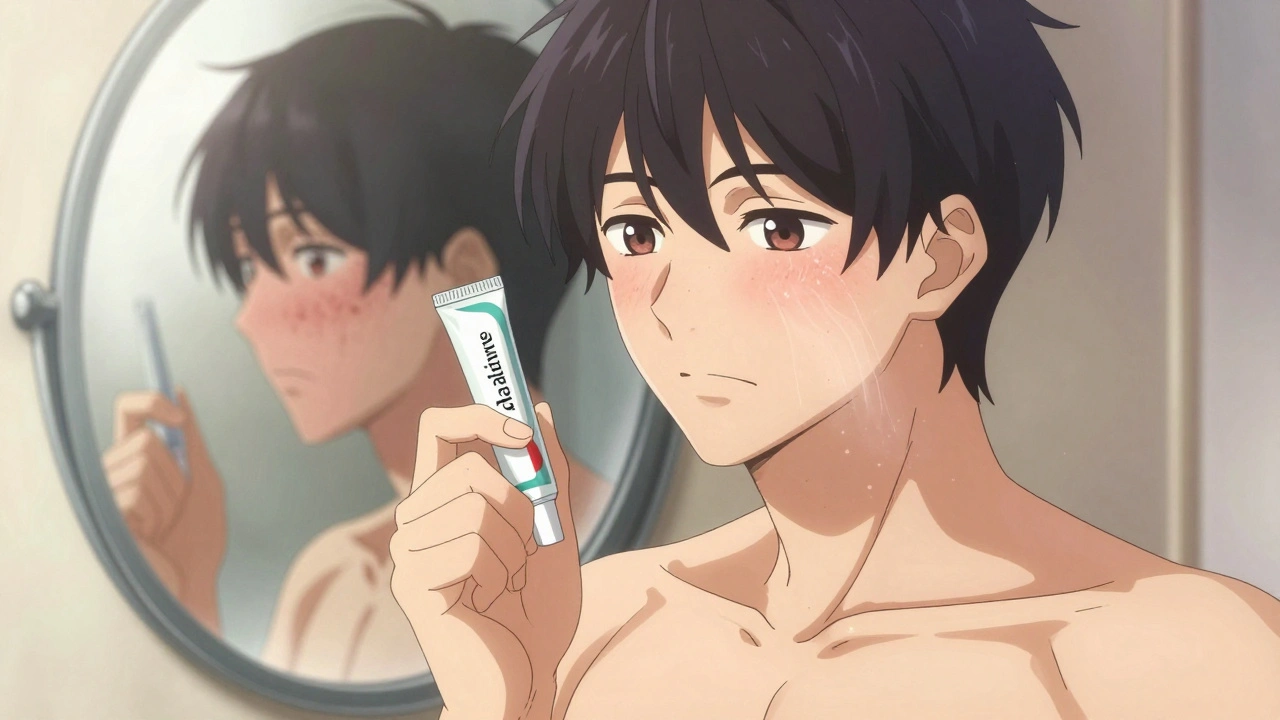
When it comes to clearing acne and reducing fine lines, few skincare ingredients have stood the test of time like tretinoin and adapalene. Both are retinoids-vitamin A derivatives that transform skin from the inside out. But they’re not the same. Choosing between them isn’t about which is "better." It’s about which fits your skin, your goals, and your tolerance for side effects.
How Retinoids Actually Work
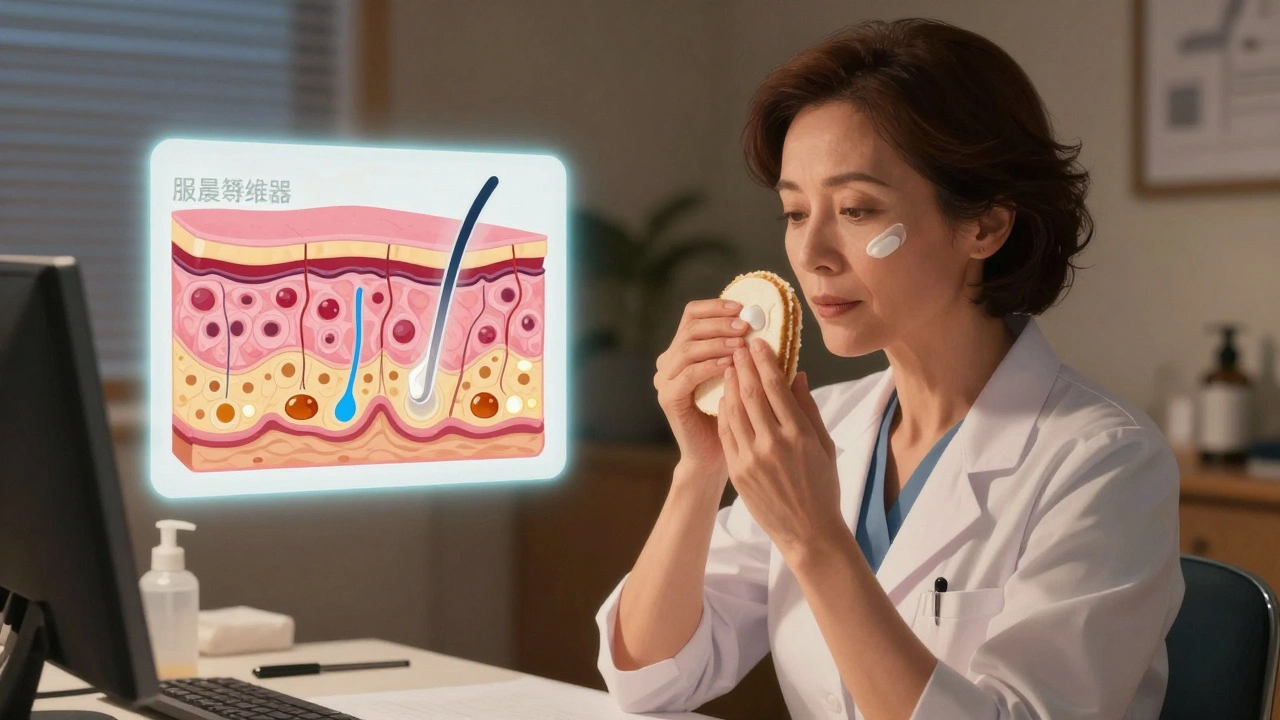
Retinoids don’t just sit on top of your skin. They slip into your skin cells and change how they behave. They speed up cell turnover, unclog pores, break down excess oil, and boost collagen. That’s why they work for both acne and wrinkles-same mechanism, different results. Tretinoin is the original. It’s been used since the 1970s. Adapalene came later, in the 1990s, and was designed to be gentler. Both bind to the same receptors in your skin, but tretinoin reaches deeper into the dermis, where collagen lives. Adapalene mostly works in the top layer, the epidermis. That’s why adapalene is great for surface-level acne and less irritating, while tretinoin can tackle deeper wrinkles and stubborn pigmentation.Tretinoin: The Gold Standard for Aging Skin
If you’re over 35 and noticing fine lines, uneven tone, or sun damage, tretinoin is still the most proven option. A 24-week study showed 0.05% tretinoin cream improved fine wrinkles by 42%. In comparison, adapalene 0.3% improved them by 35%. That gap might seem small, but in real life, it means you’ll see visible changes sooner. Tretinoin also outperforms adapalene when it comes to mottled pigmentation. After 48 weeks, users saw 58% improvement with tretinoin versus 47% with adapalene. That’s why dermatologists still recommend it as the go-to for photoaging. But there’s a catch. Tretinoin is harsher. Up to 92% of users report initial irritation-redness, peeling, stinging. That’s not a myth. It’s science. Conventional tretinoin gels degrade in light and air, making them unstable and more irritating. That’s why many now use Retin-A Micro or Altreno, newer formulations that release tretinoin slowly, cutting irritation by up to 35%.Adapalene: The Gentle Starter
Adapalene is the smart first choice for most people, especially if you’ve never used a retinoid before. It’s stable, doesn’t break down in sunlight, and can even be mixed with benzoyl peroxide (like in Epiduo). That’s huge-most retinoids can’t be paired with other acne treatments without losing potency. In clinical trials, 0.1% adapalene reduced acne lesions by 69-74% after 8 weeks. That’s as good as 0.025% tretinoin. But irritation? Half as bad. Only 15% of users got redness with adapalene, compared to 32% with tretinoin. Scaling and stinging were also much lower. And now, you can buy it over the counter. Differin Gel (0.1%) costs about $15. Prescription tretinoin? $45 or more without insurance. That’s why adapalene is now the #1 dermatologist-recommended acne treatment in the U.S.Who Should Use What?
Here’s the simple breakdown:- Use adapalene if: You’re new to retinoids, have sensitive or oily skin, or just want to clear acne without a full-on skin meltdown.
- Use tretinoin if: You’re dealing with deep wrinkles, sun damage, or stubborn hyperpigmentation-and you’ve already tolerated a retinoid before.
The Real Problem: Quitting Too Soon
The biggest reason people fail with retinoids isn’t because they don’t work. It’s because they quit before they start working. You’ll likely see a flare-up-more pimples, dry patches, flaking-between weeks 2 and 6. That’s called "retinization." It’s your skin adjusting. It’s not an allergic reaction. It’s not failing. It’s normal. A 2023 survey found 63% of people stopped using retinoids within the first four weeks because they thought it wasn’t working. But those who stuck with it? 87% saw major improvement by week 12. And real results? They take 6 to 12 months. The trick? Use the "sandwich method." Wash your face. Wait 20 minutes. Apply moisturizer. Then a pea-sized amount of retinoid. Then another layer of moisturizer. This cuts irritation by nearly half.What You Can’t Skip: Sunscreen
Retinoids make your skin more sensitive to UV light. Skip sunscreen, and you risk more damage than you fix. Studies show users who don’t wear daily SPF 30+ have 3.2 times more side effects. It doesn’t matter if you’re using adapalene or tretinoin. You need sunscreen every single morning. No exceptions. Even on cloudy days. Even if you’re indoors.What About Other Options?
There are other retinoids-like tazarotene (Tazorac)-but they’re stronger and harsher. Tazarotene works faster for acne, but it’s more irritating than tretinoin. That’s why it’s usually reserved for cases where the others failed. Combination treatments like Epiduo (adapalene + benzoyl peroxide) are great for active acne. They clear lesions faster than either ingredient alone. But they’re not for beginners. Start with adapalene alone, then add benzoyl peroxide if you need more punch.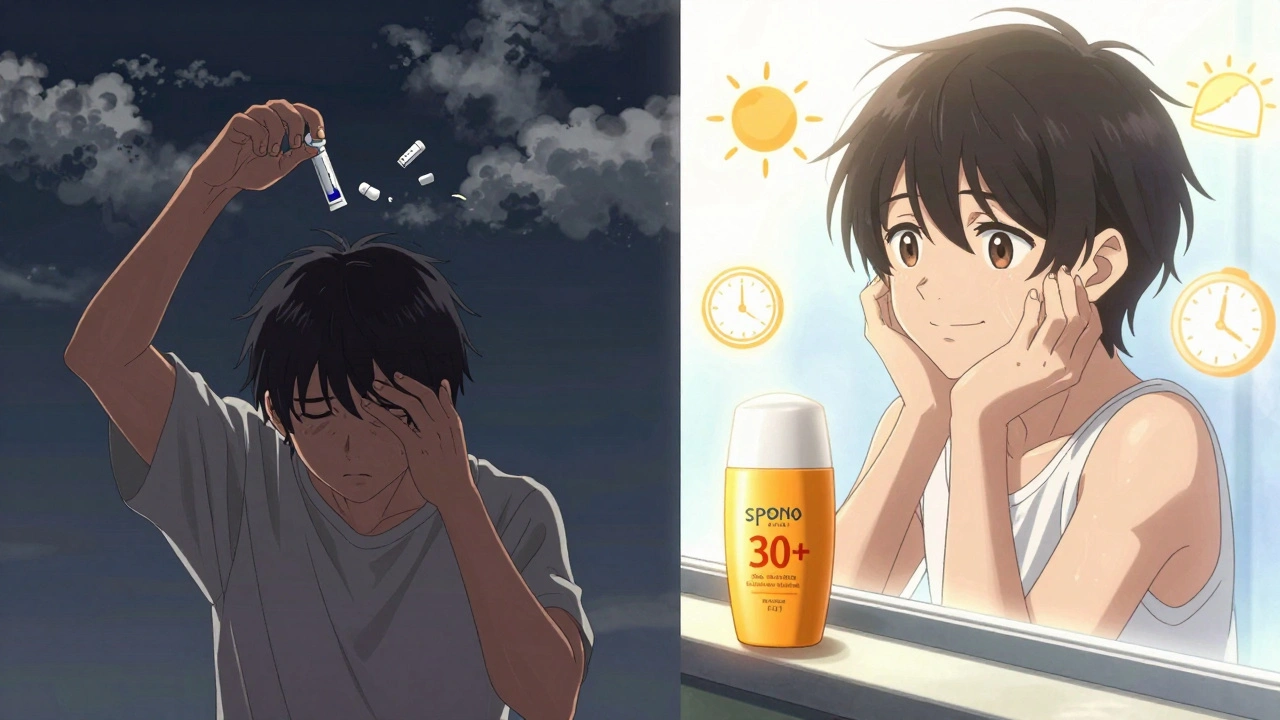
Cost, Access, and What’s Next
Adapalene’s OTC status changed everything. It’s now the most accessible retinoid in the U.S. Tretinoin still requires a prescription, but insurance often brings the cost down to $10-$20 a tube. Future developments? Look for personalized retinoid therapy. Researchers are already testing genetic markers to predict who’ll tolerate tretinoin well and who won’t. In five years, your dermatologist might test your DNA before prescribing. But for now? Stick with the proven. Adapalene for gentle, consistent results. Tretinoin for deeper, more dramatic changes. Both work. Neither is magic. But together, they’ve helped millions of people reclaim their skin.How to Start
Here’s your simple plan:- Choose your product: Adapalene 0.1% (OTC) for acne or sensitive skin. Tretinoin 0.025% or 0.05% (prescription) for wrinkles or stubborn pigmentation.
- Start slow: Apply a pea-sized amount 2 nights a week.
- Use the sandwich method: Moisturizer → retinoid → moisturizer.
- Wait 4-6 weeks before increasing frequency.
- Apply sunscreen every morning, no matter what.
- Stick with it for at least 3 months before judging results.
Common Mistakes to Avoid
- Using too much. A pea-sized amount covers your whole face. More doesn’t mean faster.
- Applying during the day. Both degrade in sunlight. Use at night.
- Skipping moisturizer. Dryness isn’t a sign it’s working-it’s a sign you’re damaging your barrier.
- Expecting overnight results. Retinoids take months, not days.
- Stopping when skin flares. That’s the adjustment phase. Push through.
Can I use adapalene and tretinoin together?
No. Using both at the same time increases irritation without improving results. Pick one and stick with it. If adapalene stops working after 6-12 months, you can switch to tretinoin under your dermatologist’s guidance.
Is adapalene as good as tretinoin for acne?
Yes, for mild to moderate acne. Clinical trials show adapalene 0.1% is just as effective as tretinoin 0.025% at clearing breakouts. The difference is in tolerability-adapalene causes far less redness and peeling, making it easier to stick with long-term.
How long until I see results?
You’ll start noticing less oil and fewer new breakouts around week 4. But real improvement-clearer skin, smoother texture, fading lines-takes 8 to 12 weeks. For wrinkles and pigmentation, expect 4 to 6 months of consistent use.
Can I use retinoids if I’m pregnant?
No. Both tretinoin and adapalene are FDA Category C, meaning they may harm a developing fetus. If you’re pregnant, planning to become pregnant, or breastfeeding, avoid both. Talk to your doctor about safer alternatives like azelaic acid or niacinamide.
Why does my skin get worse before it gets better?
That’s called purging. Retinoids speed up skin cell turnover, pushing trapped oil and dead cells to the surface faster. This causes temporary breakouts or flaking. It’s not an allergic reaction-it’s your skin cleaning house. It usually lasts 2-6 weeks. Keep going, and it clears up.
If you’re ready to try retinoids, start with adapalene. It’s affordable, effective, and forgiving. If you’re past acne and chasing smoother skin, tretinoin is still the most powerful tool you’ve got. Either way, patience and sunscreen are your best allies.
Geraldine Trainer-Cooper
December 6, 2025 AT 21:28Retinoids don’t care about your Instagram skincare routine
They just work if you let them
Stop chasing the next miracle ingredient and just use what’s proven
Ashish Vazirani
December 7, 2025 AT 01:27Everyone in India knows this already - we’ve been using tretinoin since the 90s, thanks to our dermatologists who actually know science, not TikTok influencers!
Adapalene? Cute. But if you want real results, you don’t play nice with your skin - you dominate it.
And sunscreen? Of course you use it - but don’t think your SPF 30 from Target is going to save you from Delhi sun.
Real protection? That’s a zinc oxide paste, applied like armor.
And yes, I’ve been using 0.1% tretinoin since I was 22 - my skin looks like a 30-year-old’s because I didn’t whine when it peeled.
Stop calling it ‘retinization’ - that’s just your skin crying because it’s weak.
My cousin in Mumbai uses adapalene - she’s got clear skin, sure - but her wrinkles are starting at 28.
Meanwhile, I’m 34 and still get compliments on my ‘glass skin’ - because I didn’t take the easy path.
It’s not about cost - it’s about discipline.
And if you’re quitting after 4 weeks? You’re not skincare-challenged - you’re life-challenged.
India didn’t become a superpower by being gentle.
Neither should your skin.
Kenny Pakade
December 7, 2025 AT 18:39Ugh. Another ‘tretinoin is the gold standard’ post.
Have you even looked at the studies? Most of them are funded by Galderma.
Adapalene is cheaper, OTC, and works just fine - the only reason tretinoin is still pushed is because doctors make more money off it.
Also, ‘sandwich method’? Sounds like a fast food combo.
And sunscreen every day? Newsflash - I live in Arizona. I’m not wearing SPF 30 at 7 a.m. while I drink my coffee.
My skin’s fine.
Stop gaslighting people into buying $50 tubes of cream.
brenda olvera
December 9, 2025 AT 13:32I started adapalene last year after years of cystic acne and honestly it changed my life
At first I thought I was breaking out more but then I realized it was just my skin cleaning house
Now my skin is smoother than it’s ever been and I’m 29
Don’t give up before the magic happens
You got this
Brooke Evers
December 10, 2025 AT 06:35I want to say how much I appreciate how clear and compassionate this post is.
So many people feel ashamed when their skin flares up - like they’re doing something wrong.
But this explains it so gently - it’s not failure, it’s adaptation.
I’m a nurse and I’ve seen so many patients quit retinoids because they think they’re allergic or the product is broken.
But it’s just their skin learning a new language.
And the sandwich method? I’ve been recommending it for years - it’s such a simple trick that makes such a difference.
Also, sunscreen isn’t optional - it’s non-negotiable.
Even on cloudy days.
Even if you’re inside.
Even if you’re tired.
Even if you think you don’t need it.
Because the damage adds up silently.
And if you’re reading this and you’re scared to start? I get it.
But you’re not alone.
And your skin deserves patience.
Not perfection.
Just consistency.
And you’re already doing better than you think.
Nigel ntini
December 10, 2025 AT 15:20Well-structured and evidence-based - excellent summary.
The distinction between epidermal and dermal action is clinically accurate.
Adapalene’s stability and compatibility with benzoyl peroxide are often underestimated.
And the point about retinization being a physiological adjustment, not an allergic reaction, is critical.
Many patients misinterpret it as intolerance and discontinue prematurely.
The sandwich technique is a simple yet powerful behavioral intervention.
It reduces transepidermal water loss and mitigates irritation without compromising efficacy.
Also, sunscreen adherence remains the single most underappreciated factor in long-term outcomes.
Studies consistently show that non-compliance with SPF increases adverse events by over 300%.
This post should be required reading for anyone considering retinoid therapy.
Well done.
Priya Ranjan
December 11, 2025 AT 20:17Anyone who uses adapalene and calls it ‘enough’ is just lazy.
You think you’re saving money? You’re just delaying real results.
Adapalene is for people who can’t handle responsibility.
Real skin transformation requires pain.
And if you’re not peeling, you’re not working.
Also, why are you using OTC stuff when you can get prescription strength?
It’s not about cost - it’s about commitment.
And sunscreen? You think you’re protected with that cheap drugstore lotion?
That’s not sunscreen - that’s a placebo.
Real SPF 50+ with zinc oxide - daily - no excuses.
And don’t even get me started on people who use retinoids in the morning.
That’s not skincare - that’s self-sabotage.
Stop making excuses.
Your skin is not a hobby.
It’s your armor.
pallavi khushwani
December 11, 2025 AT 20:26I’ve been using adapalene for 8 months now and I swear I didn’t believe it would work until week 10
My skin was so dry and flaky at first I thought I’d ruined it
But then one morning I looked in the mirror and realized… my pores looked smaller
And my skin just… glowed
Not in that filter way
But the real, quiet kind of glow
Like my skin finally remembered how to be healthy
And I didn’t have to do anything dramatic
Just a pea-sized amount
At night
With moisturizer before and after
And sunscreen every morning
Even on the days I forgot to wash my face
It still worked
Because consistency isn’t about being perfect
It’s about showing up
Even when you’re tired
Even when you’re mad
Even when your skin feels like it hates you
It still works
And that’s the quiet magic
It doesn’t shout
It just waits
Dan Cole
December 13, 2025 AT 14:24Let’s be real - this whole retinoid debate is a marketing scam wrapped in pseudoscience.
Tretinoin isn’t ‘better’ - it’s just older.
And yes, it’s more irritating - because it’s a crude molecule.
Adapalene is a refined, targeted molecule designed for modern skin.
Studies show no significant difference in long-term collagen production between the two.
And the ‘gold standard’ label? That’s just legacy bias.
Pharma companies love tretinoin because it’s patent-expired and they can still charge $50 a tube.
Adapalene? $15.
So they push tretinoin as ‘premium’ - classic placebo branding.
And the ‘sandwich method’? That’s just a workaround for bad formulation.
Why not fix the delivery system instead of layering moisturizer like a lasagna?
Also, ‘retinization’? That’s not a real medical term - it’s a euphemism for ‘side effects we don’t want to admit are avoidable.’
And yes - I’ve used both.
Tretinoin gave me a chemical burn.
Adapalene gave me clear skin.
Don’t be fooled by nostalgia.
Science moves forward.
So should you.
Billy Schimmel
December 15, 2025 AT 06:09So you’re telling me the secret to perfect skin is… do nothing for six months?
And wear sunscreen?
And use a pea-sized amount?
And not quit when it gets weird?
Wow.
Who knew the answer was so simple?
Guess I’ll just go sit on my couch and wait for my skin to magically improve.
Meanwhile, my face is still a disaster.
But hey - at least I’m patient.
And I bought the sunscreen.
Probably.
Geraldine Trainer-Cooper
December 15, 2025 AT 11:29Someone said tretinoin is the gold standard
But gold tarnishes
Adapalene? It just keeps working
Quietly
Without drama
And that’s the real win