
Tetracycline-Isotretinoin Interaction Checker
When you’re struggling with severe acne, it’s easy to feel like any treatment is worth trying. Two of the most common prescriptions - tetracyclines like doxycycline and isotretinoin (Accutane, Claravis) - are often seen as go-to options. But what if combining them could put your vision at risk? This isn’t a hypothetical concern. It’s a documented, life-altering danger that’s been known for over 30 years, yet still slips through the cracks in clinics and pharmacies.
What Happens When These Two Drugs Mix?
Pseudotumor cerebri, also called idiopathic intracranial hypertension (IIH), sounds like a sci-fi term. But it’s real. It means your brain is under too much pressure - not from a tumor, but from excess cerebrospinal fluid. The result? Crushing headaches, blurred vision, ringing in your ears, and in the worst cases, permanent blindness. You don’t need a brain scan to suspect it. If you’re on either drug and suddenly can’t focus or feel like your head is splitting open, it’s time to stop and get checked. The danger isn’t just that both drugs can cause this alone. It’s that together, they multiply the risk. Isotretinoin, on its own, raises the chance of pseudotumor cerebri to about 1 in 5,000 to 1 in 10,000 users. Tetracyclines like doxycycline carry a risk of about 1 in 1,000. But when you take them at the same time? Studies suggest the risk jumps by at least 10 times. Some experts believe it’s even higher. There’s no safe dose, no safe window. The moment you start both, the danger begins.Why Does This Happen?
We don’t know every detail, but we know enough to be terrified. Isotretinoin changes how your body handles fat-soluble compounds and affects fluid balance in the brain. Tetracyclines, especially doxycycline and minocycline, slip easily across the blood-brain barrier. Together, they seem to trigger a cascade: they overstimulate cells in the brain that control cerebrospinal fluid production, while also reducing how fast it drains. A 2023 study found the combo dramatically increases aquaporin-4, a protein linked to fluid buildup in brain tissue. It’s like turning on a faucet while plugging the drain. This isn’t a theory. It’s seen in real patients. A 16-year-old girl in 2018 developed permanent vision loss after just 18 days on doxycycline and isotretinoin. A Reddit user in 2022 described blurred vision and headaches after 10 days - only resolved after a spinal tap to drain fluid. The FDA has logged over 120 cases since 2004. Experts believe the real number is closer to 1,200, because most cases go unreported. People blame migraines. Doctors think it’s stress. By the time they test for intracranial pressure, it’s often too late.Who’s at the Highest Risk?
Teenagers and young adults. That’s the group most likely to get both prescriptions. Acne hits hardest in this age range, and dermatologists often start with antibiotics before moving to isotretinoin. But here’s the problem: many doctors still don’t realize the danger. A 2019 study found nearly 4% of teens on isotretinoin were also prescribed a tetracycline within 30 days. That’s 1 in 25. Pediatric patients had the highest rate - 4.9%. Why? Because tetracyclines are still seen as a "safe" first step. They’re cheap. They’re familiar. But they’re not safe with isotretinoin. Women are also at higher risk. Pseudotumor cerebri affects women 8 to 10 times more often than men, especially those of childbearing age - which overlaps exactly with the demographic using isotretinoin. And yes, the risk doesn’t go away just because you’re done with the antibiotic. The interaction can linger. Experts recommend waiting at least a week after stopping tetracyclines before starting isotretinoin. Some clinics, like Mayo Clinic, wait two weeks.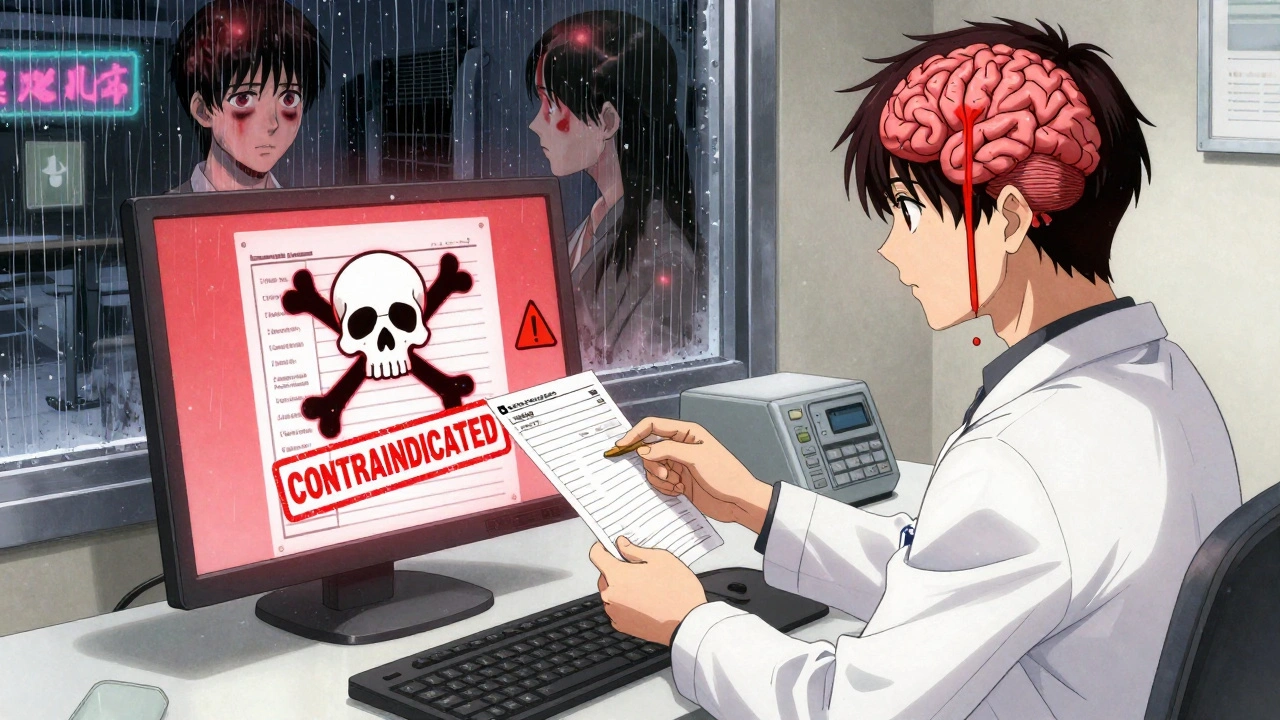
What About Other Acne Treatments?
This isn’t about avoiding antibiotics altogether. It’s about avoiding the wrong combo. Topical treatments like benzoyl peroxide or adapalene? Safe with isotretinoin. Dapsone gel? Also safe. Even oral contraceptives or spironolactone, used for hormonal acne, don’t raise this risk. But any drug in the tetracycline family - doxycycline, minocycline, tetracycline, even the newer sarecycline - carries this danger. That’s why dermatology guidelines from the American Academy of Dermatology and the European Academy of Dermatology are crystal clear: Never combine isotretinoin with any tetracycline-class antibiotic. This isn’t a suggestion. It’s a hard rule. And it’s backed by Level I evidence - the highest standard in medicine.How Are Clinics Trying to Stop This?
The good news? Systems are catching up. Since 2006, the FDA’s iPledge program has required patients to be counseled about isotretinoin risks - including this one. But it’s not enough. Many doctors still write the prescriptions. Pharmacies still fill them. Now, electronic health records are stepping in. Systems like Epic and Cerner have built hard stops. If a doctor tries to prescribe isotretinoin while a tetracycline is active, the system blocks it. A 2022 study showed this cut co-prescriptions from 3.7% to just 0.4%. That’s 90% fewer dangerous combinations. CVS Health’s pharmacy system now flags this combo at checkout - and has prevented 98% of attempted dispensing. Dermatology residency programs now teach this interaction in detail. The American Board of Dermatology includes it in every certification exam. If you’re a doctor who still prescribes this combo, you’re not just out of date - you’re putting patients at risk.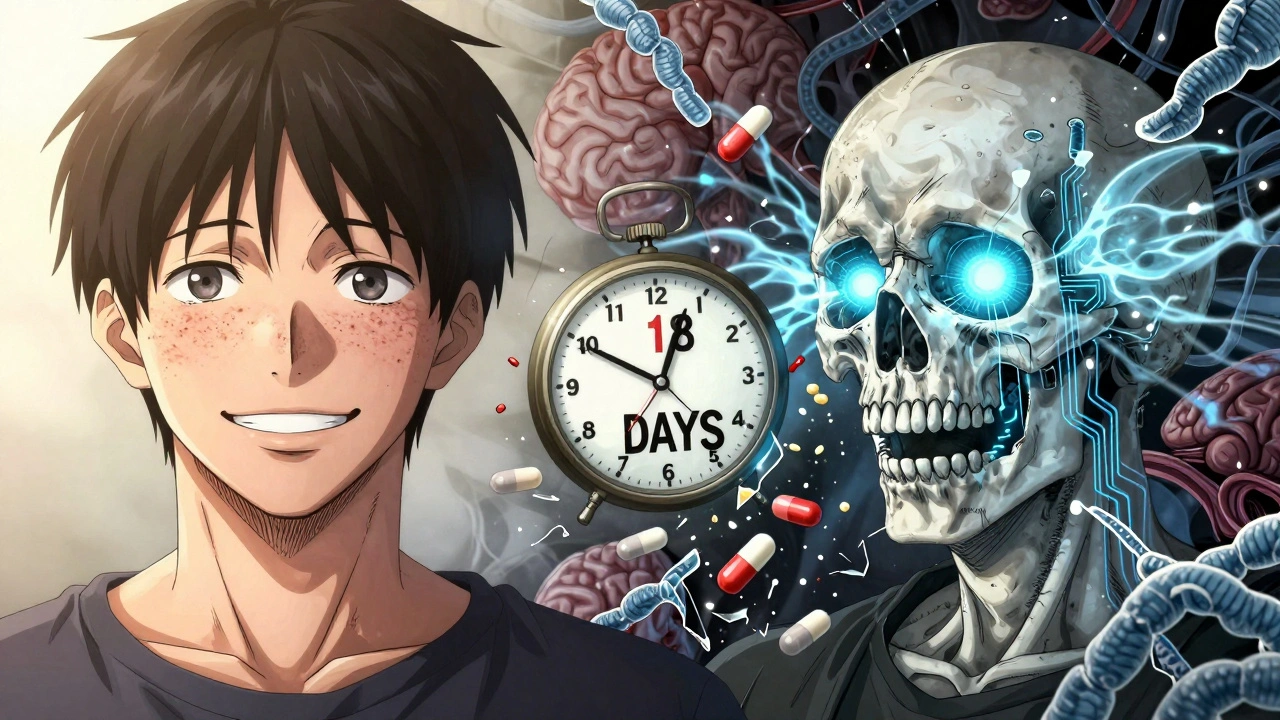
What Should You Do?
If you’re on isotretinoin: Stop any tetracycline immediately. Tell your doctor. Don’t wait for symptoms. Get your eyes checked if you have headaches, vision changes, or ringing in your ears. A simple eye exam can detect swelling of the optic nerve - an early warning sign. If you’re on a tetracycline and thinking about isotretinoin: Ask your dermatologist for a waiting period. At least 7 days. Better yet, 14. Make sure they know you’re not just stopping the antibiotic - you’re giving your body time to reset. If you’re a parent: Ask your teen’s dermatologist: "Are you sure they’re not taking any antibiotics right now?" Even a course of doxycycline for a sinus infection can be dangerous if it overlaps with isotretinoin. If you’ve had this combo and feel fine: Don’t assume you’re safe. Symptoms can appear weeks after stopping. Keep an eye on your vision. Don’t ignore headaches. This isn’t something you can ignore.The Bigger Picture
This isn’t just about two drugs. It’s about how medicine works - or doesn’t. We have powerful tools to treat acne. But we also have dangerous, well-known interactions that persist because of habit, not science. Tetracyclines were once the gold standard for acne. Now, we know they’re a relic in many cases. The U.S. market for tetracycline acne prescriptions has dropped 27% since 2010. Isotretinoin use has climbed. Why? Because doctors are learning. Because systems are improving. Because patients are speaking up. The future of acne treatment is moving away from antibiotics. Toward non-antibiotic anti-inflammatories. Toward personalized care. Toward safety. This interaction is a reminder: some risks aren’t worth the trade-off. Your vision matters more than clearing up a few pimples faster.Can you take doxycycline and isotretinoin together if you stop one first?
No. Even if you stop the tetracycline, you must wait at least 7 days - preferably 14 - before starting isotretinoin. The drugs can linger in your system, and the risk of pseudotumor cerebri doesn’t disappear immediately. Always confirm with your dermatologist before switching.
What are the early warning signs of pseudotumor cerebri?
Look for severe headaches (especially worse in the morning or when lying down), blurred or double vision, transient visual obscurations (brief blackouts), ringing in the ears that pulses with your heartbeat, and nausea. If you’re on either drug and experience any of these, get medical help immediately.
Is this risk only for teens?
No. While teens are most commonly prescribed both drugs, adults of any age can develop pseudotumor cerebri from this combination. Women between 20 and 45 are at highest overall risk. Age doesn’t protect you.
Are all tetracycline antibiotics equally risky?
Yes. Doxycycline, minocycline, tetracycline, and sarecycline all carry this risk. It’s not about the brand or dose - it’s about the class. Any drug ending in "-cycline" should be avoided with isotretinoin.
Can this interaction cause permanent vision loss?
Yes. Multiple case reports confirm permanent visual field damage after short-term use of both drugs. In some cases, vision doesn’t recover even after stopping the medications and draining spinal fluid. This is not a risk you can gamble with.
Why isn’t this interaction blocked automatically by pharmacies?
Many pharmacies now have alerts, but not all. Systems like Epic and Cerner can block it, but smaller clinics or older software may not. Always double-check with your doctor and pharmacist. Don’t assume technology will catch it - be your own advocate.
Deborah Andrich
December 13, 2025 AT 20:03God, I wish more doctors actually read the damn guidelines. My sister almost lost her vision after they gave her doxycycline while she was on Accutane. They blamed it on 'stress' for weeks. She had to beg for an MRI. Don't let this happen to anyone else.
Scott Butler
December 14, 2025 AT 00:38This is why America's medical system is a joke. You let some kid with acne take two drugs that can blind them because the docs are too lazy to check a damn drug interaction chart. We need to fire every dermatologist who still prescribes this combo.
John Fred
December 14, 2025 AT 18:43Yessss!! 🔥 This is why I always tell my acne patients: skip the antibiotics unless it's absolutely necessary. Topical adapalene + benzoyl peroxide = game changer. No brain pressure, no vision loss, just clear skin. 🙌
Hamza Laassili
December 16, 2025 AT 14:56WTF?!?!?!?! I took doxy and accutane together for 3 weeks last year and I'm fine!!! So this is just fearmongering???!!! Why do people make this stuff up???!!!
Cole Newman
December 17, 2025 AT 18:33Bro you're lucky you didn't go blind. I know 3 people who did. One guy's optic nerve got permanently swollen. He can't drive anymore. This isn't a gamble. It's a death sentence with a 10% chance of you walking away. Stop being a dumbass.
Casey Mellish
December 19, 2025 AT 05:55As an Aussie, I'm proud to say our dermatology guidelines are even stricter. We don't even *consider* tetracyclines for acne anymore unless it's life-threatening. We've got better options. Your skin doesn't need to pay the price of your impatience.
Tyrone Marshall
December 21, 2025 AT 00:14It's not just about the drugs-it's about how we treat young people's bodies as test subjects. We rush to fix acne because it's 'cosmetic,' but we forget it's deeply psychological. Why not treat the root cause-hormones, diet, stress-instead of poisoning the system? This interaction is a symptom of a deeper problem in how we medicate.
Emily Haworth
December 21, 2025 AT 14:39Did you know the FDA knows about this but doesn't make it mandatory to warn patients? 🤔 Big Pharma doesn't want you to know. They make billions off Accutane AND antibiotics. This is a silent genocide of teenagers' vision. I'm not paranoid-I'm just reading the reports.
Tom Zerkoff
December 23, 2025 AT 12:56It is imperative to underscore that the pharmacokinetic synergy between tetracycline-class agents and isotretinoin induces a pathological upregulation of aquaporin-4 expression within the choroid plexus, thereby impairing cerebrospinal fluid homeostasis. The clinical implications are unequivocally severe and warrant immediate cessation of concurrent administration.
Yatendra S
December 23, 2025 AT 22:43we are all just atoms in a machine... the drugs are just energy patterns... your vision? it's just a reflection of your mind's perception... maybe the real illness is believing you need to 'fix' your skin... 🌌
Lara Tobin
December 25, 2025 AT 10:03I had the worst headaches after starting Accutane. I thought it was just dehydration. I wish someone had told me about this. Please, if you're on either-listen to your body. Don't wait.
Jamie Clark
December 25, 2025 AT 10:47So what? You're scared of a 1 in 1,000 chance? Most people die from bad coffee or car crashes. This isn't a reason to stop treating acne-it's a reason to stop being weak. If you're not willing to take a risk for clear skin, you don't deserve it.
Keasha Trawick
December 25, 2025 AT 23:24Imagine your brain turning into a pressure cooker while your eyes scream for mercy. That’s what this combo does. I saw a girl cry because she couldn’t read her own name on a billboard. She was 17. This isn’t a side effect-it’s a horror story with a prescription label.