
Imagine waking up to find your partner standing on the bed, shouting, or even swinging their arms as if fighting an invisible enemy. This isn't a scene from a horror movie; it is the terrifying reality for people living with REM Sleep Behavior Disorder, which is a parasomnia where individuals physically act out vivid dreams due to a loss of normal muscle paralysis during REM sleep. Known clinically as RBD, this condition strips away the protective atonia that usually keeps us still while we dream. The result? Complex motor behaviors, vocalizations, and sometimes serious injury to both the patient and their bed partner.
You might wonder why this matters beyond just bad sleep. It does. RBD is not just a sleep glitch; it is often the earliest warning sign of serious neurological decline. Approximately 90% of patients with idiopathic RBD eventually develop a neurodegenerative synucleinopathy like Parkinson's disease, dementia with Lewy bodies, or multiple system atrophy. Understanding the medications available and the necessary neurological assessments is crucial for managing symptoms today and monitoring health tomorrow.
How Doctors Diagnose RBD
Before treating RBD, you need a confirmed diagnosis. You cannot rely on self-reporting alone because many people mistake these episodes for nightmares or night terrors. The gold standard for diagnosis is polysomnography, commonly known as a sleep study. During this overnight test, technicians monitor your brain waves, oxygen levels, heart rate, and, most importantly, muscle activity.
The hallmark of RBD in a sleep study is REM sleep without atonia (RSWA). In healthy sleepers, muscles are essentially paralyzed during REM sleep. In RBD patients, electromyographic (EMG) tone remains high. According to the International Classification of Sleep Disorders (ICSD-3), a diagnosis requires excessive muscle tone in at least 15% of REM sleep epochs. Studies show that complex behaviors occur an average of 4.2 times per hour during these episodes. If you have been experiencing frequent injuries or violent dream enactment, ask your doctor about a polysomnogram. It provides the objective data needed to start effective treatment.
First-Line Medications: Melatonin vs. Clonazepam
When it comes to treating RBD, two medications dominate the landscape: melatonin and clonazepam. Both have conditional recommendations from the American Academy of Sleep Medicine (AASM), but they work differently and carry different risks.
Melatonin is often the first choice for older adults. It is a hormone that regulates the sleep-wake cycle. Treatment typically starts with immediate-release melatonin at 3 mg at bedtime. Doctors may titrate this dose up to 12 mg if needed. About 65% of patients respond well to melatonin monotherapy. Its biggest advantage is safety. Only 8% of patients report mild side effects like headache or dizziness. A 68-year-old male patient, for example, reduced his weekly episodes from seven to one after starting 6 mg nightly, with only minor morning grogginess that faded after two weeks.
Clonazepam, a benzodiazepine, is more potent but carries higher risks. It shows efficacy in 80-90% of cases, with some studies citing an 88.7% symptom reduction rate. However, it causes significant side effects in 38% of patients. These include dizziness (22%), unsteadiness (18%), and daytime sleepiness (15%). For elderly patients, the risk of falls increases by 34%. Despite this, many clinicians still prescribe it when melatonin fails, often starting at 0.25-0.5 mg and capping at 2.0 mg. The key is careful monitoring. If you stop clonazepam abruptly, you risk withdrawal symptoms like nightmares and agitation, affecting 38% of discontinuers. Tapering slowly-reducing by 0.125 mg every 1-2 weeks-is essential.
| Medication | Efficacy Rate | Common Side Effects | Key Risk |
|---|---|---|---|
| Melatonin | ~65% | Headache, Dizziness | Low |
| Clonazepam | 80-90% | Dizziness, Unsteadiness, Daytime Sleepiness | Falls, Dependence |
| Pramipexole | ~60% | aNausea, Nausea | Impulse Control Issues |

Alternative Therapies and Emerging Options
If melatonin and clonazepam do not work, doctors may consider other options. Pramipexole, a dopamine agonist used for Parkinson's disease, helps about 60% of patients, particularly those who also suffer from restless legs syndrome. However, its benefits must be weighed against potential side effects like impulse control disorders.
Another option is Rivastigmine, an acetylcholinesterase inhibitor. A randomized controlled trial showed it improved RBD frequency in patients with mild cognitive impairment who were refractory to conventional therapy. While promising, evidence for Rivastigmine is limited compared to first-line treatments.
Looking ahead, dual orexin receptor antagonists represent a breakthrough in development. Research from Mount Sinai in October 2023 demonstrated a 78% reduction in dream enactment behaviors in animal models. These drugs target the orexin system, which regulates wakefulness. Neurocrine Biosciences is currently conducting Phase II trials of NBI-1117568, a selective orexin-2 receptor antagonist, with results expected soon. This could offer a safer alternative with fewer side effects than benzodiazepines.
Neurological Assessment: The Hidden Danger
Treating the symptoms is only half the battle. The more critical aspect of RBD management is neurological monitoring. As mentioned, RBD is a prodromal marker for synucleinopathies. Within 12 years, 73.5% of patients with idiopathic RBD develop a neurodegenerative disorder. The annual conversion rate is approximately 6.3%.
This means you need regular check-ups. The American Academy of Neurology recommends annual neurological assessments for all patients with idiopathic RBD. What should these assessments cover?
- Movement Disorders: Look for subtle tremors, rigidity, or bradykinesia (slowness of movement) that signal early Parkinson's disease.
- Cognitive Function: Monitor for memory lapses, visual hallucinations, or attention deficits that could indicate dementia with Lewy bodies.
- Autonomic Symptoms: Check for blood pressure fluctuations, urinary issues, or constipation, which are common in multiple system atrophy.
Early detection allows for earlier intervention. While we cannot yet prevent neurodegeneration, managing symptoms early can improve quality of life significantly. Dr. Ronald Postuma of McGill University notes that the next five years may bring disease-modifying therapies targeting the underlying neurodegenerative process. Until then, vigilance is your best tool.
Safety Modifications: Protecting Your Bedroom
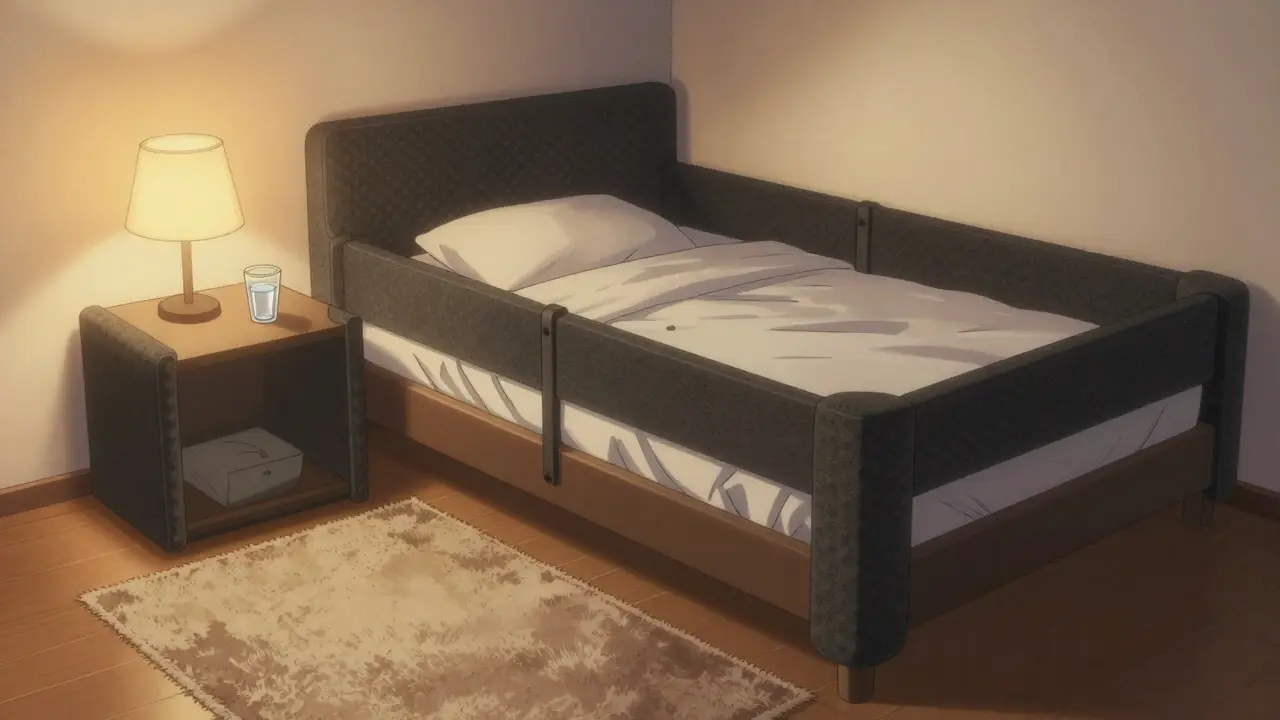
Medication alone is not enough. You must make your bedroom safe. In a 2019 study, 78% of patients implemented safety modifications. Why? Because 42% of patients eventually require sleeping in separate rooms due to safety concerns, even with medication.
Here is a checklist for securing your sleep environment:
- Remove Weapons: Take all firearms, knives, and sharp objects out of the bedroom.
- Pad Furniture: Cover sharp corners of nightstands and dressers with padding.
- Floor Protection: Place thick carpets or mats beside the bed to cushion falls.
- Bed Rails: Install bed rails for patients with moderate to severe symptoms to prevent falling out of bed.
- Alcohol Avoidance: Even moderate alcohol consumption (1-2 drinks) triggers RBD episodes in 65% of patients. Avoid it completely before bed.
These steps reduce the risk of injury to both you and your partner. One spouse noted that after her husband started clonazepam and they padded the room, she could finally sleep without fear of being kicked or punched. Safety is a shared responsibility.
Living with RBD: Practical Tips
Living with RBD affects more than just the patient. Bed partners often experience chronic sleep deprivation and anxiety. Open communication is vital. Explain the condition to family members so they understand these actions are involuntary.
Keep a sleep diary. Record the frequency and severity of episodes, any changes in medication, and potential triggers like stress or illness. This data helps your doctor adjust treatment effectively. Remember, melatonin takes 2-4 weeks at each dose level to show full effect. Patience is key.
If you feel overwhelmed, seek support. Organizations like the American Brain Foundation provide resources and community connections. You are not alone in this journey.
Is REM Sleep Behavior Disorder curable?
Currently, there is no cure for RBD. Treatment focuses on managing symptoms through medication like melatonin or clonazepam and ensuring bedroom safety. However, research into dual orexin receptor antagonists offers hope for more effective future treatments.
Will I definitely get Parkinson's disease if I have RBD?
Not necessarily, but the risk is high. Approximately 90% of RBD cases are associated with underlying neurodegenerative synucleinopathies. About 73.5% of patients with idiopathic RBD develop a disorder like Parkinson's disease within 12 years. Regular neurological assessments are crucial for early detection.
What is the safest medication for RBD?
Melatonin is generally considered the safest first-line treatment, especially for older adults. It has a low side effect profile (only 8% report mild issues) compared to clonazepam, which carries risks of falls, dizziness, and dependence. However, clonazepam is more effective for severe cases.
Can alcohol trigger RBD episodes?
Yes, alcohol is a significant trigger. Studies show that even moderate consumption (1-2 drinks) can trigger RBD episodes in 65% of patients. It is strongly recommended to avoid alcohol entirely, especially in the hours leading up to bedtime.
How is RBD diagnosed?
RBD is diagnosed using polysomnography (a sleep study). The key finding is REM sleep without atonia (RSWA), where muscle tone remains high during REM sleep. ICSD-3 criteria require excessive EMG tone in at least 15% of REM sleep epochs for a formal diagnosis.
Claire A
May 6, 2026 AT 07:54My husband was diagnosed with this three years ago and honestly, it changed our lives completely. We had to move him to a separate room because he was kicking so hard during his dreams that I ended up in the ER twice from blunt force trauma. It sounds crazy but it is real. The melatonin helped a lot at first, starting with just 3mg but we eventually went up to 10mg before bed. It took about three weeks for us to see the full effect though, so don't give up if it doesn't work overnight. We also padded all the sharp corners of his nightstand and put thick yoga mats on the floor around the bed. It makes the room look like a gym but it keeps us safe. I hope you find relief soon because dealing with the fear every night is exhausting for both partners.
Nisha Koshti
May 7, 2026 AT 05:24this article is probably fake news!!! big pharma wants u to take pills for everything!!!! they dont want u to know that its just stress from the government controlling ur sleep patterns!! :((((((( why do they hide the truth??? i bet the melatonin is laced with something bad... u shouldnt trust doctors... they are all in on it... stop taking meds and eat more kale or whatever... :((((((
Jannet Suen
May 8, 2026 AT 09:59I have to say that while Nisha's comment above is certainly one way to view things, it might be helpful to stick to the medical facts presented here rather than spiraling into conspiracy theories. 😅 It is easy to feel overwhelmed by a diagnosis like RBD, especially when reading about the link to Parkinson's disease, but panic rarely helps anyone. The statistics mentioned regarding the conversion rate are indeed high, but remember that early detection allows for better management of symptoms. I found that keeping a detailed sleep diary really helped my neurologist adjust my medication effectively. It’s not about hiding the truth; it’s about understanding the biology so we can protect ourselves. Let’s try to keep the conversation supportive and grounded in reality, shall we? 🌿
andrew iregbayen
May 10, 2026 AT 00:49Hey Claire, thanks for sharing your experience. It really puts things into perspective. I’ve been researching this because my dad has been acting out in his sleep lately and we thought it was just vivid nightmares until we read about REM sleep without atonia. The part about clonazepam having an 80-90% efficacy rate is interesting, but the side effects sound rough, especially the dizziness and fall risk for older folks. Do you think trying the orexin receptor antagonists mentioned in the article is worth waiting for, or is it too experimental right now? I’m curious if anyone has heard of patients using pramipexole successfully since he also has restless legs syndrome. Any insights would be great!
Laura ciotoli
May 10, 2026 AT 01:21You need to listen to the experts here. Pramipexole is not a toy. It is a dopamine agonist with serious risks including impulse control disorders. If you have restless legs, yes, it might help, but you must weigh the benefits against the potential for gambling addiction or hypersexuality. This is not a casual suggestion. You must consult a specialist. Do not self-medicate based on internet forums. The safety modifications listed in the post are non-negotiable. Remove weapons. Pad the room. Do not ignore these steps. Your father’s life could depend on it. Clonazepam requires careful tapering. Abrupt cessation causes withdrawal. Follow the protocol strictly. Ignorance is dangerous.
Sarah O'Donnell
May 10, 2026 AT 03:15I feel like people here are ignoring the emotional toll this takes on the family. 😔 It’s not just about pills and pads. It’s about the constant anxiety. My partner has RBD and I haven’t slept through the night in years. I wake up every time he moves. It’s traumatic. Why does everyone focus only on the medication? What about the mental health of the bed partner? We need more support groups. More empathy. Less cold clinical data. 💔😢 The system fails us. We are treated as cases, not humans. It’s sad really. How can you love someone when you’re afraid of them sleeping? 🥀
Amelia Vaughan
May 11, 2026 AT 12:53This is a classic example of how modern medicine creates problems instead of solving them. People used to sleep fine before all these chemicals. Now everyone needs a pill to stay still in their own bed. Weakness. You need to toughen up. Stop drinking alcohol before bed as the article says. That’s the root cause. Discipline yourself. Don’t blame it on a disorder. Many men act out because they lack willpower. Fix your lifestyle. Go to bed earlier. Eat less sugar. Stop whining about neurological decline. It’s mostly in your head. Strong minds don’t need clonazepam. Get a grip.
Kevin S
May 12, 2026 AT 01:07Hey Sarah! 👋 I totally hear you. It IS super stressful for the partner too. 😓 I know my wife feels guilty for being scared sometimes, but it’s involuntary. Maybe looking into those support groups from the American Brain Foundation mentioned in the post could help? 🙏 It’s good to connect with others who get it. Sending positive vibes to you and your partner! ✨💪