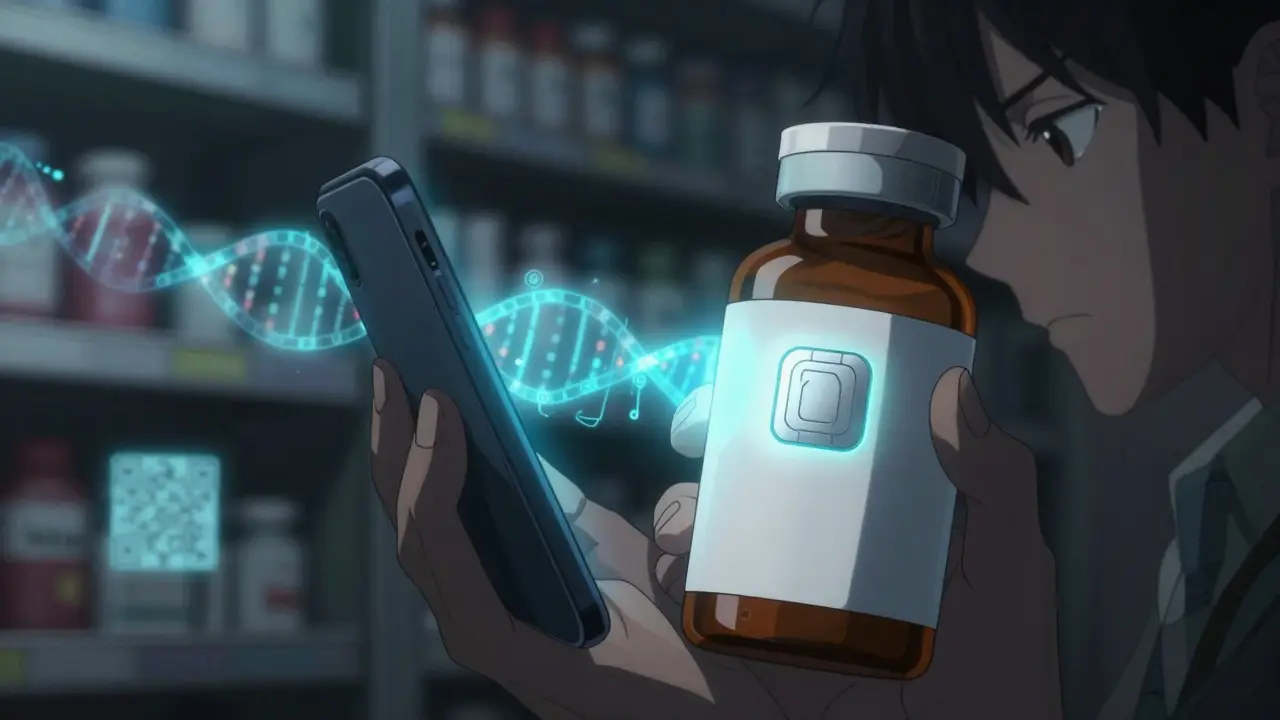
Every year, millions of people around the world take pills that look real but aren’t. These aren’t just cheap knockoffs-they’re dangerous. Fake drugs can contain no active ingredient, too much of a drug, or even toxic chemicals like rat poison or floor cleaner. The World Health Organization estimates that one in ten medical products in low- and middle-income countries is counterfeit. In some regions, that number climbs to one in three. And while the problem isn’t new, the tools to stop it are changing fast.
What’s at Stake?
Counterfeit drugs don’t just waste money. They kill. A patient taking fake antibiotics might not recover from an infection. Someone using fake insulin could go into a diabetic coma. Fake cancer drugs might delay real treatment, giving tumors time to spread. The global cost of fake pharmaceuticals is estimated at over $200 billion annually, but the human cost is far worse. That’s why governments, manufacturers, and tech companies are now racing to build systems that can verify a pill’s authenticity-from the factory floor to the pharmacy counter.
Serialization: The Foundation of Modern Anti-Counterfeiting
The most widespread solution today is mass serialization. This means every single pill bottle, box, or vial gets a unique digital code-like a fingerprint. That code links to a secure database that tracks where the product has been, who handled it, and whether it’s been tampered with. By November 2025, U.S. law under the Drug Supply Chain Security Act (DSCSA) will require every prescription drug to have this serial number. The EU’s Falsified Medicines Directive (FMD) already enforces similar rules.
Serialization isn’t just about barcodes. Modern systems use GS1 standards for 2D DataMatrix codes that hold up to 2,000 characters of encrypted data. These codes are printed directly onto packaging using high-resolution printers. The system works like this: a manufacturer assigns a unique serial number. As the drug moves through warehouses, distributors, and pharmacies, each handoff is logged. If a bottle is scanned at a pharmacy and the system says it was never shipped to that location, it’s flagged as suspicious.
Companies that adopted serialization early saw recall times drop by nearly 60%. Instead of pulling entire batches, they can isolate just the fake units. But it’s expensive. One European distributor reported spending €2.3 million and 14 months just to integrate serialization into their warehouse systems. Smaller manufacturers still struggle to afford it-only 43% have adopted it, compared to 97% of the top 100 pharmaceutical companies.
NFC: The Smartphone That Verifies Your Medicine
While barcodes require a scanner, Near Field Communication (NFC) lets you use your phone. Just tap your smartphone against the medicine package, and in under two seconds, it checks the product’s digital identity against a secure server. No app needed. No login. No scanning. Just tap.
Why is this better than QR codes? Because QR codes can be copied. In 2025, a major U.S. drugmaker used plain QR codes for verification. Fraudsters printed fake labels, scanned the real ones, and uploaded them to their own servers. When patients scanned the fake labels, their phones showed “verified.” The company had to recall $147 million in product. That’s why the industry is moving to cryptographically secured NFC. These tags have embedded chips that generate one-time digital signatures. Even if someone copies the physical tag, the digital signature won’t match. ForgeStop’s 2025 tests showed NFC verification is 37% faster than barcode scanners and reduces false positives by 92%.
Most modern smartphones support NFC. By 2025, 89% of phones shipped worldwide had it built in. That means patients in Nigeria, Brazil, or rural India can verify medicine using a $100 Android phone. A pharmacy chain in Latin America reported a 98% drop in counterfeit incidents after switching to NFC-pharmacists now verify over 1,200 packages a day with no slowdown.
Blockchain: The Unbreakable Ledger
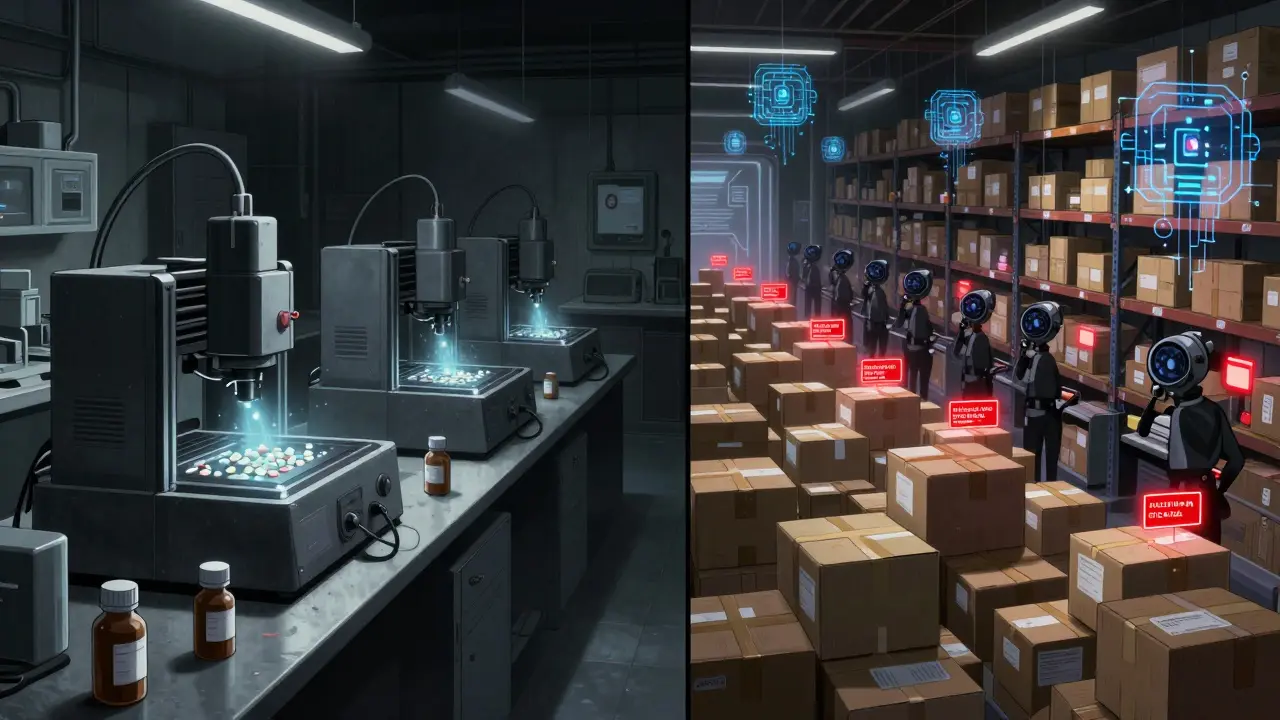
Think of blockchain as a digital notebook that no one can erase or alter. Every time a drug changes hands-whether from a factory in China to a warehouse in Germany to a clinic in Mexico-the event is recorded as a block in a chain. Once recorded, it’s permanent. This isn’t just about tracking. It’s about proving the drug stayed within safe temperature ranges during transport, that no one swapped the packaging, and that the supplier was authorized.
Companies like De Beers used blockchain to track diamonds. Now, pharmaceutical firms are adapting the same tech. The EU Digital Product Passport, launching in 2027, will require every medicine to link to a blockchain record showing its entire lifecycle: ingredients, production date, storage conditions, and transport history.
But blockchain isn’t easy. It takes 18 to 24 months to fully integrate into legacy systems. It needs buy-in from every partner in the supply chain-manufacturers, logistics firms, pharmacies. If even one link doesn’t connect, the chain breaks. Still, for large companies with global networks, it’s becoming non-negotiable. As one industry analyst put it: “Each product gets a unique digital identity. As it moves, every participant records its presence and condition. That’s not convenience. That’s accountability.”
Forensic Markers: DNA, Holograms, and Invisible Inks
Some counterfeiters can copy barcodes. Others can replicate packaging. So what’s left? Physical features only experts can detect.
Covert markers include UV inks that glow under blacklight, thermochromic inks that change color with heat, and microtext too small to see with the naked eye. These are printed directly onto labels or blister packs. They’re cheap to apply-adding just a few cents per unit-but hard to fake without the original printing plates.
Even more advanced is DNA-based authentication. Scientists embed unique synthetic DNA strands into the drug’s coating or packaging. To verify, a pharmacist swabs the surface and runs a quick test. The DNA sequence matches only the original product. It’s nearly impossible to replicate. But it costs $0.15 to $0.25 per unit-five times more than standard serialization. So far, it’s only used for high-value drugs like cancer treatments or vaccines.
Holograms are still common, but old-school ones are easy to copy. Newer versions use diffractive patterns, kinegrams, and laser-etched textures that shift under angle. A genuine hologram will show movement and depth. A fake one looks flat and blurry.
AI Vision: Seeing What Humans Can’t
Pharmacists can’t check every bottle with a DNA test. But AI can. Cameras mounted at packaging lines or pharmacy shelves scan thousands of units per hour. Using machine learning trained on millions of real and fake packages, these systems spot tiny differences: a slightly off-color label, a misaligned barcode, a texture mismatch in the foil seal.
Systems from companies like Cognitivemarket Research now detect counterfeits with 99.2% accuracy in controlled labs. Real-world conditions are harder-poor lighting, dusty packaging, worn labels. But accuracy jumped from 89.7% in 2024 to 94.3% by mid-2025. These systems are being rolled out in warehouses and customs checkpoints, especially in Asia-Pacific, where counterfeit volumes are highest.
What’s Next? Eco-Labels, Tariffs, and the Counterfeiter’s Arms Race
It’s not just about stopping fakes-it’s about doing it sustainably. Over 62% of new anti-counterfeit packaging now uses recyclable materials. Some companies are embedding traceable markers into biodegradable films. Others are testing water-soluble inks that dissolve after verification, leaving no plastic waste.
But threats are evolving too. In 2025, counterfeiters began using AI to generate fake packaging designs and 3D-print counterfeit blister packs. The Liberation Day Tariffs imposed in April 2025 increased production costs for drugs from China and India by 12-18%, creating delays of 21-45 days. That’s giving counterfeiters more time to flood markets with fake goods during shortages.
Experts agree: no single technology is enough. The future belongs to multi-layered security. A pill bottle might have:
- A serialized QR code for regulatory compliance
- An NFC chip for consumer verification
- A hologram for quick visual check
- A thermochromic stripe that changes color when touched
- A blockchain record linking to its entire journey
By 2027, 83% of pharmaceutical executives plan to use this layered approach. It’s not about one silver bullet. It’s about making counterfeiting so hard, so expensive, and so risky that it’s no longer worth the effort.
How You Can Help
As a patient, you don’t need to be a tech expert. But you can be alert. If a medicine looks different-new packaging, odd smell, strange color-don’t take it. Ask your pharmacist to verify it. In countries with NFC systems, download the official app or just tap your phone. If your pharmacy doesn’t offer verification, ask why. Pressure matters. Every time a patient asks, it forces the system to improve.
How do I know if my medicine is fake?
Check for tampering-broken seals, mismatched labels, or odd packaging. Use your smartphone: if the package has an NFC chip or a verified QR code, tap or scan it. In many countries, official apps let you verify authenticity instantly. If something feels off, take it back to the pharmacy. Never use medicine that looks, smells, or tastes strange.
Are all QR codes on medicine safe?
No. Many fake drugs have copied QR codes that lead to fake verification pages. Only trust QR codes that are cryptographically secured-meaning they’re linked to a secure server that checks digital signatures, not just a website. Look for logos from trusted providers like GS1, ForgeStop, or your pharmacy’s official app. If the QR code opens a random website, don’t trust it.
Is blockchain really necessary for anti-counterfeiting?
For large manufacturers and global supply chains, yes. Blockchain provides an unchangeable record of every step a drug takes-from factory to patient. It’s required by EU and U.S. regulations for traceability. For small pharmacies, it’s less critical. But for ensuring drugs aren’t switched, stolen, or exposed to unsafe temperatures, blockchain is the most reliable tool we have.
Why is NFC better than barcode scanning?
Barcodes can be copied, scanned, and reused on fake products. NFC chips contain encrypted, one-time digital signatures that can’t be duplicated. NFC verification is faster-under 2 seconds-and works without line-of-sight. You just tap. Barcodes need perfect lighting and alignment. NFC works even if the label is dirty or slightly damaged.
Can counterfeiters beat these new technologies?
They try. But modern systems are designed to make counterfeiting too costly. A single NFC chip costs pennies, but copying it requires advanced equipment, factory access, and decryption skills. DNA markers are impossible to replicate without the original biological code. AI systems learn from every new fake they see. The goal isn’t perfection-it’s making fakes so hard to produce that it’s not worth the risk.
Will these technologies work in developing countries?
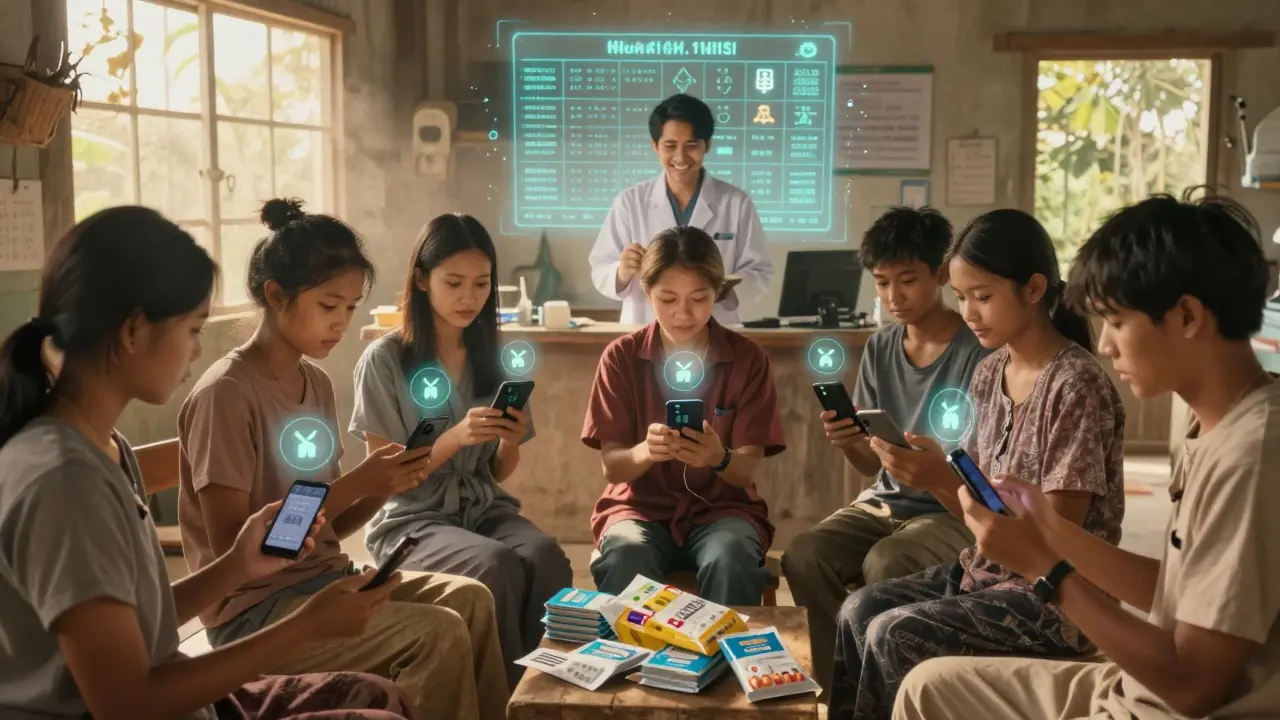
Yes. NFC and QR codes work on basic smartphones, which are now common even in rural areas. Brazil and Nigeria launched mandatory serialization in 2025. Mobile networks are expanding fast. The biggest barrier isn’t tech-it’s infrastructure. But governments and NGOs are partnering with tech firms to deploy low-cost verification kiosks and community pharmacy networks that use simple tap-and-check systems.
Final Thought
The fight against fake drugs isn’t won by one invention. It’s won by layers-digital, physical, regulatory, and human. A barcode alone won’t save you. A hologram alone won’t stop a determined counterfeiter. But a bottle with an NFC chip, a blockchain record, a DNA marker, and a pharmacist who asks questions? That’s a system that works. And that’s the future we’re building.
Angel Wolfe
February 27, 2026 AT 15:21The government is letting Big Pharma control everything and now they want us to trust NFC chips and blockchain? LOL. This is all a scam to make us buy more expensive meds and give up our data. I bet the FDA is in bed with these tech companies. They’re using fake drugs as an excuse to track every pill you take. You think your phone verifying your medicine is safe? Nah. That’s just the first step to biometric ID tagging. They’ll say it’s for safety but next thing you know, your insulin dose is remotely throttled if you don’t pay your insurance. I’ve seen it happen. I’m not crazy. I’ve read the documents.
Vikas Meshram
February 28, 2026 AT 01:37Serialization and NFC are good but you are missing the point. In India we have 800 million people without reliable internet. How is blockchain going to work when the village pharmacy has no 4G? You need offline verification. QR codes with offline hash validation. Not cloud dependent systems. Also why are you ignoring the role of local pharmacists? They’ve been verifying medicines for decades by smell, texture, and batch number. Tech should assist not replace human judgment. And stop calling it ‘anti-counterfeit’ - it’s anti-poor. These systems cost 5x more and only help urban centers.
Ben Estella
March 1, 2026 AT 06:57Let me get this straight - we’re spending billions on NFC chips and DNA markers while China prints fake pills in basements and ships them to us via Amazon? This is a joke. The real solution? Ban imports from countries that don’t have FDA-style oversight. Shut down the ports. Stop the flow. No more ‘global supply chain’ nonsense. We don’t need blockchain. We need borders. We need tariffs. We need to stop letting foreign manufacturers play Russian roulette with our kids’ lives. And if you think this is about safety, you’re blind. It’s about control. Big Pharma wants you dependent on their tech so they can charge more. Wake up.
Miranda Anderson
March 2, 2026 AT 20:52I’ve been working in a rural pharmacy for 12 years, and I can tell you - the real heroes aren’t the tech companies. They’re the old pharmacists who remember every patient’s name, who notice when a pill looks slightly off, who call the wholesaler even if it means staying late. The tech is cool, don’t get me wrong. NFC is faster than scanning barcodes. But I’ve seen patients panic because their phone says ‘unverified’ when the real issue is a weak signal. We need tech that serves people, not the other way around. And yes, I’ve had patients cry because they couldn’t afford the ‘verified’ version of their meds. That’s the real crisis. Not the fake labels. The price tags.
Let’s not turn healthcare into a tech showcase. Let’s make sure no one has to choose between their life and their paycheck.
Gigi Valdez
March 3, 2026 AT 16:44The integration of serialization standards under GS1 and the DSCSA represents a significant step forward in supply chain integrity. The reduction in recall times by 60% is statistically significant and correlates directly with improved traceability. However, the economic burden on small manufacturers remains a structural challenge that requires policy intervention, not merely technological adoption. The 43% adoption rate among non-top-100 firms suggests a market failure that cannot be solved by consumer-facing NFC or blockchain alone. A tiered subsidy model, possibly modeled after the EU’s FMD implementation framework, would be more equitable.
bill cook
March 4, 2026 AT 09:24So you’re telling me I should tap my phone on my insulin bottle to make sure it’s real? What if I’m in a car? What if my battery dies? What if the server goes down? You think this is safe? It’s not. It’s a dependency trap. You’re trading one risk - fake drugs - for another - total system failure. One glitch in the cloud and a diabetic dies because their phone says ‘unverified.’ That’s not innovation. That’s negligence. And don’t get me started on DNA markers. You’re putting biological code on a pill? What happens when someone hacks that? What’s next - microchips in your tongue?
Katherine Farmer
March 5, 2026 AT 09:02Let’s be brutally honest - most of these ‘innovations’ are just expensive vanity projects for pharma CEOs trying to look like they’re doing something. NFC? Blockchain? DNA? These are not solutions. They’re PR campaigns. The real problem is the lack of regulatory enforcement. The FDA doesn’t inspect 10% of foreign manufacturing sites. The EU outsources 70% of its drug production. And yet we’re spending millions on smartphone verification? This is like putting a lock on your door while leaving the window wide open. The only thing that works is surprise inspections, heavy fines, and prison time for counterfeiters. Not QR codes. Not chips. Not holograms. Justice.
Jimmy Quilty
March 6, 2026 AT 14:57Did you know that the same companies that make these NFC chips also own the blockchain servers? And they’re owned by the same people who control the drug patents? This isn’t about safety. This is about monopolizing the entire supply chain. You think your phone verifies the pill? Nah. It verifies that you bought from their approved distributor. The moment you try to get generics from another country? Boom. Your phone says ‘unverified.’ They’re creating a digital gated system. And you’re applauding it. Wake up. The fake drugs aren’t just on the market - they’re in the code. And they’re watching you.
Sneha Mahapatra
March 7, 2026 AT 18:59It’s beautiful how we’re using tech to protect life - but we must remember that behind every pill is a person. A mother in Bihar who waits three days for her child’s fever medicine. A veteran in Ohio who skips doses because the ‘verified’ version costs $120. Technology should lift people up, not gate them out. I’m not against NFC or blockchain. I’m against systems that forget humanity. Maybe we should fund community verification kiosks powered by solar, run by local volunteers, with simple color-changing stickers. No app. No login. Just trust. And compassion. That’s the real innovation.
❤️
Brandon Vasquez
March 8, 2026 AT 22:55Good breakdown. The layered approach is key. One tech alone fails. But combined - serialization, NFC, AI vision - they create redundancy. That’s smart. Also agree on the human element. Pharmacists are the last line of defense. Tech helps them work faster. Doesn’t replace them. Keep it simple. Trust your gut. If it looks wrong, ask. That’s all most people need to do.
Brandie Bradshaw
March 10, 2026 AT 13:10Why are we even talking about this? Because the government has been asleep at the wheel for 20 years! They let counterfeiters flood the market while they wrote reports and held hearings! Now, suddenly, after thousands of deaths, they throw out a bunch of expensive tech like it’s magic? This isn’t innovation - it’s damage control. And don’t even get me started on the ‘eco-labels’ - recycled packaging? Please. The real eco-friendly move is to stop outsourcing to countries with zero environmental laws and force domestic production. That’s the only way to truly fix this. Not QR codes. Not blockchain. Not NFC. Accountability. And punishment. Not ‘verification.’
Ajay Krishna
March 11, 2026 AT 02:20As someone from rural India, I can say - the best anti-counterfeit tech is a local pharmacist who knows your family. No phone needed. No app. Just a handshake and a question: ‘Did this come from the same distributor as last month?’ We’ve been doing this for generations. Tech can help - like a simple scanner that checks batch numbers offline - but it shouldn’t replace trust. Build community networks. Train local workers. Pay them fairly. That’s the real solution. Not Silicon Valley’s latest gadget.
Noah Cline
March 12, 2026 AT 18:42From a supply chain analytics standpoint, the adoption curve of serialization is linear, but NFC and blockchain exhibit exponential ROI post-implementation threshold. The marginal cost of NFC integration is negligible at scale due to economies of scale in chip manufacturing (NXP, STMicro) and ubiquitous smartphone penetration (89% global penetration by 2025 per Statista). The real bottleneck is not technological - it’s interoperability. Legacy ERP systems (SAP, Oracle) lack API hooks for blockchain event streaming. The 18-24 month integration window isn’t a flaw - it’s a feature of legacy infrastructure inertia. The solution isn’t to abandon blockchain - it’s to implement middleware orchestration layers using Apache Kafka and GraphQL APIs to bridge legacy and modern systems. This isn’t sci-fi. It’s enterprise architecture 101.