
Imagine waking up with muscle aches that feel like a brutal gym session, but you haven't exercised in weeks. Then you notice your urine looks like cola or dark tea. This isn't just a bad flu or a strange reaction to a new vitamin; it could be rhabdomyolysis is a life-threatening clinical syndrome where skeletal muscle breaks down rapidly, leaking intracellular contents into the bloodstream. While crush injuries once dominated the medical literature, a growing number of emergencies are now caused by how different drugs fight for the same space in your liver and kidneys.
The Danger of the "Chemical Collision"
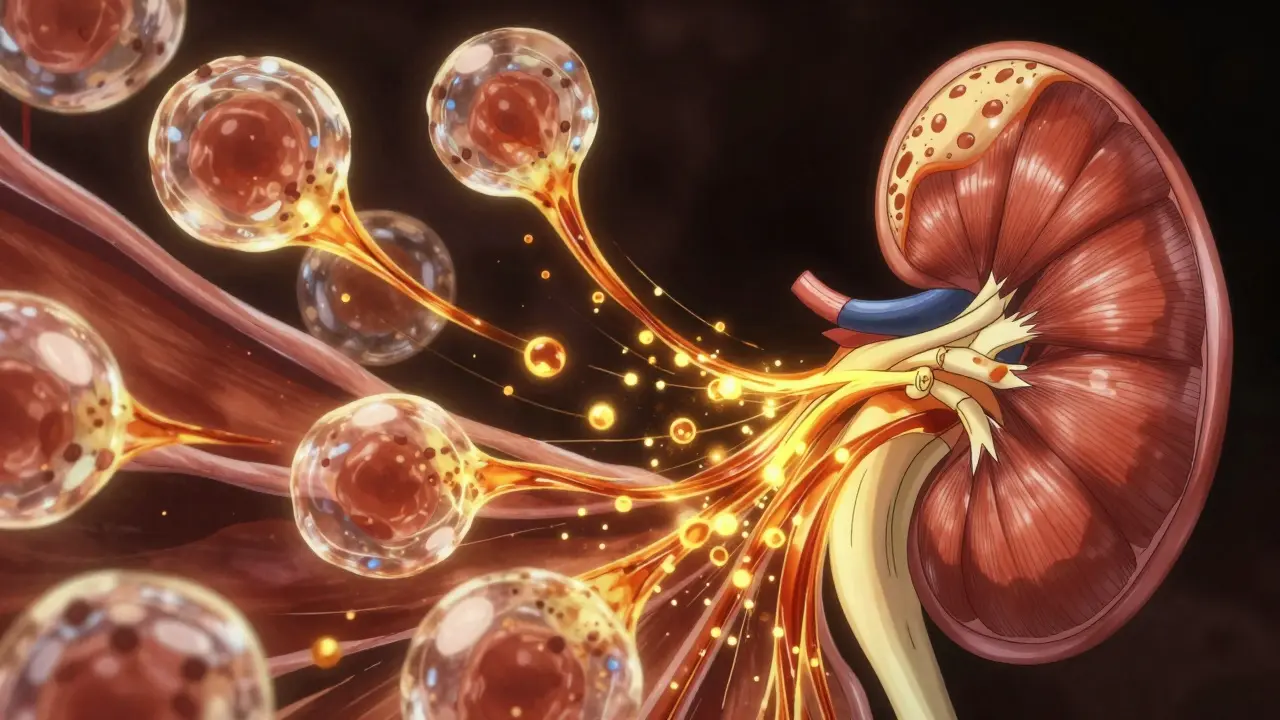
Most people think of drug interactions as mild things, like a medication making you sleepy. But with rhabdomyolysis, the interaction is a physical assault on your muscle cells. When two drugs interfere with each other-often by blocking a specific enzyme in the liver called CYP3A4-one drug can build up to toxic levels in your system. This toxicity compromises the muscle cell membrane, causing them to burst. When they pop, they release myoglobin, a protein that is harmless inside a muscle but toxic to the kidneys when it hits the bloodstream.
About 7-10% of all rhabdomyolysis cases are directly tied to these medication mishaps. The real emergency happens when this flood of myoglobin clogs the renal tubules, leading to acute kidney injury (AKI). In fact, up to 50% of treated patients develop AKI, and if the kidneys fail completely, the mortality rate can jump to 15%.
The Usual Suspects: Which Drugs Are Riskiest?
Not all medications carry the same risk, but a few classes are notorious for causing muscle breakdown when paired incorrectly. Statins (cholesterol-lowering drugs) are the primary culprits, responsible for roughly 60% of drug-induced cases. Specifically, atorvastatin and simvastatin appear most frequently in adverse event reports.
The risk skyrockets when statins meet "inhibitors." For example, if you take simvastatin and then start a strong antibiotic like erythromycin, the risk of muscle breakdown increases by nearly 19-fold. This happens because the antibiotic blocks the liver's ability to clear the statin, leaving the drug to linger and attack muscle tissue. Similar dangers exist with colchicine (used for gout) when combined with clarithromycin, which can trigger a massive spike in muscle enzymes.
| Combination Pair | Risk Multiplier / Incidence | Key Effect |
|---|---|---|
| Simvastatin + Gemfibrozil | 15-20x higher risk | Severe muscle toxicity |
| Simvastatin + Erythromycin | 18.7x higher risk | CYP3A4 enzyme inhibition |
| Colchicine + Clarithromycin | 8.7% incidence rate | Rapid muscle breakdown |
| Zidovudine (HIV med) | 12.3% CK elevation | Direct myotoxicity |
Spotting the Warning Signs
You might expect a clear set of symptoms, but rhabdomyolysis is sneaky. Doctors look for the "classic triad": muscle pain (usually in the shoulders, thighs, or lower back), profound weakness, and dark, cola-colored urine. However, only about half of the patients actually show all three. You might just feel nauseous, have a low-grade fever, or notice you're urinating much less than usual.
From a clinical standpoint, the gold standard for diagnosis is the creatine kinase (CK) test. A normal CK level is low, but in rhabdomyolysis, it typically exceeds 5 times the upper limit of normal. In severe emergencies, CK levels can soar above 100,000 U/L. If you've recently started a new medication or changed your dose-which is when 52% of these cases occur-any new, unexplained muscle soreness should be treated as a red flag.
Who Is Most at Risk?
Age and genetics play a massive role in who suffers from these interactions. People over 65 are over three times more likely to experience rhabdomyolysis, partly because of polypharmacy-the practice of taking five or more medications daily. Those in this group face a staggering 17-fold increase in risk compared to those on fewer drugs.
Biological sex and pre-existing health also matter. Women have a higher incidence rate than men, and anyone with pre-existing kidney issues (an eGFR below 60 mL/min) is 4.5 times more likely to succumb to muscle breakdown. There is even a genetic component; people with the SLCO1B1*5 allele are significantly more prone to simvastatin-induced muscle damage.
Emergency Management and Recovery
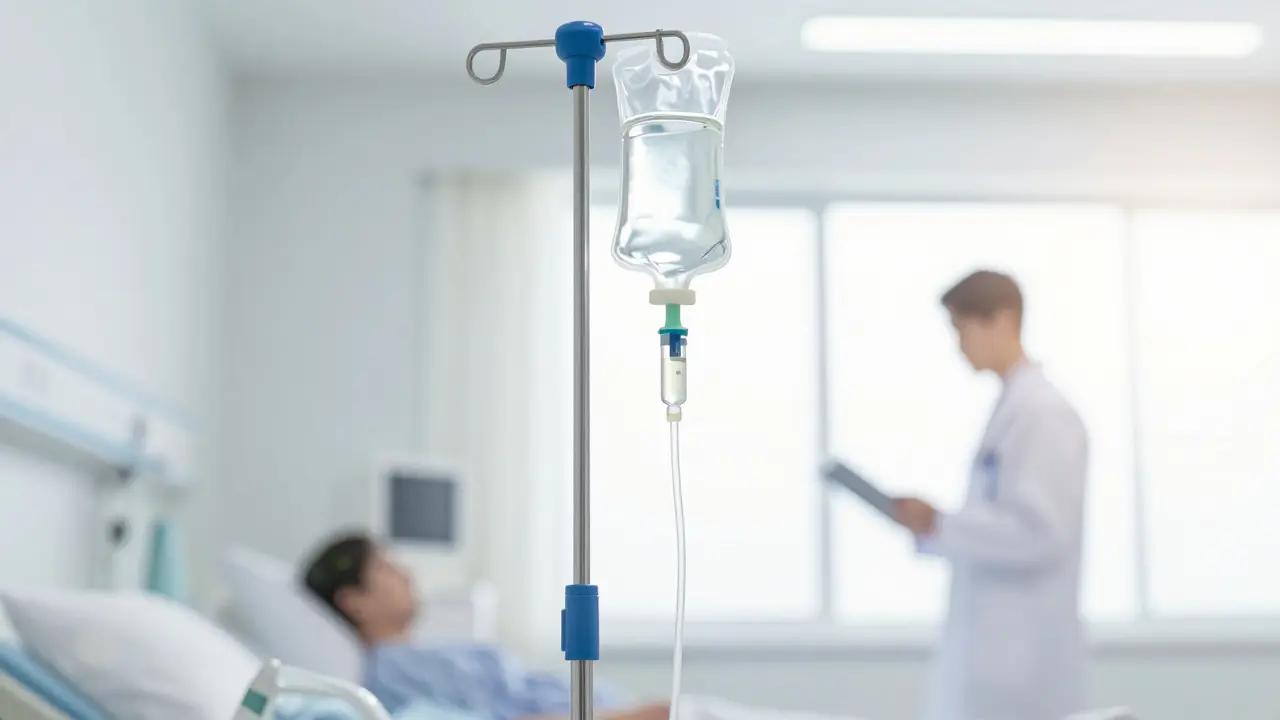
If rhabdomyolysis is suspected, the clock is ticking. The first and most critical step is the immediate cessation of the offending drug. From there, the goal is to "flush" the kidneys. This requires aggressive intravenous hydration-often 3 liters of saline in the first six hours-to keep the myoglobin from precipitating in the renal tubules.
Doctors also use sodium bicarbonate to alkalinize the urine, which helps protect the kidneys from the acidic nature of the muscle proteins. In extreme cases, like those induced by the drug leflunomide, patients may require plasma exchange because the drug stays in the system for weeks. Recovery is a slow road; while some bounce back in about 12 weeks, those who required dialysis for kidney failure may take nearly 30 weeks to fully recover their strength.
Can rhabdomyolysis be cured at home?
No. Rhabdomyolysis is a medical emergency that requires hospital intervention. At-home treatment is impossible because the condition requires aggressive IV fluids to prevent permanent kidney failure and monitoring for electrolyte imbalances like hyperkalemia (high potassium), which can cause the heart to stop.
Are all statins equally dangerous?
Not all statins have the same risk profile. Lipophilic statins like simvastatin are more likely to be associated with rhabdomyolysis, especially when combined with CYP3A4 inhibitors. Hydrophilic statins are generally considered to have a lower risk of severe muscle toxicity.
Why does urine change color during this emergency?
The color change occurs because of myoglobinuria. Myoglobin is a protein that stores oxygen in muscles. When muscles break down, myoglobin enters the blood and is filtered by the kidneys into the urine, giving it a dark red or brown, "cola-like" appearance.
What is the relationship between potassium and rhabdomyolysis?
Potassium normally lives inside your cells. When muscle cells burst during rhabdomyolysis, they dump massive amounts of potassium into the blood (hyperkalemia). This is dangerous because high potassium levels can interfere with the electrical signals of the heart, potentially leading to cardiac arrest.
How long does it take to recover from medication-induced muscle breakdown?
Recovery varies. For those without kidney failure, complete recovery typically takes around 12 weeks. However, patients who suffered acute kidney injury and required dialysis often face a longer recovery period, averaging nearly 29 weeks, and some may experience persistent muscle weakness for six months or more.
Next Steps for Safety
If you are taking multiple medications, especially for cholesterol or gout, keep a complete list of every drug and supplement you use. When a doctor prescribes a new medication, specifically ask, "Will this interfere with my current meds in a way that affects my muscles or kidneys?"
If you experience the sudden onset of muscle pain combined with dark urine, do not wait for a scheduled appointment. Head to the emergency room immediately and bring your medication list. Early intervention with fluids is the only way to stop the progression from muscle damage to permanent kidney failure.
Rauf Ronald
April 7, 2026 AT 23:51This is such a critical reminder for everyone on statins!
I've seen this happen in the clinic when patients don't disclose their over-the-counter supplements or new antibiotics to their GP. The key is definitely that aggressive hydration; getting those fluids in early can literally be the difference between a quick recovery and lifelong dialysis. Stay vigilant and always keep that med list updated!
Del Bourne
April 8, 2026 AT 12:21It is worth mentioning that some herbal supplements can also inhibit the CYP3A4 enzyme. For instance, grapefruit juice is a well-known culprit that can increase the concentration of certain statins in the bloodstream. While it might seem like a small dietary detail, it can significantly elevate the risk for those already predisposed to muscle toxicity. Always double-check your diet and supplements alongside your prescriptions.
Daniel Trezub
April 8, 2026 AT 15:50Pretty basic stuff here, honestly. Everyone acts like the "cola urine" is a shock, but if you've actually read any pharmacology, the myoglobin leak is textbook. Also, claiming the risk "skyrockets" is a bit dramatic; it's just standard enzyme competition. But hey, good for the people who don't read their pharmacy pamphlets!
Vivek Hattangadi
April 10, 2026 AT 14:40Totally agree with the point about polypharmacy! It's so common for elderly patients to have five or six different doctors prescribing things without a centralized record. We really need better integrated health systems to prevent these chemical collisions before they happen. Great breakdown of the symptoms too!
GOPESH KUMAR
April 10, 2026 AT 19:04The tragedy of the modern era is that we trust a pill to fix a problem and then spend the rest of our lives fixing the problems the pill created. It's a cycle of chemical dependence where the "cure" is just a slower form of decay. Most of these "emergencies" are just the body screaming that it's had enough of synthetic interference. We ignore the biological balance for the sake of a lab-grown number on a blood test.
Kathleen Painter
April 11, 2026 AT 04:47I think it's really important for us to approach this with a bit of empathy for the patients who find themselves in this position, because it's often not their fault and can be incredibly scary to wake up with that level of muscle weakness. Many people might feel a sense of guilt or shame for not knowing about these interactions, but the reality is that the pharmaceutical landscape is so complex that even seasoned medical professionals can miss these red flags sometimes. Let's just focus on supporting each other and making sure we encourage people to speak up about their symptoms without fear of judgment, as the mental toll of a thirty-week recovery from kidney failure is just as taxing as the physical symptoms. We should all try to be a bit more mindful of how we discuss these risks so people don't just panic, but instead feel empowered to have a real, open conversation with their healthcare provider about their specific genetic risks or current medication load.
Michael Flückiger
April 13, 2026 AT 04:16So true!!! Just get to the ER!!! Don't wait!!!
Windy Phillips
April 14, 2026 AT 05:49It's just so typical that people ignore the warnings on the bottle... then they act surprised when their kidneys fail!!! I've seen so many people treat their health like a hobby rather than a priority... it's honestly exhausting to witness... the lack of basic caution is just staggering!!!
Rupert McKelvie
April 15, 2026 AT 13:05Glad to see this information being shared. It's a tough recovery process but the human body is remarkably resilient with the right medical support. Definitely a positive outcome once you get that hydration started.