
Fexofenadine Absorption Estimator
Select the beverage you took with your medication to see how it might affect your drug's effectiveness.
Water does not block absorption. You are receiving the full dose of your medication.
The Science of the "Blocked Doorway"
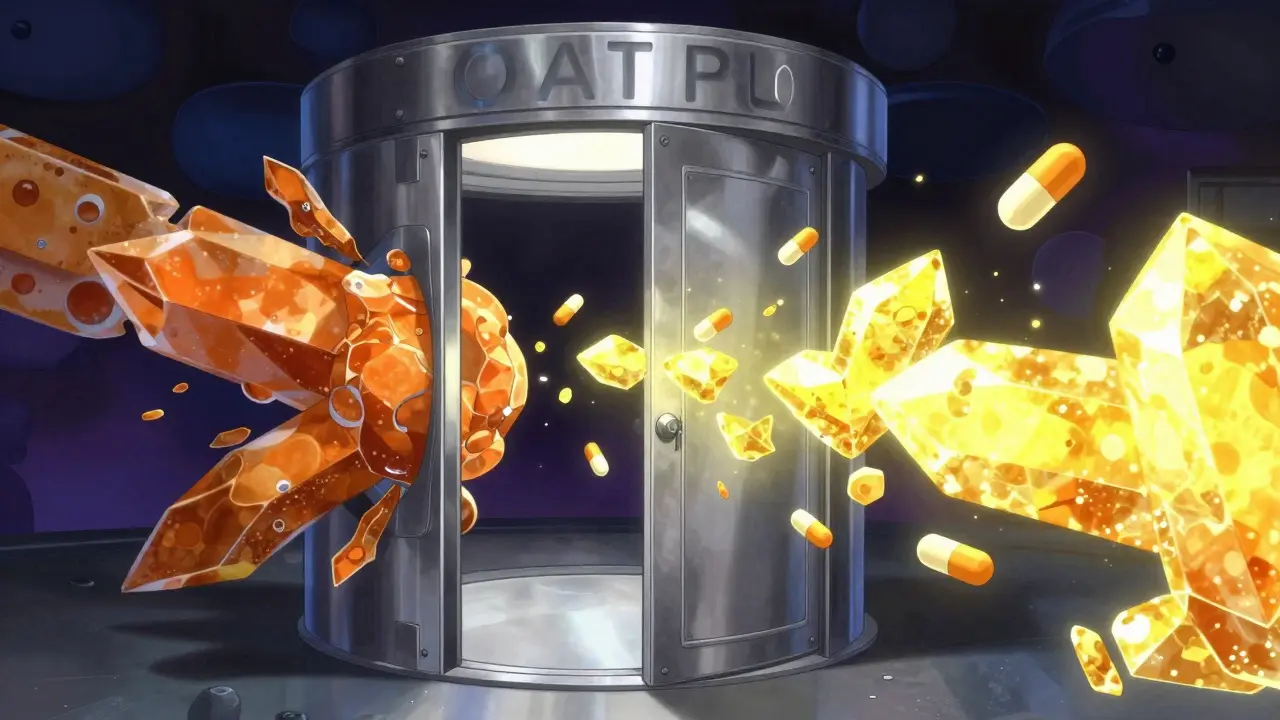
Most people have heard that grapefruit juice interferes with medications, but usually, that's because it messes with liver enzymes. Fexofenadine is different. To get from your gut into your bloodstream, this drug relies on specific transport proteins called OATPs (Organic Anion-Transporting Polypeptides), specifically OATP1A2. Think of these as specialized revolving doors that pull the medication into your system. Certain fruit juices contain bioactive compounds-like naringin in grapefruit or hesperidin in oranges-that act like a jam in those revolving doors. When you drink these juices, these compounds bind to the OATPs, effectively locking the door. Since the drug can't get through the transporter, it simply passes through your digestive tract and is excreted without ever entering your blood. This means that even if you take the correct dose, your body only "sees" a fraction of the medicine.Which Juices Cause the Most Trouble?
Not all fruits are created equal when it comes to this interaction. Research from the University of Western Ontario showed that the impact varies depending on the type of juice and how much you drink. In clinical trials, researchers found that large amounts of juice could reduce the drug's bioavailability (the amount that reaches your circulation) by staggering margins.| Juice Type | Reduction in Drug Exposure (AUC) | Potency Level |
|---|---|---|
| Apple Juice | 77% Reduction | Highest |
| Orange Juice | 72% Reduction | High |
| Grapefruit Juice | 67% Reduction | High |
| Water | 0% (Baseline) | None |
Real-World Impact: When Symptoms Return
This isn't just a lab phenomenon. In community forums and patient reports, the "juice effect" often manifests as a mysterious loss of efficacy. Some users report that their allergies were perfectly managed for years until they started a new habit, like drinking morning orange juice. Suddenly, the medication that once worked perfectly seems useless. Because fexofenadine has a relatively narrow therapeutic window for controlling severe allergy symptoms, a 30% to 70% drop in blood concentration is often the difference between a clear head and a sneezing fit. If you've noticed your Allegra (the common brand name for fexofenadine) isn't hitting the mark, check your beverage choices before assuming you've developed a tolerance to the drug.How to Time Your Dose for Maximum Relief
Since the inhibitors in fruit juice don't stay active forever, you can easily avoid this problem by changing your timing. The blockage of the OATP transporters typically lasts between two and four hours. To make sure your medication actually gets into your system, you need to create a window of separation.- The Pre-Dose Gap: Avoid drinking fruit juices for at least 4 hours before you take your pill. This ensures the "doors" in your gut are open and ready.
- The Post-Dose Gap: Wait 1 to 2 hours after taking your medication before having juice. This gives the drug enough time to be absorbed before the inhibitors arrive.
- The Gold Standard: Use plain water to swallow your tablet. Water doesn't contain the flavonoids that block absorption and is the safest bet for any medication.

How Fexofenadine Compares to Other Antihistamines
If you find the timing rules too restrictive, you might consider switching to a different second-generation antihistamine. One of the most interesting parts of this chemical interaction is that it is almost entirely unique to fexofenadine. Other popular non-sedating options like loratadine (Claritin) and cetirizine (Zyrtec) do not rely on the same OATP transporters for absorption. Because they use different pathways to enter the bloodstream, they aren't hindered by the flavonoids found in orange or apple juice. For someone who can't imagine a morning without a glass of OJ, switching medications is a practical alternative to strict timing schedules.Common Pitfalls and Pro Tips
Even for those trying to be careful, a few common mistakes can sneak in. First, be wary of other "healthy" drinks. Some green teas contain compounds that can also inhibit OATPs, potentially reducing the amount of medication that reaches your system, though the effect is generally less severe than with apple or orange juice. Second, keep an eye on your antacids. If you're taking medications containing aluminum or magnesium, they can sometimes interfere with drug absorption in different ways. Always check the labels of your over-the-counter supplements. Lastly, don't be fooled by "diluted" juices. While a 50% diluted grapefruit juice reduces absorption less than full-strength juice (roughly 23% versus 67%), it still creates a significant barrier. If you want the full strength of your allergy relief, stick to water during your dosing window.Does this happen with all fruit juices?
No. While many fruits contain polyphenols, the most clinically significant interactions occur with grapefruit, orange, and apple juices. Tomato juice, for example, does not significantly block the transporters needed for fexofenadine absorption.
Will drinking juice make the medication toxic?
No, it's actually the opposite. Unlike some drugs where grapefruit juice increases levels to dangerous amounts, with fexofenadine, the juice prevents the drug from entering your blood. The risk isn't toxicity, but rather that the medicine won't work.
Can I eat the whole fruit instead of drinking the juice?
Whole fruits contain the same inhibitors as the juice, though usually in lower concentrations per gram. To be safe, it's best to avoid eating large amounts of grapefruit, oranges, or apples immediately before or after taking your dose.
How long does the juice "blockage" last?
Research suggests the inhibitory effect on the OATP transporters lasts between 2 and 4 hours. This is why the recommended window is to wait 4 hours before dosing or 1-2 hours after.
Should I switch to a different allergy pill?
If you find it impossible to separate your medication from your juice habits, you might discuss options like cetirizine or loratadine with your doctor, as these do not have the same interaction with fruit juices.