Have you ever picked up a prescription, looked at the price tag, and wondered why the pharmacist offered you a different-looking pill for a fraction of the cost? That pill is likely a generic drug. It’s not just a cheap imitation; it is a pharmaceutical product that contains the exact same active chemical substance as the original brand-name medication. The modern industry for these medications emerged after the passage of the Drug Price Competition and Patent Term Restoration Act of 1984, commonly known as the Hatch-Waxman Act, which was signed into law by President Ronald Reagan on September 24, 1984. This legislation created a streamlined approval pathway, allowing manufacturers to prove their drugs work just as well as the originals without repeating costly clinical trials.
What Exactly Is a Generic Drug?
To understand generics, you first need to understand patents. When a company invents a new drug, they get exclusive rights to sell it for about 20 years. This protects their investment in research and development. Once that patent expires, other companies can step in. According to the U.S. Food and Drug Administration (FDA), a generic drug is identical or bioequivalent to a brand-name drug in dosage form, safety, strength, route of administration, quality, performance characteristics, and intended use. Think of it like this: if the brand-name drug is the original designer handbag, the generic is the exact same bag made with the same materials and craftsmanship, just sold under a different label once the design patent lapses.
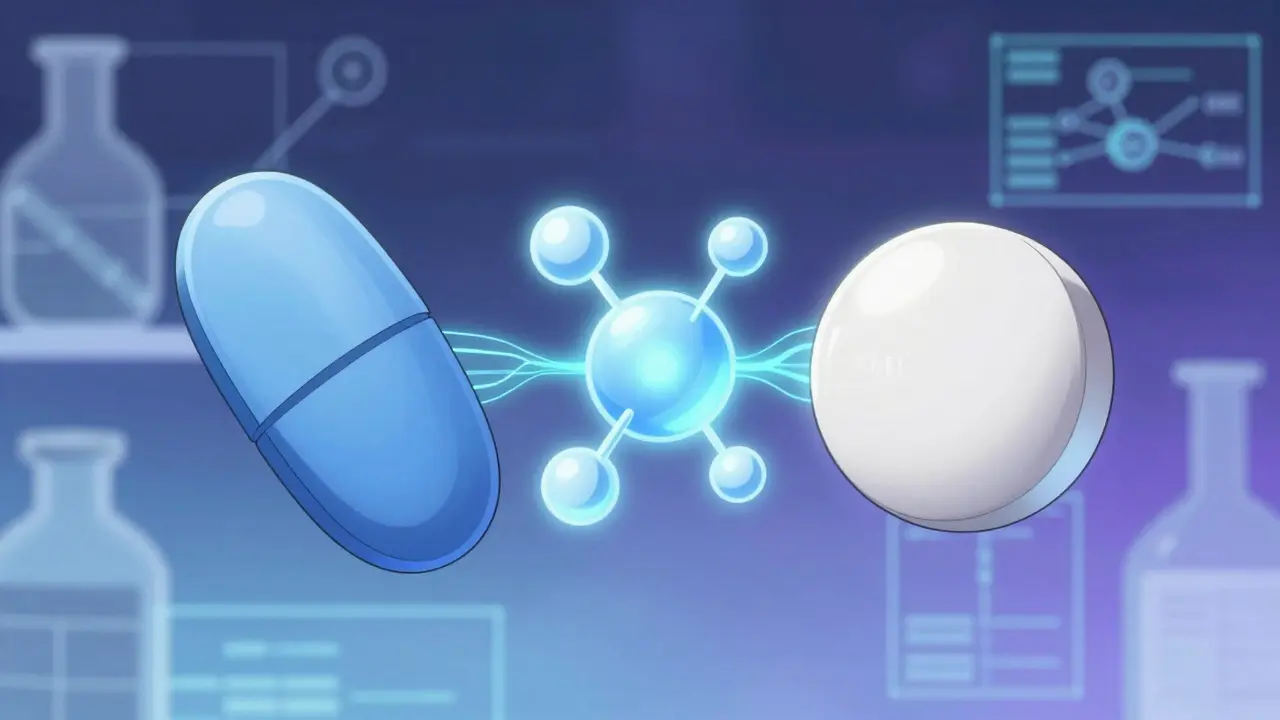
The key term here is "bioequivalence." This doesn’t mean the pills look the same. In fact, they often don’t. Trademark laws prevent generics from looking exactly like the brand-name version to avoid consumer confusion. So, while the brand might be a blue oval tablet, the generic could be a white round one. However, inside, the active ingredient-the part that actually treats your condition-is chemically identical. The inactive ingredients, like dyes or binders, may differ, but they must not affect how the drug works.
The Science of Bioequivalence: How They Prove It Works
You might ask, "How do we know the generic works the same way?" The answer lies in rigorous testing. Manufacturers don’t run massive human trials like the original drug developers did. Instead, they submit an Abbreviated New Drug Application (ANDA). To get approved, they must demonstrate bioequivalence through pharmacokinetic studies. These studies involve healthy volunteers taking both the brand-name and generic versions. Researchers measure how much of the active ingredient enters the bloodstream and how fast it gets there.
The FDA requires strict statistical parameters. Specifically, the 90% confidence intervals for the ratio of population geometric means of AUC (area under the curve) and Cmax (maximum concentration) between the generic and brand-name drugs must fall within 80-125%. In plain English, this means the generic delivers the same amount of medicine into your body in roughly the same amount of time. If it were significantly faster or slower, it wouldn’t pass. This ensures that whether you take the expensive brand or the affordable generic, your body receives the therapeutic dose it needs.
| Feature | Brand-Name Drug | Generic Drug |
|---|---|---|
| Active Ingredient | Original formula | Identical to brand |
| Inactive Ingredients | Proprietary mix | May differ (color/flavor) |
| Appearance | Unique shape/color | Different (trademark rules) |
| Clinical Trials | Extensive (Phase I-III) | Bioequivalence studies only |
| Cost | High (covers R&D) | Low (80-85% less) |
| FDA Standards | cGMP Compliance | Identical cGMP Compliance |
Why Are Generics So Much Cheaper?
The price difference is staggering. Generics typically cost 80-85% less than their brand-name equivalents. Why? Because the generic manufacturer didn’t have to spend billions on initial discovery and clinical trials. The Congressional Budget Office estimates that generic competition reduces prices to approximately 15% of the original brand price within one year of the generic entering the market. When multiple generic manufacturers enter the market-usually five or more-prices can drop to about 9% of the original brand price.
This isn’t just good for patients; it’s vital for the healthcare system. In the United States, generics account for 90.5% of all prescriptions dispensed but represent only 13.1% of total drug costs. Over the past decade, this has saved the U.S. healthcare system an estimated $2.18 trillion. By skipping the redundant animal and clinical studies required for the original brand-name drug, generic companies can offer the same therapeutic benefit at a fraction of the cost. This economic model relies heavily on the abbreviated approval pathway established by the Hatch-Waxman Act, which balances innovation incentives with public access to affordable medicine.
Safety and Quality: Is It Really the Same?
Skepticism is natural. After all, "you get what you pay for," right? Not when it comes to regulated medicines. The FDA conducts approximately 3,500 inspections annually of generic drug manufacturing facilities worldwide. These facilities must comply with Current Good Manufacturing Practices (cGMP), which mandate identical standards for identity, strength, purity, and quality as brand-name drugs. The FDA permits only minimal acceptable variability in manufacturing, typically allowing ±5% variation in active ingredient content for both brand and generic drugs.
Expert consensus overwhelmingly supports the therapeutic equivalence of generic drugs. The Institute of Medicine reviewed 38 clinical studies and concluded that generic cardiovascular drugs showed no clinically meaningful differences in effectiveness compared to brand-name versions. Dr. Janet Woodcock, former Director of the FDA's Center for Drug Evaluation and Research, stated clearly that the FDA would not allow generics to be marketed unless they were therapeutically equivalent to the brand. The American College of Physicians affirms that generic drugs are therapeutically equivalent to their brand-name counterparts and should be used when available.
Exceptions and Complexities: When Caution Is Needed
While most generics are perfect substitutes, there are nuances. Some experts note limitations in specific therapeutic areas. For instance, "narrow therapeutic index" drugs, such as warfarin (a blood thinner) or levothyroxine (for thyroid issues), require precise dosing. Small variations in concentration can have clinical consequences. Dr. Aaron Kesselheim of Harvard Medical School acknowledges that while most generics are equivalent, these specific drugs may require more careful monitoring when switching between brands and generics. Your doctor might choose to keep you on a specific manufacturer’s version to ensure stability.
Then there are biologics. These are complex drugs made from living organisms, unlike traditional small-molecule drugs. The Biologics Price Competition and Innovation Act of 2009 created a pathway for "biosimilars." Unlike generics, biosimilars are not identical copies; they are "highly similar" to the reference product. As a result, they undergo more extensive testing and typically achieve smaller price reductions of approximately 20-30%, rather than the 80-85% seen with traditional generics. Adoption has been slower, with biosimilars capturing only 31% of potential market share in approved indications by 2022.

The Approval Process: From Lab to Pharmacy
Getting a generic drug to market involves a rigorous regulatory pathway. The process begins after the patent expiration of the reference listed drug. The generic manufacturer submits an ANDA, providing detailed chemistry, manufacturing, and controls documentation. The FDA's Office of Generic Drugs processes approximately 1,000 ANDAs annually. Under the Generic Drug User Fee Amendments (GDUFA) III, effective October 1, 2022, the agency aims to reduce review times to 10 months for 90% of standard ANDAs.
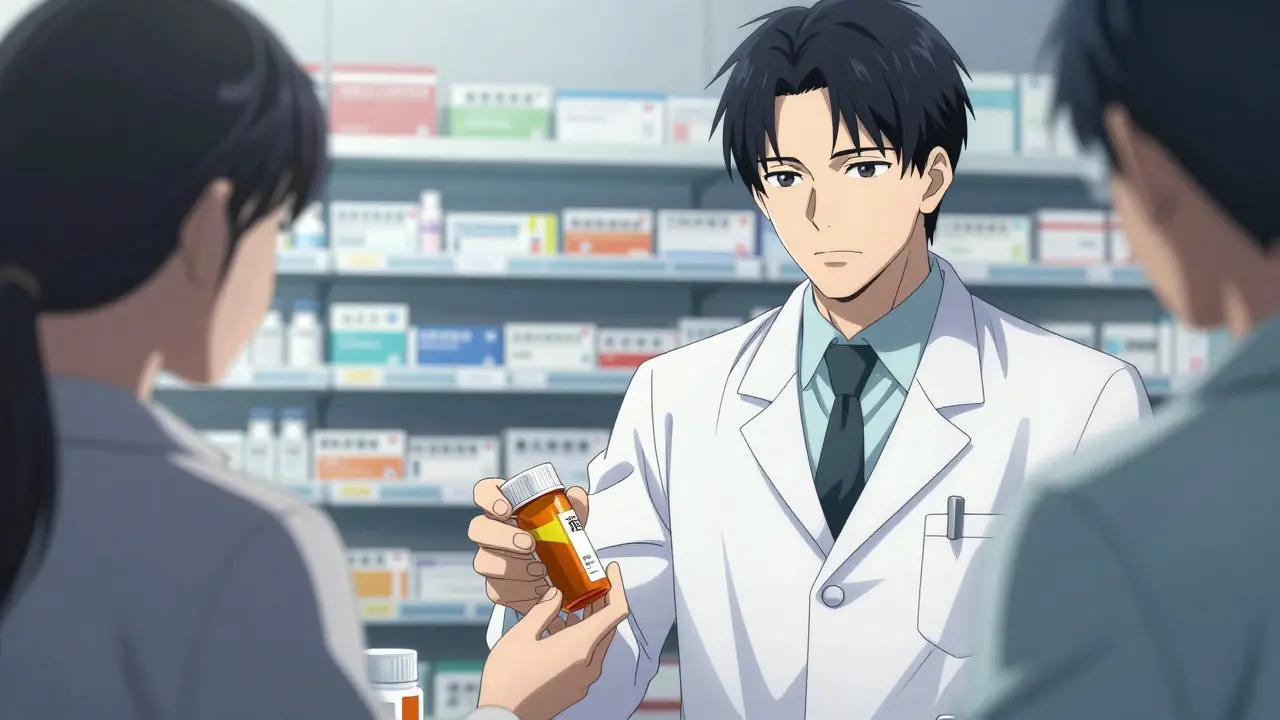
Pharmacists play a crucial role in this ecosystem. In 49 U.S. states, substitution laws allow pharmacists to automatically swap a brand-name prescription for a generic unless the prescriber explicitly writes "dispense as written." This practice, known as therapeutic interchange, helps drive down costs across the board. However, patient education remains critical. The Institute for Safe Medication Practices recommends that pharmacists counsel patients on the visual differences between brand and generic versions to prevent confusion, ensuring patients understand that a change in color or shape does not mean a change in efficacy.
Future Trends and Global Supply Chains
The landscape of generic drugs is evolving. The global generic pharmaceuticals market was valued at $404.4 billion in 2022 and is projected to reach $569.5 billion by 2028. However, supply chain resilience is a growing concern. Currently, 80% of active pharmaceutical ingredients for generics are sourced from facilities in India and China. This concentration raises risks highlighted in Executive Order 14017 on America's Supply Chains. Any disruption in these regions can lead to shortages, as seen with the 22% increase in drug shortages reported by the FDA in 2022.
Regulatory scrutiny is also increasing for complex generics, including topical products, inhalers, and ophthalmic suspensions. The FDA issued 37 product-specific guidances in 2022 alone to clarify bioequivalence requirements for these harder-to-copy formulations. Looking forward, the FDA projects that 350 brand-name drugs with annual sales of $138 billion will lose patent protection between 2023 and 2027. This wave of expirations promises significant new generic competition, potentially generating further savings for consumers and the healthcare system.
Are generic drugs less effective than brand-name drugs?
No. Generic drugs are required by the FDA to be bioequivalent to brand-name drugs, meaning they deliver the same amount of active ingredient into your bloodstream in the same amount of time. Major medical organizations, including the American Medical Association and the Institute of Medicine, confirm that generics provide the same clinical benefit as their brand-name counterparts.
Why do generic pills look different from brand-name pills?
Trademark laws prevent generic manufacturers from making their pills look exactly like the brand-name version to avoid consumer confusion. While the active ingredient is identical, inactive ingredients like dyes and binders may differ, resulting in different colors, shapes, or flavors. These differences do not affect the drug's therapeutic performance.
Can my pharmacist substitute a generic for my prescribed brand-name drug?
In most cases, yes. In 49 U.S. states, automatic substitution laws allow pharmacists to dispense a generic version unless your doctor specifically writes "dispense as written" on the prescription. This helps reduce costs without compromising care. However, for certain narrow therapeutic index drugs, your doctor may prefer you stay on a specific brand.
What is the Hatch-Waxman Act?
The Hatch-Waxman Act, passed in 1984, is a landmark U.S. law that created the abbreviated approval pathway for generic drugs. It allows manufacturers to prove bioequivalence without repeating costly clinical trials, balancing the need for innovation incentives with public access to affordable medicines. It is the foundation of the modern generic drug industry.
Are there any risks associated with taking generic drugs?
For most medications, there are no significant risks. However, for "narrow therapeutic index" drugs like warfarin or levothyroxine, even small variations in concentration can matter. Patients on these medications may need closer monitoring when switching between brands and generics. Additionally, supply chain issues can occasionally lead to shortages, though this affects both brand and generic availability.