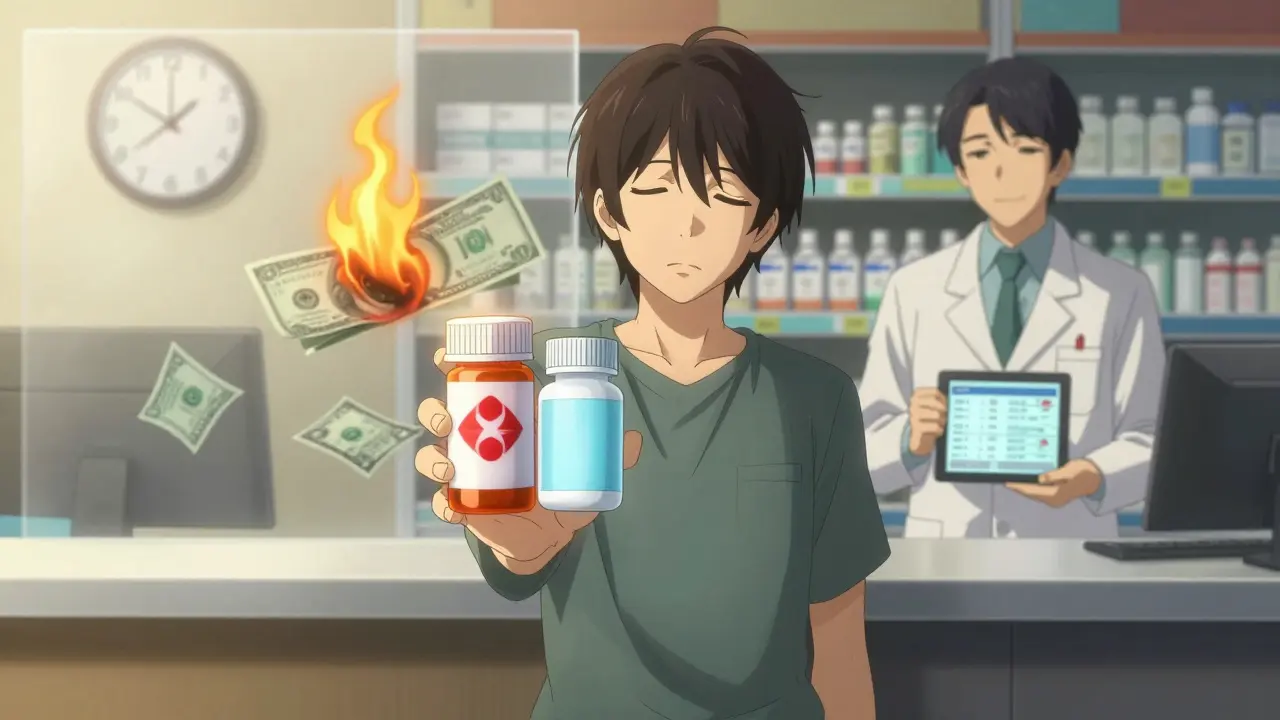
Have you ever looked at your prescription receipt and wondered why the generic version costs a fraction of the brand-name drug? It’s not a trick. It’s not a mistake. It’s simple economics - and it’s saving billions every year. Generic medications work the same way as their brand-name counterparts, but they cost far less. For patients, that means lower out-of-pocket costs. For insurers, it means less spending overall. And yet, many people still avoid them - not because they’re unsafe, but because they don’t understand why they’re cheaper.
Same Drug, Different Price
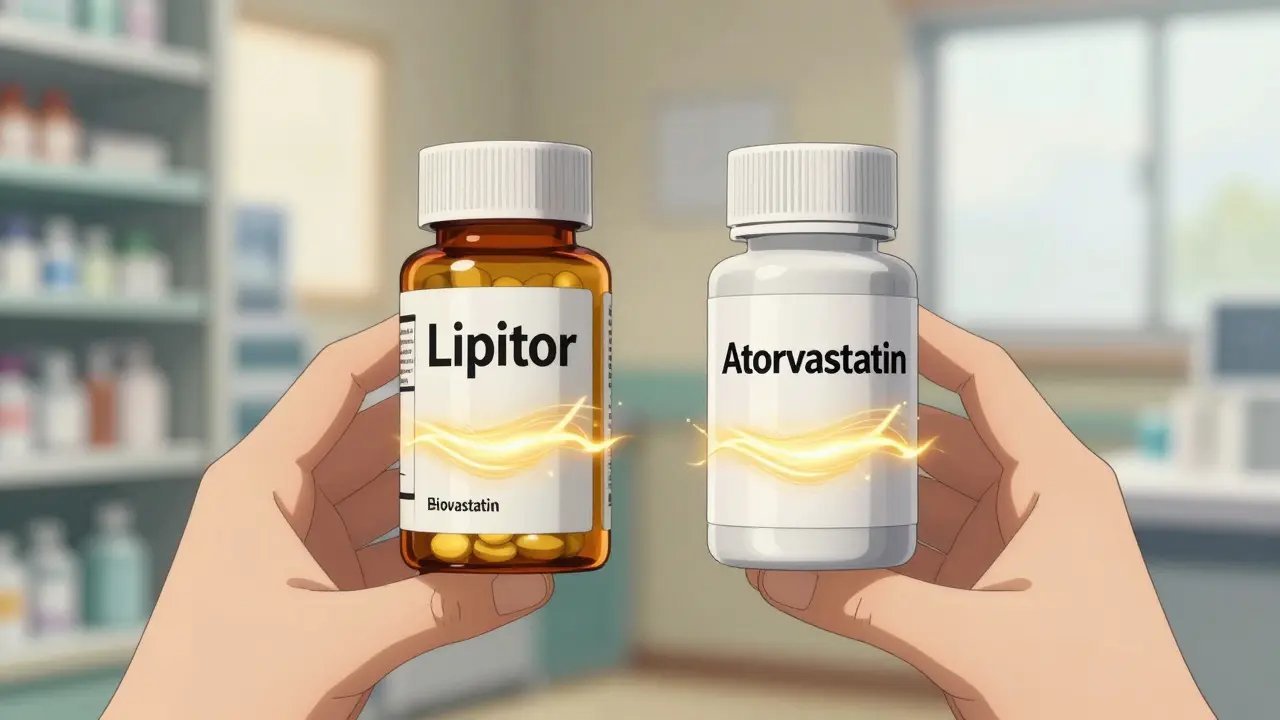
A generic drug isn’t a copycat. It’s the exact same medicine. The FDA requires that generics contain the same active ingredient, strength, dosage form, and route of administration as the original brand-name drug. They must also deliver the same therapeutic effect. That means if you take a generic version of lisinopril for high blood pressure, it will work just like Zestril. The pills might look different - different color, shape, or filler - but the part that actually treats your condition is identical.
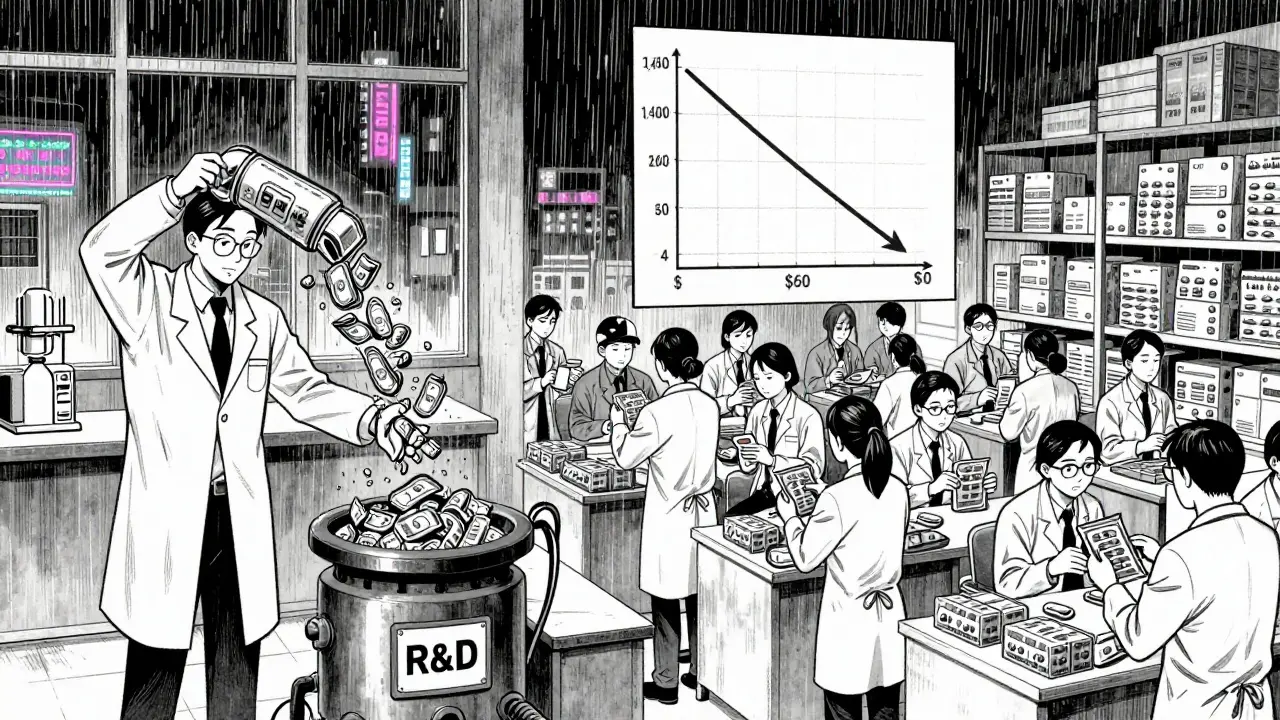
The big difference? Cost. Brand-name drugs are expensive because the company that created them had to pay for years of research, clinical trials, and marketing. A single new drug can cost over $2 billion to bring to market. That cost gets baked into the price. Generics skip all of that. They don’t need to repeat expensive clinical trials. Instead, they prove they’re bioequivalent - meaning they get absorbed into your body the same way. That cuts development costs by more than 90%.
How Competition Drives Prices Down
Once a brand-name drug’s patent expires, other companies can make the same medicine. The first generic to enter the market usually costs about 20% of the brand price. But here’s where it gets interesting: as more companies jump in, prices keep falling. The FDA found that when three or more generic manufacturers compete, prices drop to just 15-20% of the original brand price. With five or more, they can plunge to under 10%.
Take lurasidone, a psychiatric medication sold as Latuda. Before generics, a 30-day supply cost over $1,400. After generic versions arrived, that same supply dropped to under $60. That’s a 95% price drop. Another example: pemetrexed (Alimta), used for lung cancer. The brand cost about $3,800 per month. Generics brought it down to $500. In total, generic drugs saved Americans over $408 billion in 2022 alone.
This isn’t theoretical. It’s happening every day in pharmacies across the country. The reason? Competition. When multiple companies are selling the same thing, they have to undercut each other just to stay in business. No brand-name company can compete with that kind of pricing.
What You Pay: Copays and Out-of-Pocket Costs
If you’re covered by insurance, you probably notice the difference right on your receipt. The average copay for a generic drug is $6.16. For a brand-name drug? $56.12. That’s nearly nine times more. And 93% of generic prescriptions cost under $20. Only 59% of brand-name prescriptions do.
Even if you’re on a high-deductible plan, generics still win. A 2023 study found that 78% of people with high-deductible insurance saved more by paying cash for generics than using their insurance. Why? Because insurers often negotiate prices with pharmacies, and those deals aren’t always passed on to you. Sometimes, the pharmacy charges you more than the cash price.
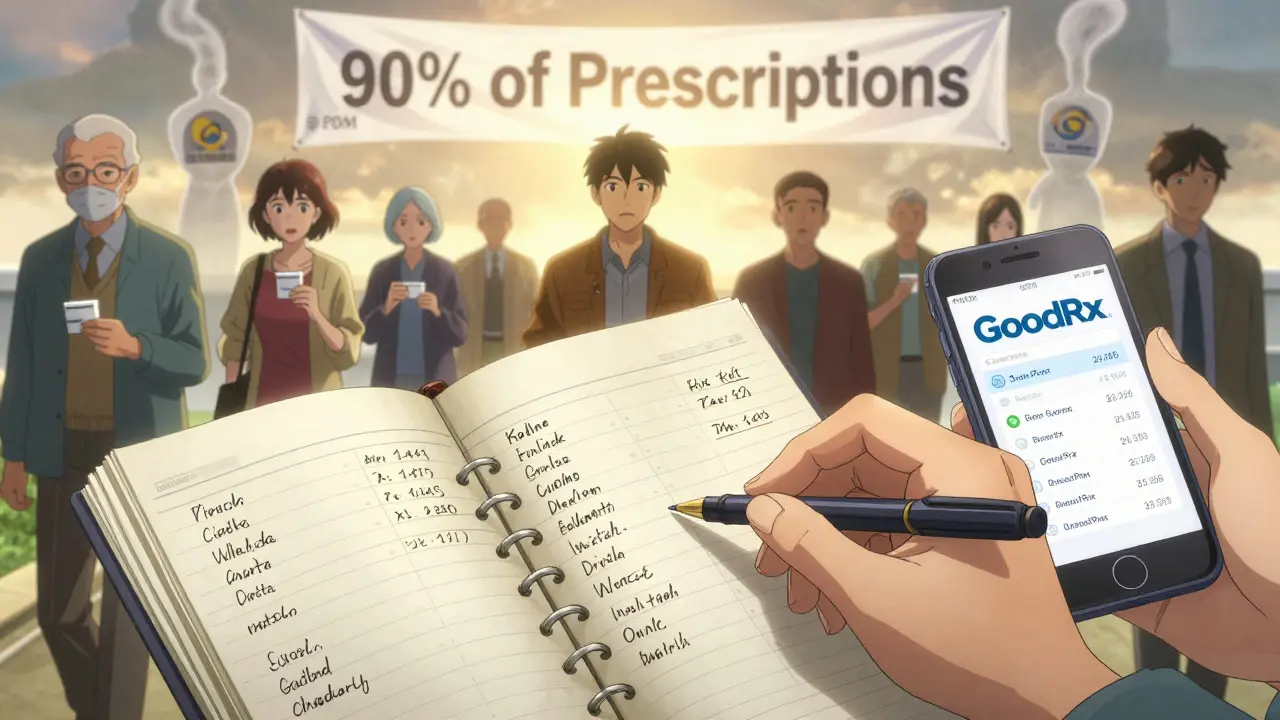
Tools like GoodRx and SingleCare show you exactly how much a drug costs at nearby pharmacies - cash price, no insurance needed. For depression meds, the average discount is 67%. For hypertension drugs, it’s 58%. Some erectile dysfunction pills? As low as $18 for a month’s supply. You don’t need a coupon. Just a smartphone and five minutes to check.
Not All Generics Are Created Equal
Here’s the catch: not every generic is cheap. Some are priced almost as high as the brand. How? Because of something called “spread pricing.”
Pharmacy benefit managers (PBMs) - middlemen between insurers, pharmacies, and drugmakers - sometimes make money by charging insurers more than they pay the pharmacy. They’ll say, “We’ll cover this generic drug,” but the price they negotiate with the pharmacy is $40, while they charge the insurer $60. That $20 difference? Their profit. And they often pick higher-priced generics to maximize that gap.
A 2022 study in JAMA Network Open looked at 45 high-cost generic drugs and found they were 15.6 times more expensive than other generics with the same effect. In Colorado, replacing just those expensive generics would have saved $6.6 million in one year. That’s not just waste - it’s a system that’s rigged to profit from confusion.
So while generics as a whole save money, you still need to be smart. Ask your pharmacist: “Is there a cheaper generic version?” or “Can I switch to a different generic that costs less?”
How to Save Even More
There are real, simple ways to cut your prescription costs - even if you have insurance.
- Ask for generics - always. If your doctor writes a brand-name prescription, ask if a generic is available. Most will say yes.
- Compare prices - Use GoodRx or SingleCare. The cheapest option might be at a different pharmacy than the one you usually visit.
- Pay cash - Especially if you have a high-deductible plan. Sometimes, the cash price is lower than your insurance copay.
- Consider mail-order - For maintenance drugs like blood pressure or diabetes meds, getting a 90-day supply through mail-order often cuts your cost in half.
- Ask about alternatives - Sometimes, a different generic (or even a different drug altogether) can do the same job for less. Talk to your doctor or pharmacist.
A study in JAMA Internal Medicine found that patients with chronic conditions who actively compared prices saved an average of $287 per year. That’s not pocket change. That’s a weekend trip, a new pair of shoes, or an extra month of insulin.
Who Benefits the Most?
The people who benefit most from generics aren’t the ones with the best insurance. They’re the ones with none.
A 2023 study found that uninsured patients saved the most by buying generics directly from the Mark Cuban Cost Plus Drug Company. On average, they saved $6.08 per prescription. For someone taking multiple meds, that adds up fast. But here’s the problem: MCCPDC only carries about 26% of expensive generics. So while it’s a great option for some, it’s not a full solution.
That’s why transparency matters. When you know what a drug really costs - whether you’re insured or not - you can make smarter choices. And that’s how you take control of your health spending.
The Bigger Picture
Generics account for 90% of all prescriptions filled in the U.S. But they make up only 1.5% of total drug spending. That’s the power of competition. Every time a new generic enters the market, it pulls prices down - not just for that drug, but for others too. It forces the whole system to be more efficient.
And it’s getting better. The FDA approved over 700 new generic drugs in 2022. More are coming. Biosimilars - the next wave of lower-cost biologic drugs - are expected to save another $150 billion by 2027. The Inflation Reduction Act is also helping by capping insulin costs for Medicare patients and pushing for more generic competition.
But challenges remain. Some drugmakers delay generics by filing lawsuits or paying them not to enter the market - a practice called “pay-for-delay.” The FTC is investigating these deals. And shortages of certain generics - 202 drugs are currently at risk - can spike prices overnight.
Still, the trend is clear: generics are the most effective tool we have to make medicine affordable. They’re safe. They’re effective. And they’re saving patients and insurers billions every year.
What You Can Do Today
Next time you fill a prescription, don’t just accept the first price. Ask:
- Is there a generic version?
- What’s the cash price at the next pharmacy over?
- Can I get a 90-day supply to save more?
It takes five minutes. It could save you hundreds. And if enough people do it, it changes the whole system.
Shameer Ahammad
March 18, 2026 AT 22:11Alexander Pitt
March 19, 2026 AT 17:12Manish Singh
March 21, 2026 AT 16:31Nilesh Khedekar
March 22, 2026 AT 16:16Robin Hall
March 24, 2026 AT 05:56jared baker
March 25, 2026 AT 15:35gemeika hernandez
March 27, 2026 AT 14:12Nicole Blain
March 28, 2026 AT 13:18Kathy Underhill
March 28, 2026 AT 13:31