
When your doctor hands you a prescription for a generic drug, do you feel reassured-or skeptical? The truth is, clinician communication doesn’t just inform you about your medication-it shapes whether you’ll take it, stick with it, or stop because you think it won’t work. This isn’t about marketing or cost. It’s about trust, expectation, and the quiet power of words.
Here’s the hard fact: 53.7% of patients say their doctors never or seldom talk to them about generics. And yet, studies show that patients who get even a few minutes of clear, confident explanation are 37% more likely to stick with the generic version. That’s not because generics are better. It’s because communication changes how people feel about them.
Why Patients Doubt Generics-Even When They’re Safe
Generic drugs aren’t knockoffs. They’re exact copies. The FDA requires them to have the same active ingredient, strength, dosage form, and route of administration as the brand-name version. They must also deliver the same amount of drug into the bloodstream within a strict range: 80% to 125% of the brand. That’s not close. That’s scientifically identical.
So why do 29.9% of patients still believe brand-name drugs work better? It’s not science. It’s perception. A patient who’s been on a brand-name pill for years, sees the packaging change, and hears nothing from their provider may assume something’s wrong. They might think, "This looks different. Is it really the same?" That doubt doesn’t come from ignorance-it comes from silence.
And here’s the kicker: that doubt can make them feel worse. A 2019 JAMA study found patients who received no explanation after switching to a generic reported 28% more side effects-headaches, dizziness, nausea-even though the drug was identical. This isn’t a placebo effect. It’s the nocebo effect. When you expect harm, your body responds as if it’s real. Communication isn’t just about facts. It’s about managing expectations.
The Three Keys to Effective Communication
Not all conversations work. A vague "This is fine" or "It’s cheaper" doesn’t cut it. Research from U.S. Pharmacist shows three elements make a difference:
- Authority: Explain the FDA’s 80-125% bioequivalence range. Patients don’t need jargon. Just say: "This generic delivers the same amount of medicine into your body as the brand, within a very tight, scientifically proven range. It’s not guesswork-it’s tested."
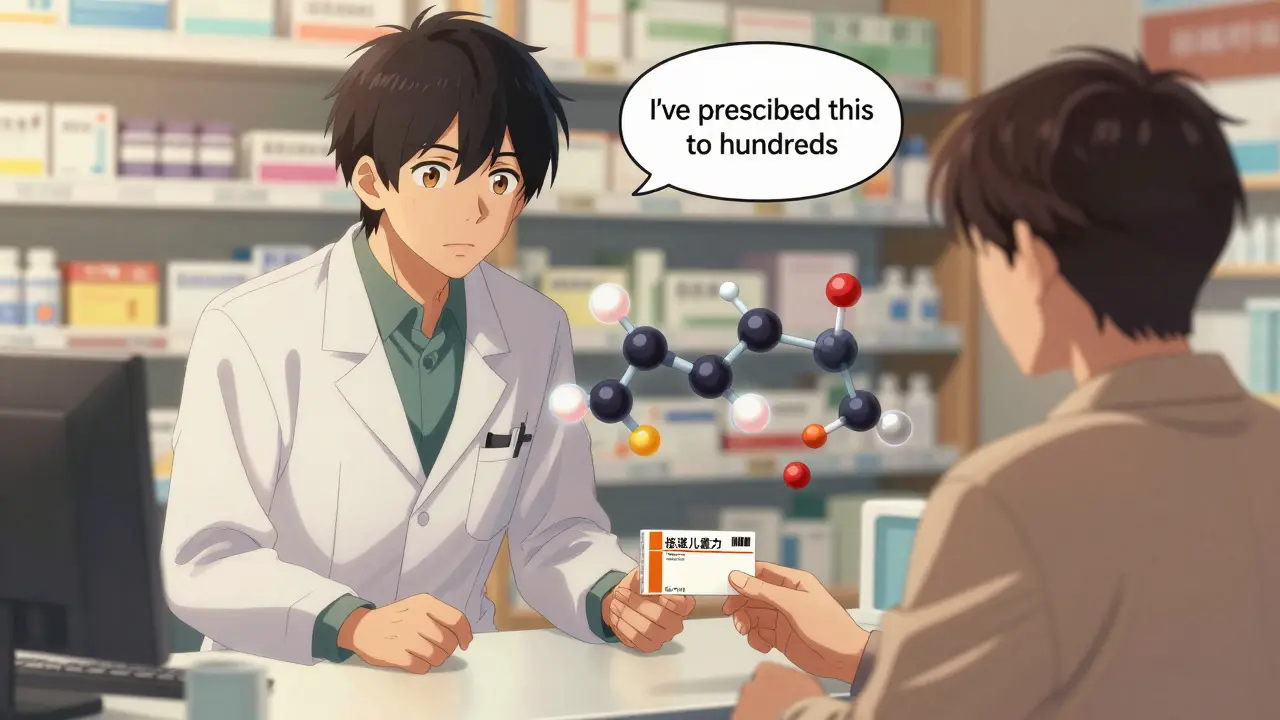
- Confidence: Avoid phrases like "Let’s try this and see how it goes." That sounds like an experiment. Say instead: "I’ve prescribed this generic to hundreds of patients. It works exactly like the brand. I take generics myself."
- Proactivity: Don’t wait for the patient to ask. Address concerns before they form. Say: "Some people worry about changes in pills. If you notice anything unusual, let me know-but most people feel no difference at all."
A 2021 study in Patient Intelligence found that when both the doctor and pharmacist communicated clearly, 92% of patients accepted the switch. When neither did? Only 61% did. That’s a 31-point gap. One conversation. Two providers. One outcome.
It’s Not One-Size-Fits-All
Communication must adapt. A 2016 NIH survey showed non-Caucasian patients were 1.7 times more likely to distrust generics than white patients. Patients earning under $30,000 a year were 2.3 times more likely to insist on brand-name drugs. Why? Past experiences, cultural messaging, and mistrust in systems play a role.
One size doesn’t fit all. A 2021 Health Affairs study found culturally competent communication-using familiar language, acknowledging concerns, and sharing stories from similar communities-reduced skepticism by 41%. For example: "I know some people here have had bad experiences with other meds changing. I’ve seen this generic work just as well for people just like you. Here’s what happened for them."
That’s not manipulation. It’s connection.
Real Stories, Real Impact
On Reddit, a patient wrote: "My cardiologist spent 10 minutes showing me the FDA data. He told me he takes generics too. I’ve been on it for two years. No issues." That’s the gold standard.
On Healthgrades, another patient wrote: "My pharmacist just handed me a different pill. When I said I got headaches, he said, ‘Some people react to generics.’ I stopped taking it for three weeks." That’s the cost of silence.
Analysis of 4,200 patient reviews found 78% of positive experiences mentioned clinician communication. Eighty-nine percent of negative ones blamed poor or no explanation. This isn’t about the drug. It’s about the conversation.
What’s Holding Doctors and Pharmacists Back?
Time. Knowledge. Confidence.
A 2020 AMA study found doctors spend an average of 1.2 minutes per patient on generic discussions. That’s not enough. A 2019 survey revealed only 54% of physicians could correctly explain the FDA’s bioequivalence range. And 39% admitted they felt unsure about generics for conditions like epilepsy or thyroid disease.
But solutions exist. Kaiser Permanente’s "Generic First" program trained every provider with standardized scripts. Result? 94% generic utilization. $1.2 billion saved annually. The American Pharmacists Association’s 15-minute training module cut communication time by 38% while boosting patient understanding from 42% to 87%.
Tools are there. Training is available. What’s missing is consistent practice.
The Bigger Picture: Why This Matters
Generics make up 90% of all prescriptions in the U.S. but only 23% of drug spending. That’s $37 billion saved every year. Yet brand-name preference requests have climbed from 12% in 2010 to 23% in 2022. Why? Because cost alone doesn’t change belief. Communication does.
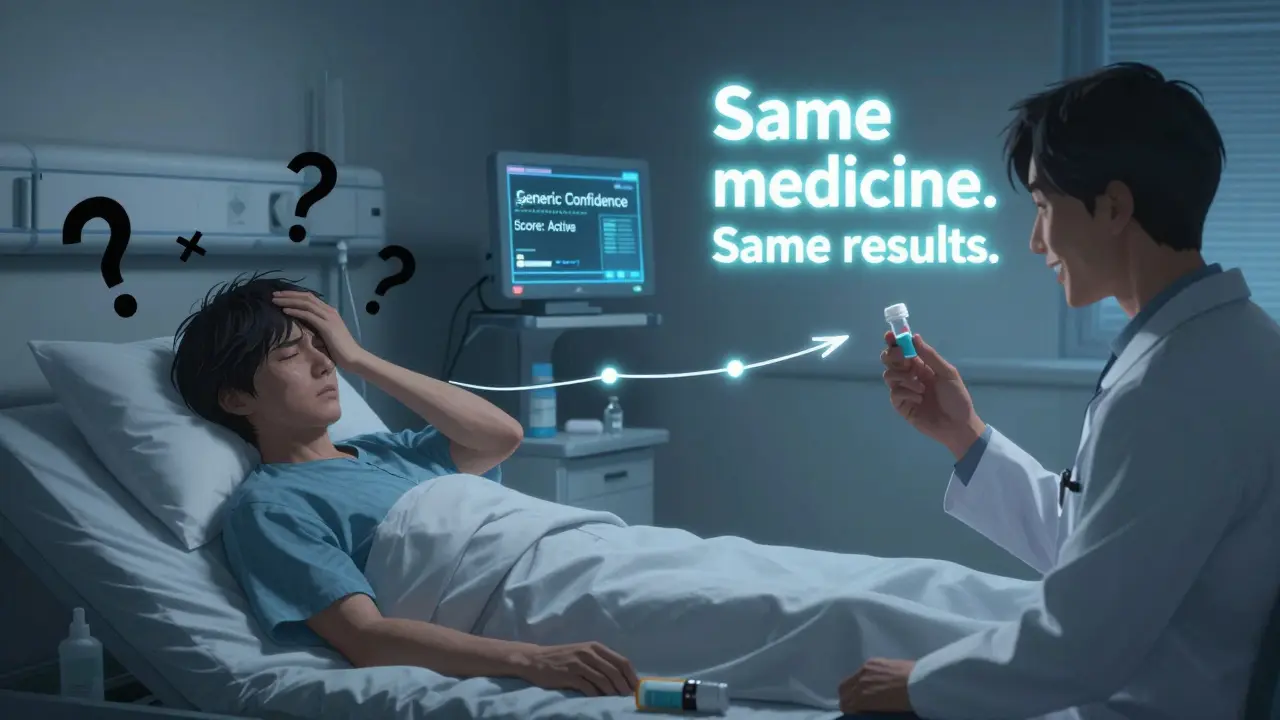
The FDA, AMA, and APhA now agree: communication is a clinical intervention. It’s not optional. It’s part of care. Epic Systems launched the "Generic Confidence Score" in 2024-a prompt in electronic health records that reminds clinicians to cover the four key points: bioequivalence, active ingredients, cost savings, and nocebo effects.
By 2025, Medicare Part D plans will tie reimbursement to how well providers communicate about generics. This isn’t bureaucracy. It’s recognition: if you want people to take their meds, you have to talk to them.
What Patients Can Do
You don’t have to wait for your provider to start the conversation. Ask:
- "Is this generic the same as the brand?"
- "Has it been tested to work just as well?"
- "What should I expect if I switch?"
- "Have you prescribed this to others? What happened?"
If they can’t answer, ask for more time-or ask to speak with the pharmacist. You’re not being difficult. You’re being informed.
Final Thought: Your Belief Is Part of Your Treatment
Medication doesn’t work in a vacuum. It works in your mind, your body, your experience. If you believe a drug won’t work, your body may respond as if it doesn’t. That’s not weakness. It’s biology.
Effective clinician communication doesn’t just explain science. It rebuilds trust. It calms fear. It turns doubt into confidence. And in a world where 8.9 billion prescriptions are filled every year, that’s not just good practice. It’s essential care.
Ryan Vargas
February 9, 2026 AT 00:06Let’s be real: the FDA’s 80-125% bioequivalence range isn’t science-it’s a political compromise disguised as pharmacology. If you’re telling me that a drug can be 20% weaker or 25% stronger than the brand and still be considered ‘identical,’ you’re not reassuring me-you’re exposing the rot in our regulatory infrastructure. This isn’t about trust in doctors; it’s about systemic betrayal. The same agency that greenlit opioids with no long-term data now tells us generics are ‘just as good’ because they ‘meet standards’? Standards designed by lobbyists with a vested interest in keeping prices high. The nocebo effect? Sure, it’s real-but so is the placebo effect of corporate branding. You don’t need to convince me generics work. You need to convince me the system isn’t rigged. And no, telling me your doctor takes them doesn’t cut it. I’ve seen what happens when people stop asking questions.
Tasha Lake
February 10, 2026 AT 12:41As someone who works in pharmacovigilance, I can confirm the bioequivalence parameters are rigorously validated through crossover studies with PK/PD endpoints-Cmax, AUC0-t, t1/2, all within 90% CI. The 80-125% isn’t arbitrary; it’s derived from population-level variability in absorption and metabolism. What’s often missed is that brand-name drugs themselves vary by ±15% between batches. The real issue isn’t equivalence-it’s perception. Patients don’t understand that variability exists in *all* drugs. We need to reframe this not as ‘brand vs generic’ but as ‘drug vs drug.’ If we start talking about intra-individual variability instead of inter-product differences, we might actually reduce anxiety. Also-side note-pharmacists are trained to explain this. Why aren’t we using them more as frontline educators?
Sam Dickison
February 12, 2026 AT 05:19Man, I get what you’re saying, but honestly? I’ve been on a generic for my BP med for three years. No issues. My doc just said, ‘This is the same stuff, just cheaper.’ That’s all I needed. No jargon, no graphs, no FDA deep dives. Just clarity. And yeah, I’ve seen people flip out over pill color changes. But here’s the thing-if you’re gonna stress about that, you’re probably gonna stress about something else too. I think the real win is when providers stop treating this like a lecture and start treating it like a routine update. ‘New pill. Same effect. Let me know if anything feels off.’ Done. That’s the script. No need to over-engineer it. Also, I take generics. Always have. My body doesn’t care what the label says.
Brett Pouser
February 14, 2026 AT 00:04From a cultural standpoint, this hits differently depending on where you come from. In my community, we’ve seen a lot of ‘switching’-not just meds, but services, insurance, even schools-and every time, it’s been followed by neglect. So when a pill changes color and no one explains why, it doesn’t feel like a cost-saving move. It feels like abandonment. I’ve sat in clinics where the provider said, ‘It’s the same,’ and the patient just nodded, terrified. No one asked if they’d had bad experiences before. That silence? It’s louder than any side effect. The solution isn’t just scripts-it’s trust-building. Ask: ‘Have you switched meds before? What happened?’ Listen. Then respond. Not with data. With humanity. That’s what changes minds-not bioequivalence ranges, but someone saying, ‘I see you. I hear you. And I’m not just trying to move you through the system.’
Simon Critchley
February 15, 2026 AT 06:00Oh for crying out loud, another ‘communication is magic’ piece. Let’s cut through the fluff: 90% of generics are manufactured in India and China. The FDA inspects maybe 2% of those facilities annually. And you’re telling me we should trust them because they ‘meet standards’? Standards that don’t even require identical inactive ingredients! Ever heard of lactose? Titanium dioxide? Dyes? I’ve seen patients with allergies react to generics because the filler changed and no one told them. The nocebo effect? Sure. But the *real* effect is that we’ve normalized cutting corners under the banner of ‘efficiency.’ This isn’t about trust. It’s about negligence wrapped in a PowerPoint. And don’t even get me started on the 39% of docs who admit they’re unsure about thyroid meds. If *they* don’t know, why should we? 😑
Jessica Klaar
February 15, 2026 AT 07:29I love how this post breaks down the three keys: authority, confidence, proactivity. But honestly? I think there’s a fourth: consistency. I had my endocrinologist switch me to a generic thyroid med and explain everything perfectly. Then my pharmacist didn’t say a word. Then I got a refill from a different pharmacy and they just handed it over. Suddenly, I’m second-guessing everything. One great conversation doesn’t undo five silent ones. We need this to be system-wide. Not just ‘good doctors’ doing the right thing. Everyone who touches the prescription-pharmacist, nurse, billing clerk, even the EHR pop-up-should reinforce the same message. It’s not about the patient’s belief. It’s about the ecosystem’s belief. If we want this to stick, we have to make it the norm, not the exception.
PAUL MCQUEEN
February 15, 2026 AT 20:41Wow. So we’re now treating communication like a clinical intervention? Next they’ll mandate therapists to hold hands with patients during insulin injections. Look, I get the intent. But this whole thing feels like overcorrection. People have been taking generics for decades without needing a TED Talk. The real problem? Patients who won’t take responsibility for their own health. If you’re worried about your meds, look up the FDA guidelines yourself. Google isn’t going to kill you. Maybe if we stopped coddling every anxiety and just said, ‘It’s the same drug. Take it,’ we’d get better outcomes. This isn’t psychology. It’s infantilization dressed in jargon.
glenn mendoza
February 16, 2026 AT 06:31While the empirical data presented here is compelling, I must respectfully emphasize that the human dimension of therapeutic adherence transcends mere statistical correlation. The physician-patient relationship, when cultivated with dignity, precision, and unwavering ethical fidelity, functions as a therapeutic agent in its own right. The nocebo phenomenon, though biologically verifiable, is not merely a cognitive artifact-it is a somatic manifestation of epistemic dissonance. Therefore, standardized communication protocols, while administratively efficacious, must be grounded in phenomenological presence: the clinician’s embodied attunement to the patient’s narrative, fears, and lived experience. Without this, even the most eloquent script becomes a hollow instrument. We must not confuse procedural compliance with therapeutic integrity. The cure is not in the words alone-but in the silence between them, where trust is quietly constructed.