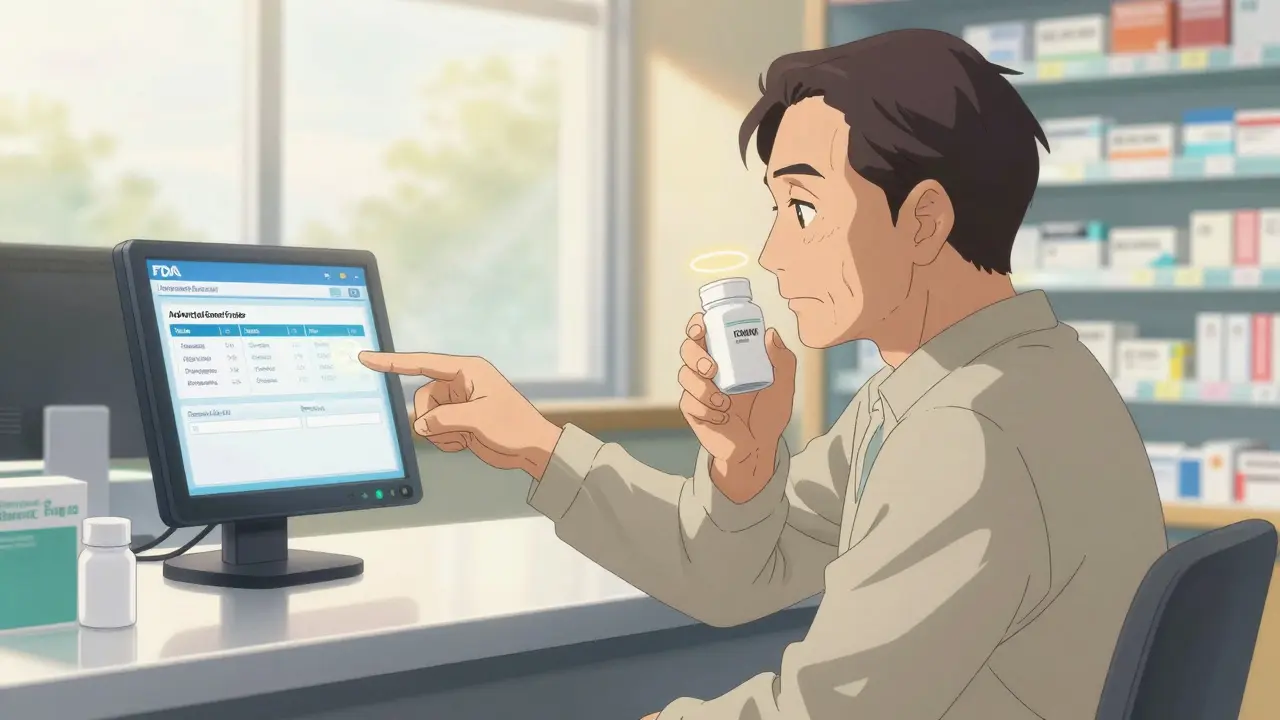
When your doctor suggests switching from your brand-name medication to a generic, it’s natural to feel uneasy. What if it doesn’t work the same? What if you start feeling worse? These fears aren’t irrational-especially when you’ve been on the same pill for years and it’s kept your condition stable. But there’s a type of generic that’s different from the rest: the authorized generic. It’s not just cheaper. It’s the exact same drug, made by the same company, in the same factory, with the same ingredients. And for many patients, switching to one can mean fewer side effects, better adherence, and real savings-all without the guesswork.
What Exactly Is an Authorized Generic?
An authorized generic isn’t just another generic drug. It’s the brand-name medication, but sold without the brand name on the label. Think of it like a store-brand version of your favorite cereal-same ingredients, same factory, same taste, just a different box. The FDA defines it as a drug produced under the brand’s own New Drug Application (NDA), meaning it’s not just bioequivalent-it’s identical. The active ingredient? Same. The inactive ingredients? Same. The manufacturing process? Same facility, same equipment, same quality controls.
This matters because regular generics, while approved by the FDA, can have different fillers, dyes, or preservatives. For most people, that’s fine. But for patients with sensitivities-say, to lactose, gluten, or artificial coloring-it can mean headaches, rashes, or worse. A 2023 GoodRx analysis found that 12.7% of patients switching to regular generics reported new or worsening symptoms linked to these inactive ingredients. With authorized generics, that number drops to 2.3%.
Why This Matters for Chronic Conditions
If you’re taking a medication for high blood pressure, epilepsy, thyroid disease, or blood thinners like warfarin, even tiny changes in how your body absorbs the drug can be risky. These are called narrow therapeutic index drugs-medications where the difference between an effective dose and a toxic one is very small. The FDA estimates that about 5.3% of all prescriptions fall into this category. For these patients, switching to a regular generic isn’t just about cost-it’s about safety.
Studies show that when patients with these conditions switch to authorized generics, they’re 28% less likely to experience therapeutic failure. That means fewer hospital visits, fewer lab tests, and fewer scary moments when your body reacts unexpectedly. One patient in a 2023 survey shared: "Switched to the authorized generic of my blood thinner and haven’t had the bruising issues I experienced with the regular generic." That’s not luck. That’s consistency.
The Cost Advantage Isn’t Always Obvious
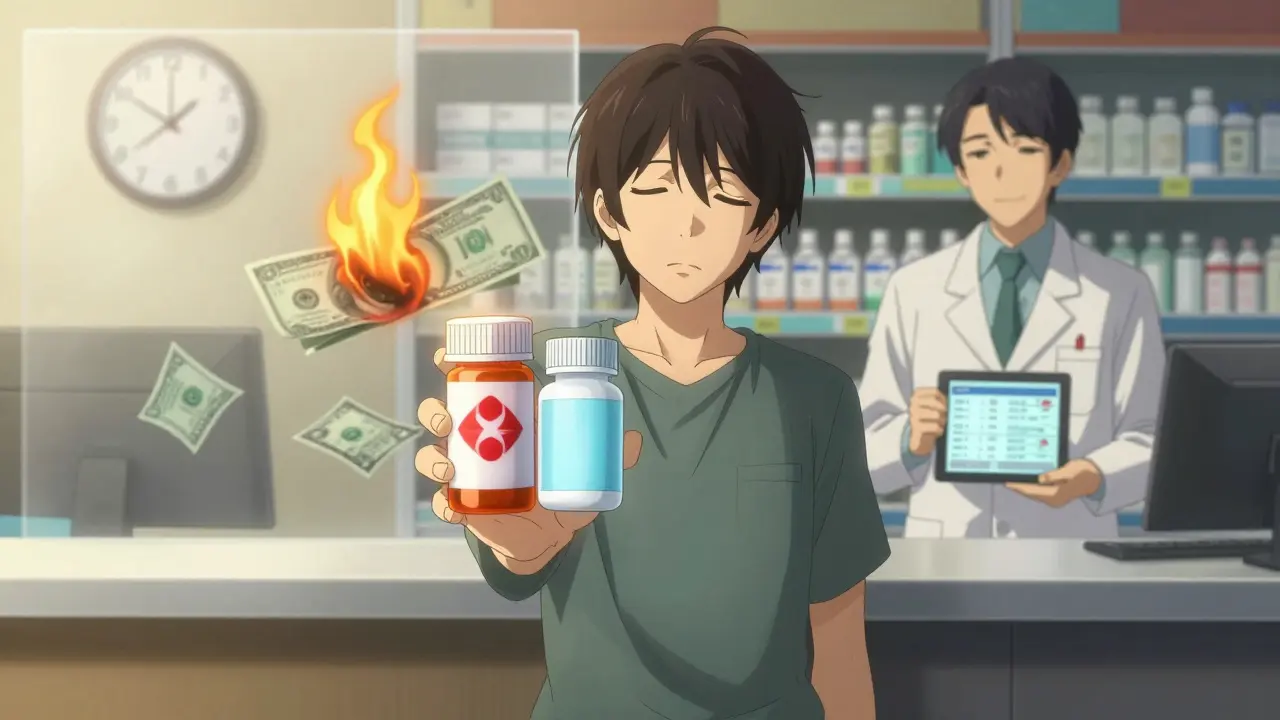
Authorized generics are cheaper than the brand-name version, often by 4-8% at retail and up to 14% at the wholesale level, according to the Federal Trade Commission. But here’s the catch: your insurance might not treat it that way.
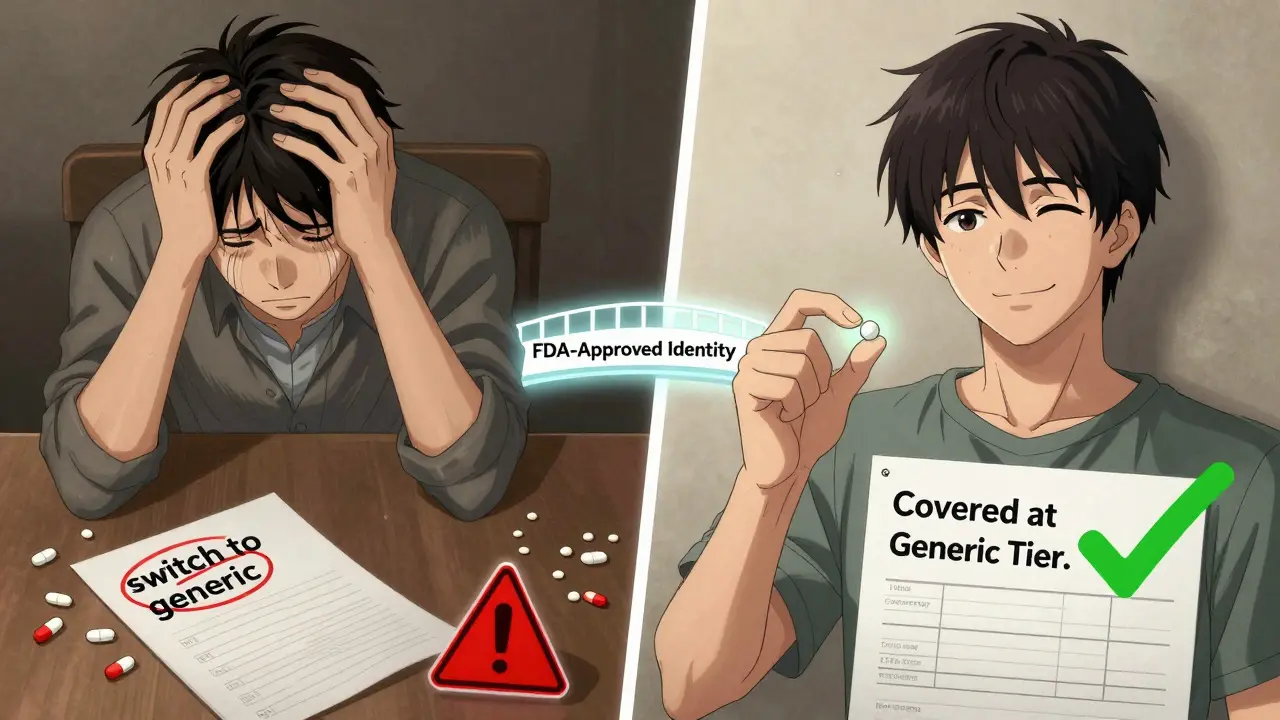
Some plans put authorized generics on the same tier as brand-name drugs-meaning you pay more out of pocket than you would for a regular generic. A 2022 Health Affairs study found that 28% of commercial insurance plans charged higher copays for authorized generics than for standard generics. One Reddit user wrote: "My insurance covered the brand but not the authorized generic version, costing me $45 more monthly despite identical medication."
That’s why checking your formulary before switching is critical. Call your insurer. Ask: "Is the authorized generic covered at the same cost as the regular generic?" If not, ask if they’ll make an exception. Many pharmacists can help you file a prior authorization request, especially if you have a history of adverse reactions to other generics.
How to Know If an Authorized Generic Is Available
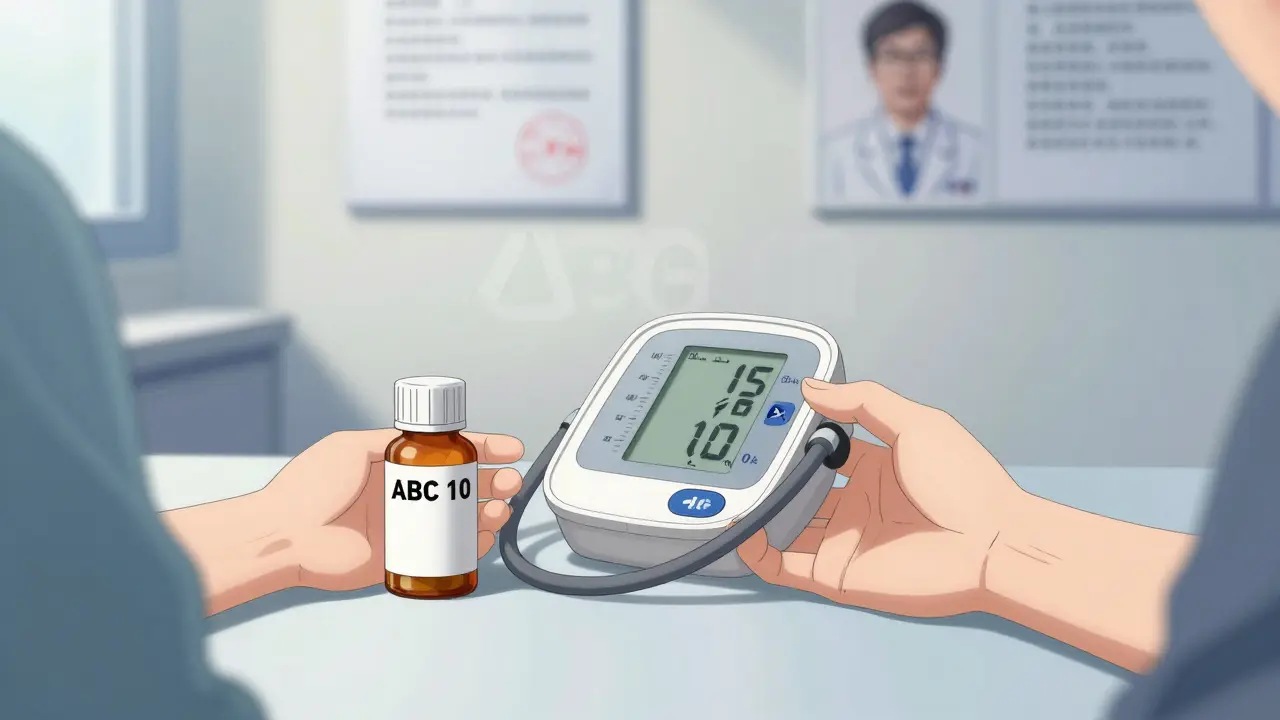
Not every brand-name drug has an authorized generic. As of Q3 2023, only 37.5% of drugs with generic alternatives also had an authorized version. The good news? The FDA launched a free tool in 2023 called the Authorized Generic Finder within its Drugs@FDA database. You can search by brand name and see exactly which authorized versions are available, who makes them, and when they launched.
Another quick way: ask your pharmacist. They often have access to manufacturer lists and can tell you if the generic you’re being offered is the authorized version. Look for the same pill shape, color, and markings as your brand-name pill. If they match, it’s likely authorized.
What to Expect When You Switch
Switching to an authorized generic should feel seamless. You’ll get the same pill, same dose, same instructions. The only difference? The name on the label might be gone, or replaced with a simple code like "ABC 10" instead of "Lipitor 10mg."
But even though it’s the same drug, don’t skip the transition steps:
- Confirm availability. Use the FDA’s Authorized Generic Finder or ask your pharmacist.
- Check your insurance. Compare your copay for the authorized generic vs. the brand vs. the regular generic.
- Get educated. Ask for printed materials from the manufacturer or FDA that explain the difference. Many patients feel better knowing they’re getting the exact same drug.
- Communicate. Tell your prescriber you’re switching. They may need to update your records.
- Monitor. Especially if you’re on a narrow therapeutic index drug, check in with your doctor at 14 and 30 days. Note any changes in symptoms, side effects, or lab results.
Most patients report no issues at all. In fact, satisfaction rates for authorized generics are 73%-compared to 58% for regular generics, according to the Asthma and Allergy Foundation of America.
Why Some Doctors Are Still Hesitant
Even though the science is clear, some providers still hesitate to recommend authorized generics. Why? One reason is confusion. Electronic health records (EHRs) often don’t distinguish between authorized and regular generics. So when a pharmacist fills a prescription, the system might just log it as "generic," hiding the fact that it’s the same as the brand.
Another issue? Perception. Some doctors worry that if patients think authorized generics are "better," they’ll lose trust in all generics. But that’s a misunderstanding. The FDA has spent decades proving that regular generics are safe and effective. Authorized generics simply remove the guesswork for sensitive patients.
As Dr. Jane Axelrad from the FDA said in 2022: "Authorized generics offer the therapeutic consistency of brand-name products with generic pricing. They’re particularly valuable for managing transitions in complex therapeutic areas."
What’s Changing in 2025 and Beyond
The landscape is shifting. The FDA’s new labeling rules, set to roll out in 2025, will require clearer labels that distinguish authorized generics from regular ones. Medicare Part D now requires plans to cover authorized generics at the same cost-sharing as the brand-name drug, helping over a million seniors save money.
And the trend is growing. The U.S. authorized generic market hit $18.7 billion in sales in 2022 and is projected to grow at 8.2% annually through 2027. More insurers and value-based care organizations are starting to track authorized generic use-not just for cost, but for outcomes.
A 2023 study of accountable care organizations found that 37% now include authorized generic utilization as a quality metric. Why? Because when patients stay on their medication without switching back, hospitalizations drop. Adherence improves. Costs go down.
Final Thought: It’s Not About Generic vs. Brand. It’s About Consistency.
Switching to an authorized generic isn’t about settling for less. It’s about choosing the most reliable option available. You’re not trading quality for price. You’re keeping the same drug you trust, but paying less for it. For patients who’ve struggled with side effects, insurance barriers, or inconsistent responses to regular generics, this is a quiet revolution-one pill at a time.
If you’re considering a switch, ask your pharmacist: "Is there an authorized generic for this?" If there is, and your insurance covers it, there’s almost no reason not to try it. Your body already knows how to handle it. You just need the right label.
Are authorized generics the same as brand-name drugs?
Yes. Authorized generics are made by the same company that produces the brand-name drug, using the exact same active and inactive ingredients, in the same facility, and under the same quality controls. The only difference is the label-they don’t carry the brand name. The FDA considers them therapeutically identical.
Why are authorized generics cheaper if they’re identical?
They’re cheaper because they don’t carry the marketing, advertising, and brand-building costs of the original drug. The manufacturer doesn’t need to recoup R&D expenses through high pricing, since they’ve already done so with the brand version. This allows them to offer the same product at a lower price, often 4-14% cheaper than the brand.
Can I ask my pharmacist for an authorized generic even if my doctor didn’t prescribe it?
Yes. Pharmacists can substitute an authorized generic if it’s available and your insurance allows it. However, your prescriber may need to write "Dispense as Written" on the prescription if they want to prevent substitutions. If you’re interested in switching, ask your pharmacist if an authorized version exists and whether it’s covered under your plan.
Why does my insurance cover the regular generic but not the authorized one?
Some insurance plans mistakenly classify authorized generics as brand-name drugs because they’re made by the same company. This can result in higher copays. To fix this, ask your pharmacist to help you file a prior authorization or appeal. Many insurers will change their decision if you show documentation that the authorized generic is identical to the brand.
How do I find out if my medication has an authorized generic?
Use the FDA’s free Authorized Generic Finder tool in the Drugs@FDA database. You can search by brand name and see if an authorized version is listed, along with the manufacturer. Your pharmacist can also check manufacturer websites or call the company directly. As of 2023, over 400 brand-name drugs have authorized generic versions available.
For more information on authorized generics, visit the FDA’s website or ask your pharmacist for their patient education materials. You deserve a medication that works-without surprises.
Amrit N
February 20, 2026 AT 16:38just switched my blood pressure med to an authorized generic and honestly? no difference. same pill, same results. i was scared i'd feel weird but nah. saved me like $30 a month. cool stuff.
Robert Shiu
February 22, 2026 AT 04:25This is such an important topic! Seriously, so many people are scared to switch and don’t even know authorized generics exist. You’re not giving up quality-you’re just cutting out the marketing fluff. Keep spreading the word, this kind of info saves people money AND stress.
Ashley Paashuis
February 22, 2026 AT 08:15I appreciate the thorough breakdown, especially the data on inactive ingredients. For patients with autoimmune sensitivities, this isn’t just about cost-it’s about safety. I’ve seen too many cases where a simple switch to a regular generic triggered rashes or GI distress. The 2.3% vs. 12.7% stat speaks volumes.
Liam Crean
February 24, 2026 AT 05:50My mom’s on warfarin and switched last year. She had constant bruising with the regular generic-like, purple splotches everywhere. Authorized generic? Zero issues. Her INR stayed stable. I didn’t even know this option existed until she told me. Wish more doctors talked about it.
Marie Crick
February 24, 2026 AT 13:08Insurance companies are scamming people. They know authorized generics are identical and still charge brand prices. That’s not innovation-that’s greed.
Jayanta Boruah
February 24, 2026 AT 23:38While the concept of authorized generics is theoretically sound, one must consider the broader economic implications. The pharmaceutical industry, despite its imperfections, operates under a complex system of intellectual property, R&D recovery, and global supply chain logistics. To equate an authorized generic with a brand-name product without acknowledging the structural incentives that drive innovation is to engage in a form of economic reductionism. One must ask: if all generics are functionally identical, why does brand-name drug development persist? The answer lies not in consumer deception, but in systemic necessity.
Hariom Sharma
February 26, 2026 AT 20:51Bro, this is the real MVP of healthcare savings. I’m from India, and we don’t even have this option half the time. Here in the US, you’re lucky to get this kind of transparency. If your doc says "generic," ask if it’s authorized. It’s that simple. Save money, no side effects, same pill. Win-win.
Nina Catherine
February 28, 2026 AT 18:38my pharmacist just told me my levothyroxine has an authorized version! i had no clue. switched yesterday and already feel more stable. also, i typo’d "levothyroxine" like 3 times while typing this lmao
Taylor Mead
March 1, 2026 AT 15:10Just want to say-pharmacists are the real heroes here. They’re the ones who catch these details before you even walk out the door. If your pharmacist says "this is the same as your brand," believe them. They’ve seen more pill bottles than most doctors have seen patients.
Scott Dunne
March 2, 2026 AT 09:43It is regrettably evident that the American healthcare system has devolved into a marketplace of obfuscation. The notion that a product bearing identical chemical composition may be subject to differential reimbursement constitutes a fundamental failure of regulatory coherence. One must question the legitimacy of a system wherein therapeutic equivalence is rendered economically inequitable.
Chris Beeley
March 4, 2026 AT 08:08Look, I’ve read every study, cross-referenced the FDA’s database, consulted three pharmacists, and reviewed the manufacturer’s white papers on batch consistency. The authorized generic isn’t just a marketing gimmick-it’s a philosophical statement on the commodification of health. We’ve been conditioned to believe that branding equals quality, when in reality, the pill in your hand is a product of scientific precision, not corporate logo design. The real scandal? That it took this long for the public to catch on.
Arshdeep Singh
March 4, 2026 AT 13:48People think they’re getting ripped off by big pharma, but let’s be real-most of you wouldn’t know a bioequivalent from a placebo if it bit you in the ass. You’re not patients-you’re consumers with anxiety. The authorized generic isn’t magic. It’s just science. And science doesn’t care about your feelings.
Jonathan Rutter
March 6, 2026 AT 01:03My sister had a seizure after switching to a regular generic. She’s fine now, but I still blame the pharmacist. I’ve been screaming about this for years. Why does no one listen? Authorized generics exist for a reason. And if your doctor didn’t tell you, they’re not doing their job. You’re not just saving money-you’re saving your life. Stop being lazy and ask.
Jana Eiffel
March 7, 2026 AT 03:00The epistemological framework underpinning pharmaceutical equivalence demands rigorous scrutiny. The FDA’s definition of therapeutic identity, while administratively convenient, fails to account for inter-individual pharmacokinetic variance. One cannot reduce the patient experience to chemical equivalence alone; the placebo effect, psychosomatic response, and symbolic value of brand recognition remain empirically significant variables. To dismiss these as irrelevant is to commit a category error in clinical reasoning.
aine power
March 8, 2026 AT 01:02So basically, you’re saying the brand-name drug is just a fancy box? Wow. Groundbreaking.