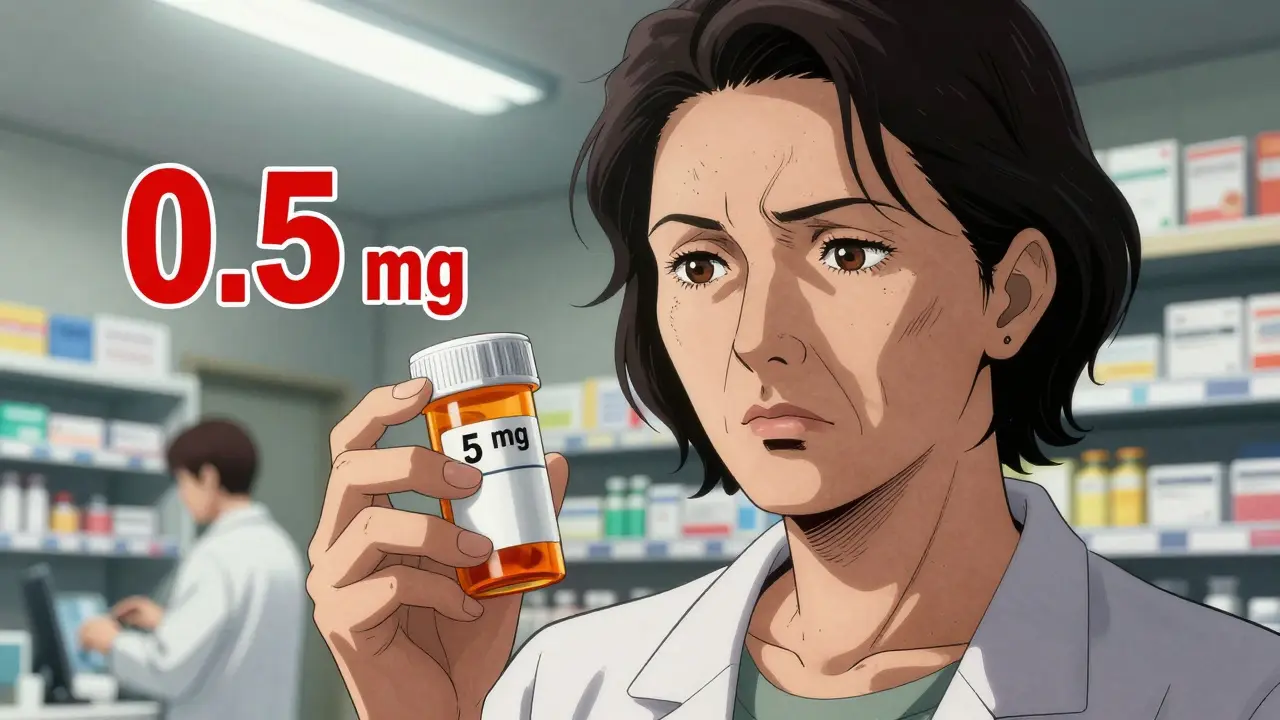
Every year, hundreds of thousands of people in the U.S. take the wrong medication or the wrong dose because of a simple mistake on a pharmacy label. It’s not because pharmacists are careless-it’s because mistakes happen even in the best-run systems. And here’s the hard truth: pharmacy labeling error is often the last thing standing between you and serious harm. You can’t always rely on the pharmacy to catch it. But you can.
What a Pharmacy Labeling Error Actually Looks Like
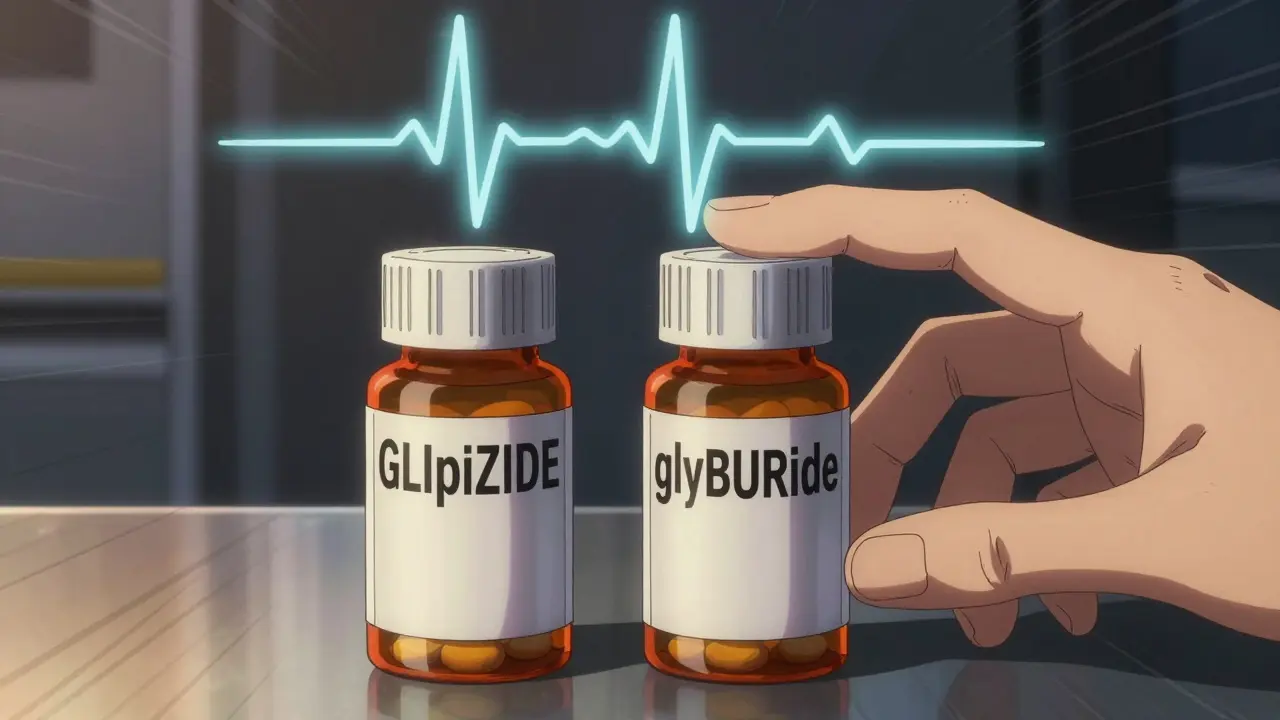
A labeling error isn’t always a misspelled name. Sometimes, it’s a tiny decimal point that turns 0.5 mg into 5 mg. Other times, it’s the wrong pill entirely-glipizide instead of glyburide, cycloserine instead of cyclosporine. These are called look-alike, sound-alike (LASA) errors, and they make up about 30% of all dispensing mistakes. The FDA has flagged over 1,500 drug name pairs that are dangerously similar. You won’t see them on the shelf labeled as risky. You have to know what to look for.Strength errors are just as common. Warfarin, insulin, levothyroxine-these are high-alert medications where a single digit mistake can cause a heart attack, stroke, or death. One patient in Michigan nearly died after taking 10 times her prescribed dose of warfarin because the label said “5 mg” instead of “0.5 mg.” She noticed because she remembered her last bottle said “0.5.” That’s the power of comparison.
Dosage form errors happen too. A capsule labeled as a tablet. A liquid labeled as a tablet. If your doctor told you to swallow a pill, but you get a liquid you’re supposed to inject? That’s not a mix-up-it’s a disaster waiting to happen.
The Five Things You Must Check Every Time
You don’t need a medical degree. You just need to ask four simple questions every time you pick up a prescription:- Is this the right drug? Compare the name on the label to the name your doctor gave you. Don’t just glance-read it out loud. Say “GLIpiZIDE” and “glyBURide” out loud. If they sound the same, you’re in a LASA trap. Tall-man lettering (capitalized letters to highlight differences) should be used, but it’s not always there. If it’s missing, trust your ears.
- Is the strength correct? Look at the number. Is it 5 mg? 50 mg? 0.5 mg? Read it aloud. A 10-fold error is easy to miss if you’re just scanning. Write it down if you need to. Compare it to your last bottle of the same medicine.
- What form is it? Tablet? Capsule? Liquid? Patch? If your doctor said “swallow a pill,” but you got a liquid, ask. Don’t assume.
- How do you take it? “Take one by mouth daily” is good. “Take one by mouth at bedtime” is better. But if it says “take two every four hours,” and your doctor said once a day? That’s a red flag.
- Why are you taking this? This is the most overlooked step. The label should say the reason-like “for high blood pressure” or “for type 2 diabetes.” If it doesn’t, ask. A 2016 study showed that including the indication on the label helps patients catch wrong-medication errors by 63%.
That’s it. Five checks. Takes 60 to 90 seconds. And it’s your last line of defense.
Why Trusting the Pharmacy Isn’t Enough
You’ve been told, “The pharmacist checks everything.” That’s not true. Pharmacists are human. They’re busy. In 2020, a study found that even double-checks by pharmacists miss about 3.4% of medication selection errors. That’s one in every 30 prescriptions. And community pharmacies-where most people get their meds-don’t always have double-check systems. Hospital pharmacies do. Community pharmacies? Only 32% use barcode scanning to catch errors. That means the system is designed to rely on you.A 2022 survey found that 58% of people never check their labels because they “trust the pharmacy.” That’s not trust-it’s risk. And 32% said they didn’t know what to check. You’re not alone. But now you know.
Real Stories: When Checking Saved Lives
On Reddit’s r/Pharmacy, one user shared how they caught a 10-fold warfarin error. Another caught a label that said “10 mg” for a drug that should’ve been “1 mg.” A third noticed the indication was missing entirely-so they called their doctor and found out they’d been given a completely different drug for a different condition.In 2021, a patient in New Jersey took a pill labeled “metoprolol” for her heart. She’d taken it for years. But this bottle looked different. She read the label again: “metoprolol tartrate.” Her last bottle said “metoprolol succinate.” Same name, different form. Different release rate. Different effect. She didn’t take it. She called. They fixed it.
These aren’t rare. They’re common. And they’re preventable.
What’s Changing to Help You
The system is catching up. Starting May 1, 2024, new U.S. Pharmacopeia rules require all pharmacy labels to use at least 12-point font and 4.5:1 contrast ratios-so older eyes can read them. The FDA is pushing for standardized tall-man lettering on 200 high-risk drug pairs. And new tech is helping: CVS now lets you scan a QR code on your prescription bag to hear an audio description of your medication. Apps like MedSafety Check use your phone’s camera to scan the label and compare it to your prescription history-with 94.7% accuracy.But none of this replaces you. Technology can fail. A barcode can be misread. A label can be printed wrong. Your eyes, your memory, your voice-those are still the most reliable tools you have.

What to Do If You Spot a Mistake
Don’t panic. Don’t take the medication. Don’t feel awkward.Walk back to the counter. Say: “I’m sorry, but this doesn’t match what my doctor prescribed. Can we double-check?”
Most pharmacists will thank you. They’ve seen this happen. They’ve had patients catch errors that saved lives. They’re trained to appreciate it.
If they brush you off? Ask to speak to the pharmacist in charge. Or call your doctor’s office. Most offices have a nurse or pharmacist on call who can verify the prescription.
And if you’re still unsure? Don’t take it. Call Poison Control at 1-800-222-1222. They’ll help you figure out what to do next.
Who’s at Highest Risk?
Older adults. People taking five or more medications. Those with poor eyesight or low health literacy. People who don’t speak English as their first language. If you or someone you care for falls into one of these groups, make a plan.Keep a written list of every medication: name, strength, form, purpose, and how often to take it. Update it every time something changes. Show it to the pharmacist when you pick up a new prescription. Bring a family member or friend with you. Ask them to read the label aloud with you.
There’s no shame in needing help. Safety isn’t about being independent. It’s about being smart.
Final Thought: Your Life Is Worth 90 Seconds
You spend hours checking your bank statements, your credit reports, your car’s oil. You check your phone for updates, your email for spam, your fridge for expired food.Why wouldn’t you spend 90 seconds checking a pill that could save-or end-your life?
Pharmacy labeling errors aren’t inevitable. They’re preventable. And the person who stops them most often isn’t the pharmacist. It’s you.
Brian Anaz
January 7, 2026 AT 00:35Venkataramanan Viswanathan
January 8, 2026 AT 14:42Vinayak Naik
January 10, 2026 AT 12:16Kelly Beck
January 10, 2026 AT 15:40Molly McLane
January 12, 2026 AT 08:57Beth Templeton
January 12, 2026 AT 19:37Jeane Hendrix
January 12, 2026 AT 20:45Rachel Wermager
January 13, 2026 AT 05:58Tom Swinton
January 14, 2026 AT 15:57Leonard Shit
January 15, 2026 AT 21:42