
When you’re sick, the last thing you should worry about is whether you understood your doctor’s instructions. But for millions of people in the U.S. who don’t speak English fluently, that’s a daily reality. Language barriers don’t just make conversations awkward-they can lead to deadly mistakes with medication. A child might get twice the dose of antibiotics because the label wasn’t translated. An elderly patient might skip doses because they didn’t understand "take with food." These aren’t rare errors. They’re systemic failures-and they’re preventable.
Why Language Barriers Lead to Dangerous Mistakes
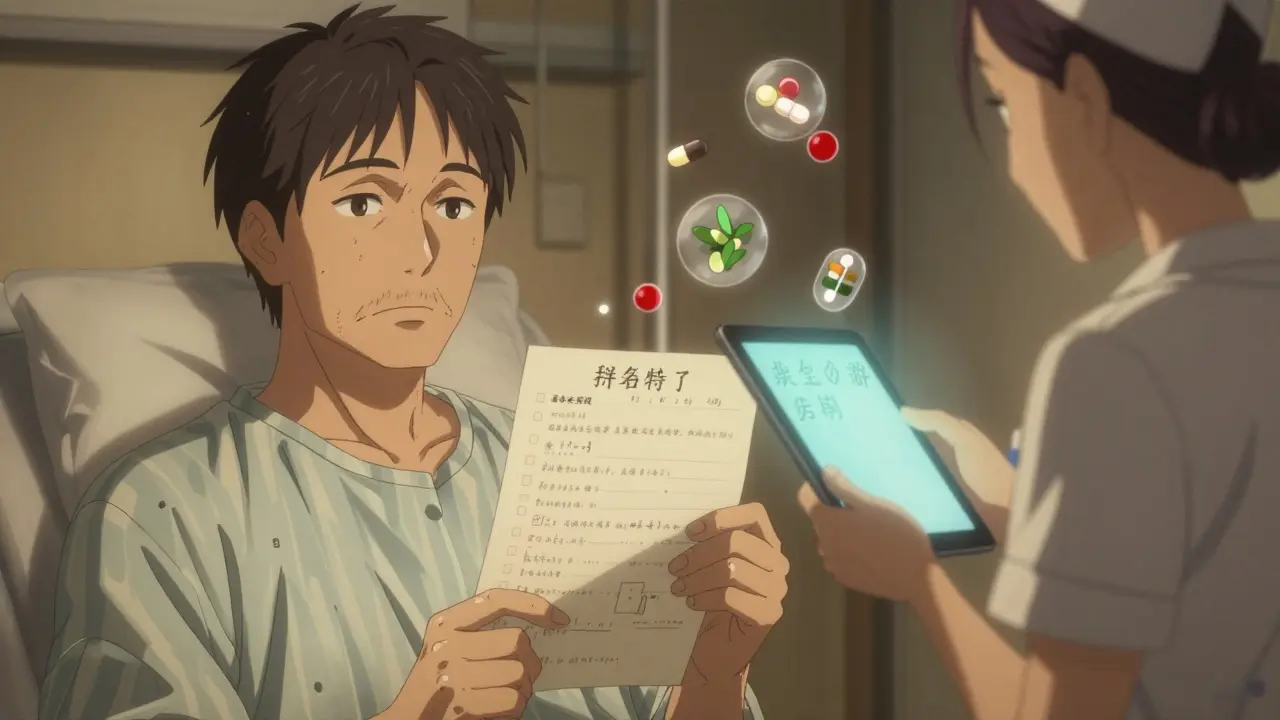
Medication errors linked to language problems aren’t theoretical. A 2022 study from the Children’s Hospital of Philadelphia found that children in families with limited English proficiency had nearly double the rate of medication errors compared to English-speaking families: 17.7% versus 9.6%. That’s not a small gap. It’s a life-or-death divide. The problem isn’t just about not knowing English. It’s about how healthcare systems respond-or don’t respond. Many pharmacies still can’t print prescription labels in languages other than English. In the Bronx, one of the most diverse areas in the country, 31% of pharmacies couldn’t provide Spanish-language labels. In Milwaukee, half of pharmacies said they rarely or never printed non-English instructions or used interpreters during counseling. When patients can’t read their own labels, they rely on others. Family members step in. Friends. Kids. Even strangers at the pharmacy counter. But untrained interpreters make mistakes. Studies show up to 25% of translations by family members are wrong-sometimes dangerously so. One Reddit user shared how their Spanish-speaking mother was given incorrect insulin instructions because the pharmacy used Google Translate. She ended up in the hospital.What Actually Works: Professional Help, Not Guesswork
The solution isn’t more apps, more flyers, or hoping someone "gets the gist." It’s professional language services-and they’re proven to work. A 2017 analysis of over 7,000 cases found that using trained medical interpreters cut medication errors by up to 50% for patients with limited English proficiency. That’s not a slight improvement. That’s a game-changer. Hospitals and clinics that use certified interpreters see fewer readmissions, fewer ER visits, and better control of chronic conditions like diabetes and high blood pressure. There are three main types of professional help:- In-person interpreters-These are trained professionals who sit with you and your provider. They know medical terms, cultural nuances, and how to explain complex instructions without oversimplifying.
- Telephone interpreters-Quick, available 24/7, and useful for urgent situations. Costs around $3.50 to $5 per minute.
- Video remote interpreters-Ideal for detailed conversations, like reviewing a new medication regimen. You can see facial expressions and gestures, which helps with understanding. Costs about $4 to $6 per minute.
The Power of Direct Observation
Sometimes, even the best interpreter can’t fix everything. Especially with high-risk medications like insulin, blood thinners, or chemotherapy drugs. That’s where directly observed dosing comes in. Instead of just handing over a pill bottle and saying "take this twice a day," a nurse or pharmacist watches you take the medication. They watch you open the bottle, measure the dose, swallow it. If you’re confused, they see it right away. A 2017 study in the Journal of General Internal Medicine showed this method significantly improved accuracy-even when language barriers were still present. Patients didn’t need to understand every word. They just needed to do it correctly, under supervision. This isn’t just for hospitals. Community pharmacies can do this too. Ask: "Can you watch me take this for the first time?" It’s a simple ask. And it saves lives.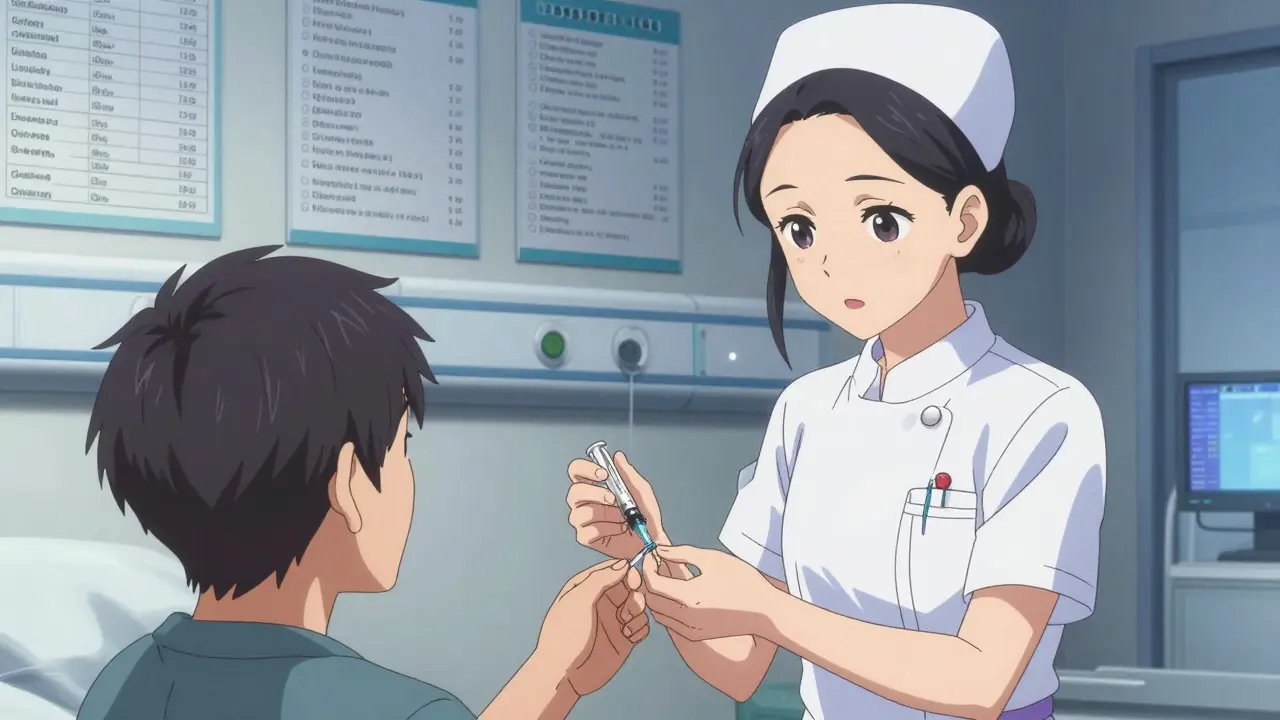
What You Can Do Right Now
You don’t have to wait for the system to fix itself. Here’s what you can do today:- Speak up early. At your first visit, tell the front desk: "I need an interpreter." Don’t wait until you’re in the exam room. Write it down if you’re nervous.
- Ask for written instructions in your language. If they say no, ask: "Can you print this in Spanish, Chinese, Arabic, etc.?" Many systems can do it-they just need to be asked.
- Use the teach-back method. After your provider explains your medication, say: "Can you please show me how to take this?" Then repeat it back in your own words. If you can’t explain it clearly, you didn’t understand it.
- Bring someone who speaks English. Not just any family member-someone who can listen, ask questions, and take notes. A teenager who’s good at English might be better than a grandparent who’s not.
- Know your rights. If you’re denied an interpreter, ask to speak to a patient advocate. You can file a complaint with the Office for Civil Rights at HHS.gov. They investigate these things.
Why This Isn’t Just About Language-It’s About Equity
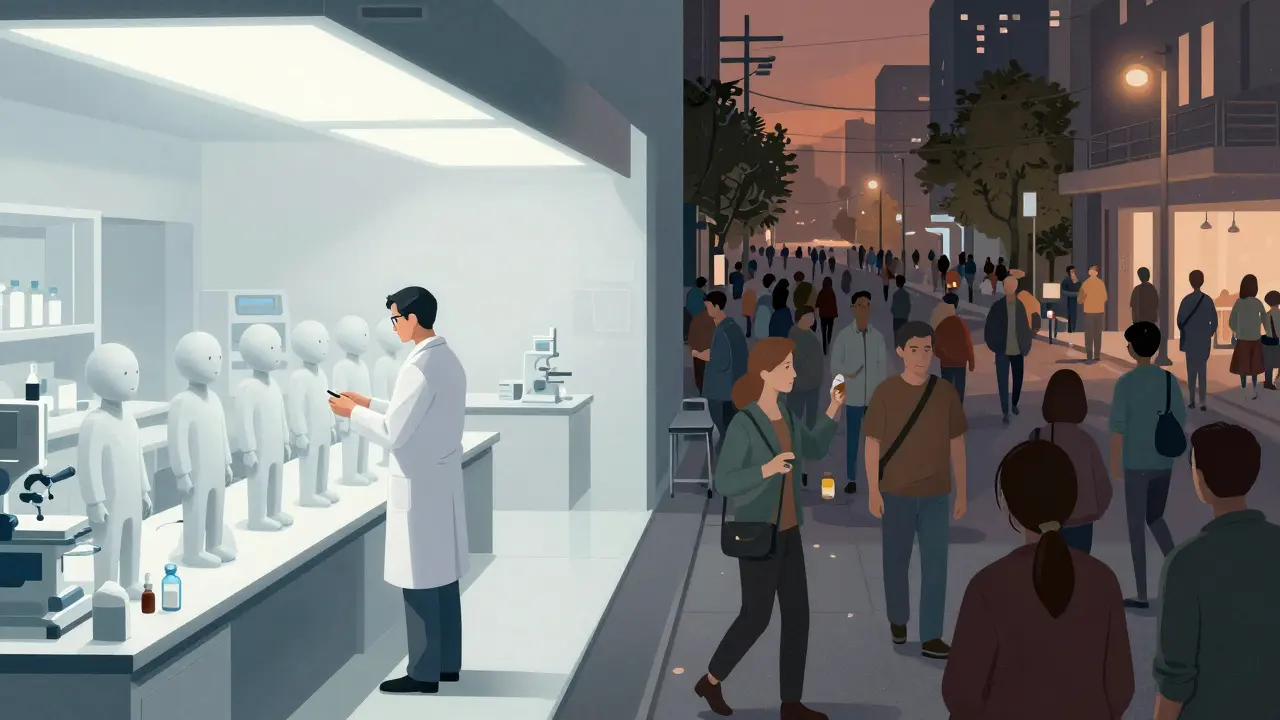
Dr. Urmimala Sarkar, who led the 2022 study on pediatric medication errors, put it plainly: "From an equity standpoint, these disparities are not acceptable." This isn’t about convenience. It’s about justice. People who speak other languages aren’t asking for special treatment. They’re asking to be treated the same way English speakers are-clearly, safely, and with dignity. And it’s not just patients. Providers are stuck too. Nurses and pharmacists want to help, but they’re often given no training, no tools, and no time. One hospital survey found 45% of staff felt pressured to skip interpretation to keep appointments on schedule. That’s not their fault. It’s a broken system. The good news? Change is possible. One hospital in California reduced medication errors among LEP patients by 40% in just one year by hiring full-time interpreters and training staff on how to use them. They didn’t need fancy tech. Just commitment.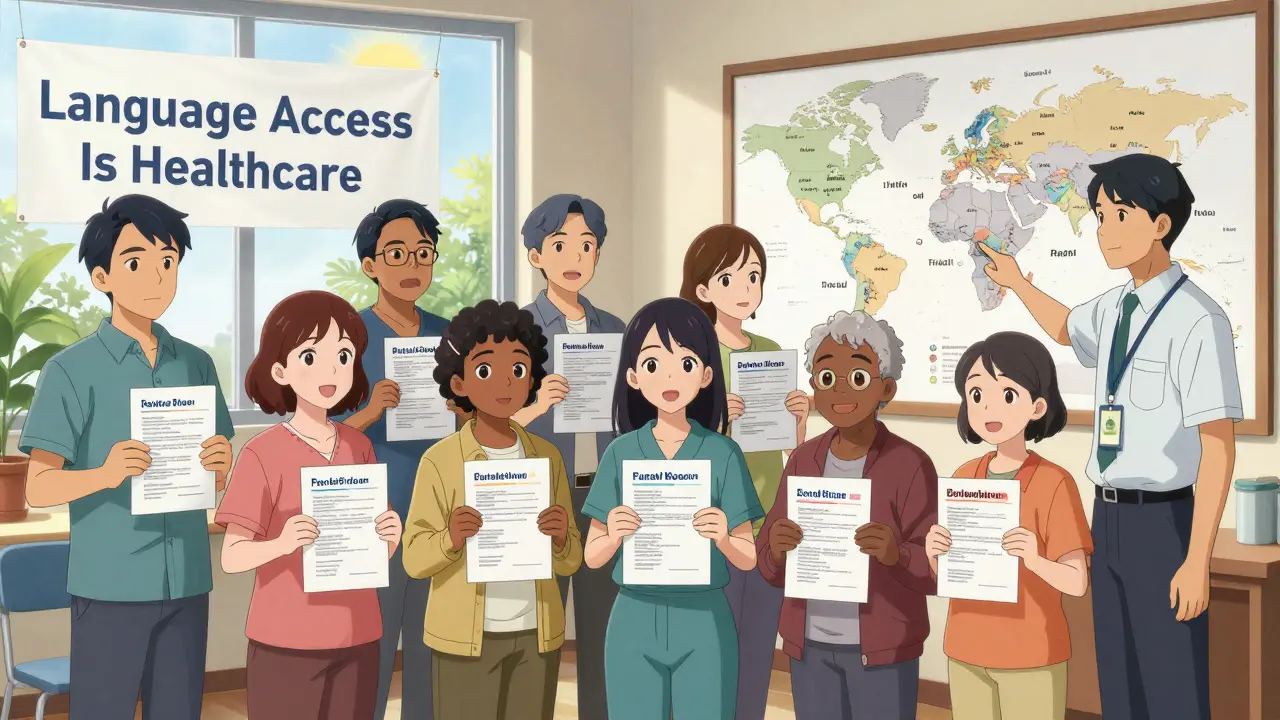
What’s Changing in 2025
There’s momentum. The FDA is preparing new rules for multilingual prescription labels in 2024. Medicare now reimburses for remote interpreter services during telehealth visits. Epic and Cerner, the two biggest electronic health record systems, are rolling out new tools in 2024 that automatically flag patients who need language help and connect them to interpreters. But progress is uneven. While urban hospitals are improving, rural clinics and small pharmacies are falling behind. And for languages like Hmong, Somali, or Karen, interpreters are still hard to find. Community organizations are stepping in. Local nonprofits in cities like Minneapolis, Phoenix, and Atlanta run interpreter training programs. The National Council on Interpreting in Health Care offers free certification resources. If you’re a provider, ask your local health department if they have a language access coalition. If you’re a patient, ask your local library-they often have free interpreter referral services.Final Thought: Safety Isn’t Optional
You wouldn’t let someone drive your car if they didn’t know how to read the dashboard. Why would you let someone take a life-changing medication without understanding the instructions? Language barriers are a solvable problem. Not with more paperwork. Not with better apps. But with real human help-trained, respected, and available when needed. If you’re a patient: speak up. If you’re a provider: listen. If you’re a family member: advocate. Because no one should be at risk just because they speak a different language.Can I use my child as an interpreter at the pharmacy?
While it’s common, using children as interpreters is risky. They often don’t understand medical terms like "anticoagulant" or "side effects," and they may skip scary parts to protect you. Studies show up to 25% of translations by family members are inaccurate. Professional interpreters are trained to handle complex medical language and maintain neutrality. Ask for one instead.
Is it illegal for a hospital to not provide an interpreter?
Yes. Under Title VI of the Civil Rights Act, any healthcare provider that receives federal funding-including Medicare, Medicaid, or grants-must provide language assistance services at no cost to the patient. Refusing an interpreter can lead to fines up to $100,000 per violation. You have the right to request one at any point in your care.
What if my language isn’t commonly spoken, like Vietnamese or Kurdish?
Even for less common languages, most hospitals and large pharmacies have access to telephone or video interpretation services that offer 200+ languages. If your provider says they can’t find an interpreter, ask for the name of their language service vendor and call them directly. Many offer on-demand access. Community health centers often have connections to volunteer interpreters for rare languages too.
Can I get my prescriptions translated into my language?
Yes, but you have to ask. Many pharmacies can print labels in Spanish, Chinese, Arabic, French, and other common languages. If they say no, ask if they can email or text you a translated version. Some apps, like Medisafe or MyTherapy, offer multilingual medication reminders. You can also request a printed copy from your provider’s office.
How do I know if my provider is using a professional interpreter?
A professional interpreter will introduce themselves by name, say they’re trained in medical interpretation, and explain they’re there to help you understand. They won’t interrupt, add opinions, or speak for you. If the person is a staff member who doesn’t wear an ID badge, or if they’re speaking in a casual tone without using medical terms correctly, they’re likely not certified. Politely ask: "Are you a trained medical interpreter?"

Jeffrey Frye
December 24, 2025 AT 00:49so like… i got my script in spanish and the pharmacy just handed me a printout that said "take 2 pills at bedtime" but the real dose was 1.5? and no one noticed until my mom started hallucinating? yeah. this is a thing. and no, i don’t want to use my 14-year-old cousin as a translator again.
Lindsey Kidd
December 25, 2025 AT 18:36THIS. 🙏 my abuela almost took her blood pressure med at the wrong time because the label said "take with food" and she thought "food" meant dessert. we got her a bilingual pill organizer and now she’s fine. but why is this even a struggle in 2025??
claire davies
December 27, 2025 AT 08:49Let me tell you about my cousin in Leeds who had a stroke because the pharmacist didn’t have a Punjabi interpreter, so they just scribbled "take 2x daily" on the bottle in English. She’s 72, speaks zero English, and her daughter was studying abroad. The hospital didn’t even offer a phone interpreter until she was admitted. This isn’t a gap-it’s a chasm. And it’s not just about language, it’s about dignity. You wouldn’t hand a blind person a map and say "figure it out." Why do we do this with medication? We’ve got the tech. We’ve got the laws. We just don’t care enough to enforce it. And that’s the real tragedy.
Rosemary O'Shea
December 29, 2025 AT 08:41Oh, darling, it’s not just about the labels-it’s the *vibes*. I watched a nurse in Boston roll her eyes when a Hmong grandmother asked for clarification. No interpreter. No patience. Just a sigh and a shrug. And now the poor woman’s on warfarin with no clue what INR means. It’s not incompetence-it’s classism wrapped in a white coat. You can’t medicate equity. You have to *feel* it.
Usha Sundar
December 31, 2025 AT 04:08My sister works at a clinic. They use video interpreters. It works. No drama. Just ask.
Spencer Garcia
January 1, 2026 AT 21:20Direct observation for high-risk meds? Genius. Simple. Effective. Why isn’t this standard everywhere?
Abby Polhill
January 2, 2026 AT 01:25From a clinical ops perspective, the real bottleneck isn’t tech-it’s workflow integration. EHRs like Epic have the API hooks for LEP flagging, but most frontline staff aren’t trained to activate them. It’s a process failure, not a resource one. You need embedded language access coordinators-not just a hotline number buried in a PDF.
Joseph Manuel
January 3, 2026 AT 20:51According to CMS data, 87% of hospitals receiving federal funding are in compliance with Title VI language access requirements. The 13% non-compliant are outliers. The narrative of systemic failure is overstated and politically motivated. Individual cases should not be generalized into institutional failure.
Delilah Rose
January 4, 2026 AT 21:07I used to work in a rural pharmacy in West Virginia. We had a lot of Spanish-speaking patients, and honestly? The staff didn’t know how to ask for an interpreter. They were scared of offending people. So they’d just nod and say, "Yeah, yeah, you got it." And then we’d get calls at 2 a.m. because someone took the wrong dose. It’s not that they didn’t care-it’s that no one ever trained them. We started doing 10-minute monthly huddles with interpreters on speakerphone, and within three months, med errors dropped by 60%. It’s not expensive. It’s not hard. It’s just… not prioritized.
Rachel Cericola
January 6, 2026 AT 20:09Let’s stop pretending this is a language issue. It’s a power issue. The system is designed for English speakers. Everything-from the font size on labels to the tone of the pharmacist’s voice-assumes you’re fluent. I’ve seen patients nod along because they’re too ashamed to say they don’t understand. We need to flip the script: make it normal to say "I need this explained again," and make it mandatory for providers to check for understanding-not just ask "do you understand?" but actually demonstrate it. Teach-back isn’t a nice-to-have. It’s the bare minimum. And if your clinic doesn’t do it, they’re not just negligent-they’re dangerous.
Austin LeBlanc
January 7, 2026 AT 17:52Stop coddling people who can’t speak English. If you’re in America, learn the language. My parents came here with nothing and learned English by 6 months. You don’t get a pass because you’re "not comfortable." Use Google Translate. Bring a friend. Stop expecting the system to bend over backward for you. It’s not fair to the rest of us.
Raja P
January 8, 2026 AT 09:57i get what you're saying, but i think we can agree that everyone just wants to be safe. maybe instead of blaming, we help? my uncle in delhi uses a phone interpreter for his diabetes meds. it costs like $2 a call. if we all pushed our local clinics to use these services, it’d be fine. no drama. just help.
niharika hardikar
January 9, 2026 AT 19:20The normalization of non-compliance with Title VI constitutes a violation of civil rights jurisprudence. The reliance on ad hoc solutions such as family interpretation undermines the ethical imperative of beneficence and non-maleficence in clinical practice. Until standardized, auditable language access protocols are mandated and enforced by federal oversight bodies, these disparities will persist as institutionalized negligence.