Have you ever looked at your prescription and wondered why some drugs have cheap generics while others still cost hundreds of dollars-even years after they were first approved? It’s not random. There’s a system behind it, and it’s designed to protect profits as much as it is to protect public health. The truth is, brand-name drugs don’t disappear just because their patent expires. In fact, about 25% of top-selling medications still have no generic version available, even after their legal monopoly ends.
Patents Aren’t the Whole Story
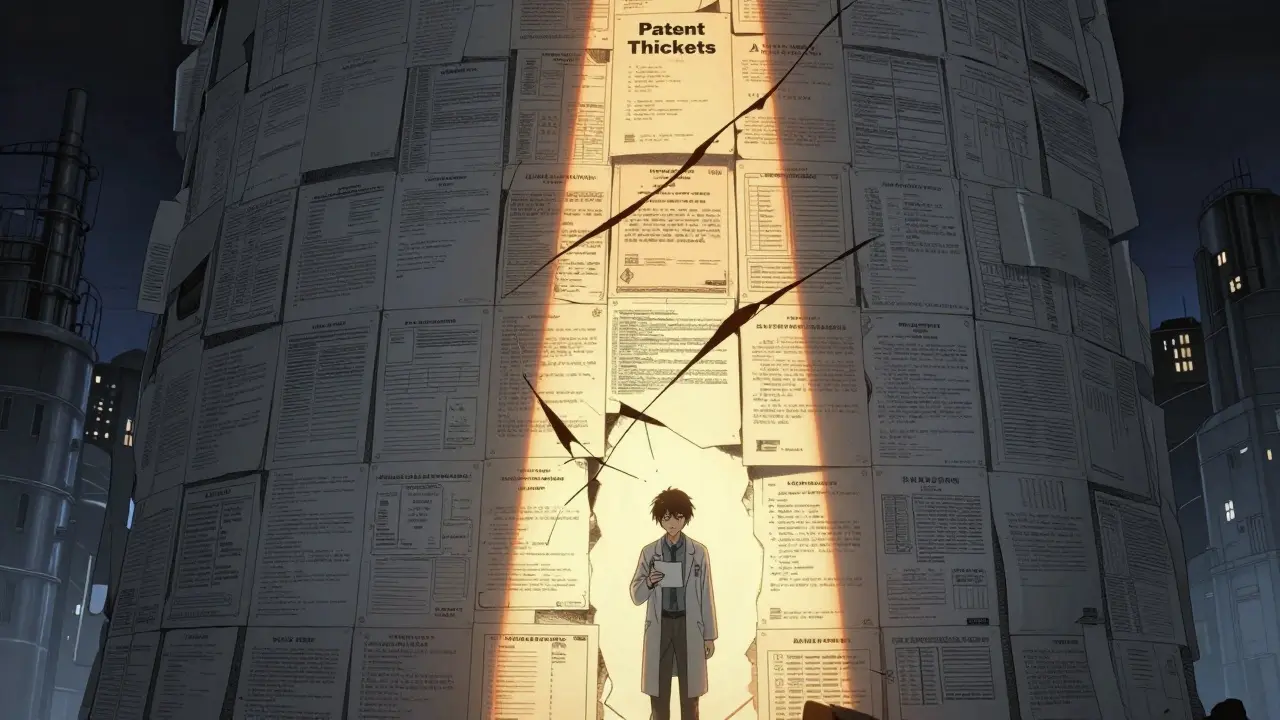
Most people think patents are the only thing blocking generics. That’s true for simple pills like Lipitor, which became generic after its 20-year patent expired. But many drugs are protected by more than just one patent. Companies file dozens-covering everything from the chemical structure to how the pill dissolves in your stomach. These are called patent thickets. They’re not always about innovation. Sometimes they’re just legal maneuvers to delay competition. For example, AstraZeneca extended its control over Nexium (esomeprazole) by filing new patents on minor formulation changes. The original patent expired in 2001, but generics didn’t hit the market until 2014. That’s 13 extra years of monopoly pricing. The FDA lists over 14,000 patents for just 2,500 brand-name drugs. Many of those patents have nothing to do with the drug’s core function-they’re just shields.Complex Drugs Can’t Be Copied Easily
Not all drugs are made the same way. Simple pills with one active ingredient are easy to replicate. But what about drugs made from biological sources? Take Premarin, a hormone therapy made from the urine of pregnant horses. Its active ingredients aren’t fully known. You can’t just reverse-engineer it. Even if a company wanted to make a generic version, they couldn’t prove it’s identical because the exact composition is a mystery. Then there are biologics-drugs made from living cells, like Humira or Enbrel. These aren’t chemicals. They’re proteins. You can’t synthesize them in a lab like aspirin. You need living cells, specific conditions, and precise handling. That’s why the FDA created a separate approval path called biosimilars. But even biosimilars take years to approve. Humira’s patent expired in 2016, but the first biosimilar didn’t arrive in the U.S. until 2023. Why? Legal battles, complex testing, and manufacturing hurdles.Delivery Systems Are Locked Down Too
It’s not just what’s in the drug-it’s how it gets into your body. Think about inhalers like Advair Diskus or patches like Androderm. These aren’t simple tablets. They’re engineered systems. The way the drug is released, how it sticks to your skin, or how it’s aerosolized matters. Even if a generic company makes a pill with the exact same chemical, if the delivery system is different, the FDA says it’s not equivalent. The FDA requires bioequivalence testing: the generic must absorb into your bloodstream at the same rate and to the same extent as the brand. For most drugs, that’s 80% to 125% similarity. But for drugs with narrow therapeutic windows-like epilepsy meds or blood thinners-even a 5% difference can cause seizures or clots. That means extra testing, more time, and higher costs. Many generic manufacturers simply walk away.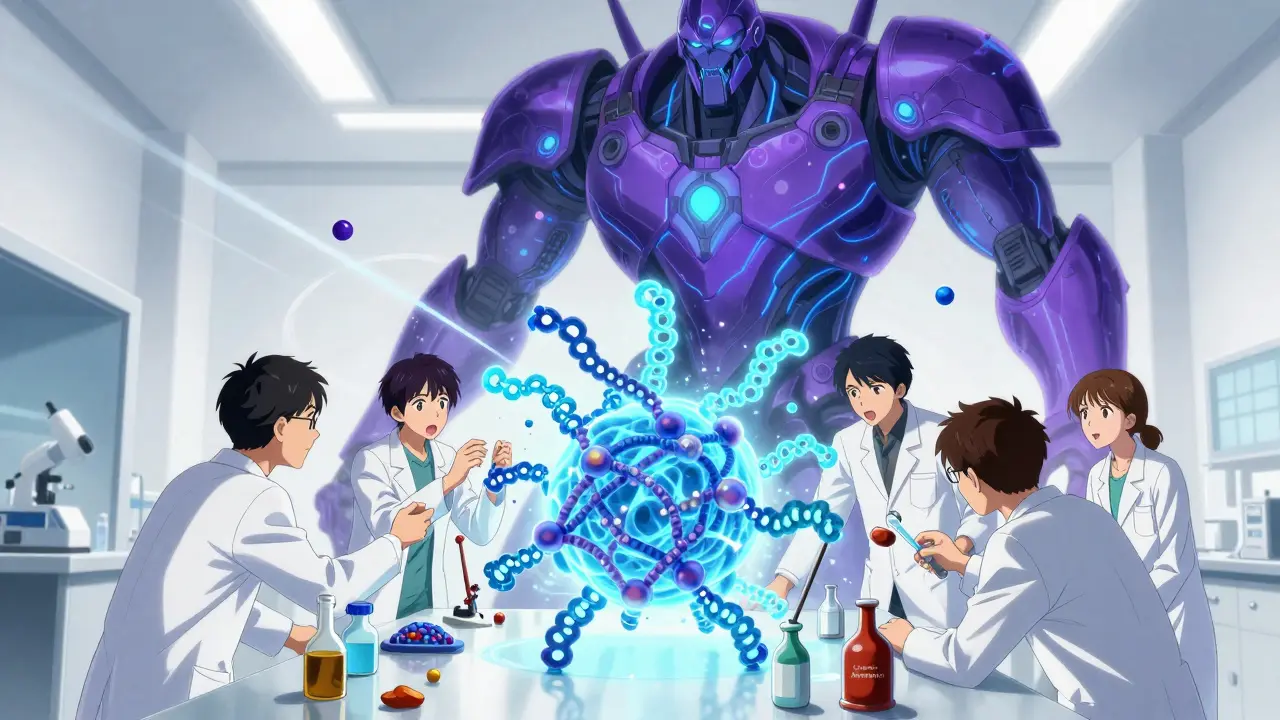
Market Incentives Are Skewed
Why would a generic company spend millions to develop a copy of a drug that only 50,000 people take? Or one that requires a specialized factory? The answer: they won’t. The market for rare disease drugs or specialty medications is tiny. The cost to get FDA approval can run over $1 million. If the patient population is small, there’s no profit. That’s why 68% of oncology drugs have no generic alternatives, compared to just 8% of common medications like blood pressure pills. A drug that treats a rare cancer might cost $15,000 a month. There’s no financial incentive for a generic maker to enter. Even if the patent expires, the drug stays branded because no one else can afford to compete.Pay-for-Delay Deals and Product Hopping
Sometimes, the delay isn’t legal-it’s bought. The FTC has documented over 290 pay-for-delay deals between 1999 and 2012. In these agreements, the brand-name company pays a generic manufacturer to hold off from selling their version. These deals cost consumers an estimated $3.5 billion a year. One famous case involved the antidepressant Wellbutrin XL. The brand paid a generic maker $100 million to delay its launch by 18 months. Then there’s product hopping. This is when a company makes a tiny change-switching from a pill to a tablet, or adding a new coating-and then files a new patent. The FDA still considers it the same drug, but now the clock resets. Mylan did this with the EpiPen. They changed the design slightly and got a new patent, keeping generics out for years longer than they should have.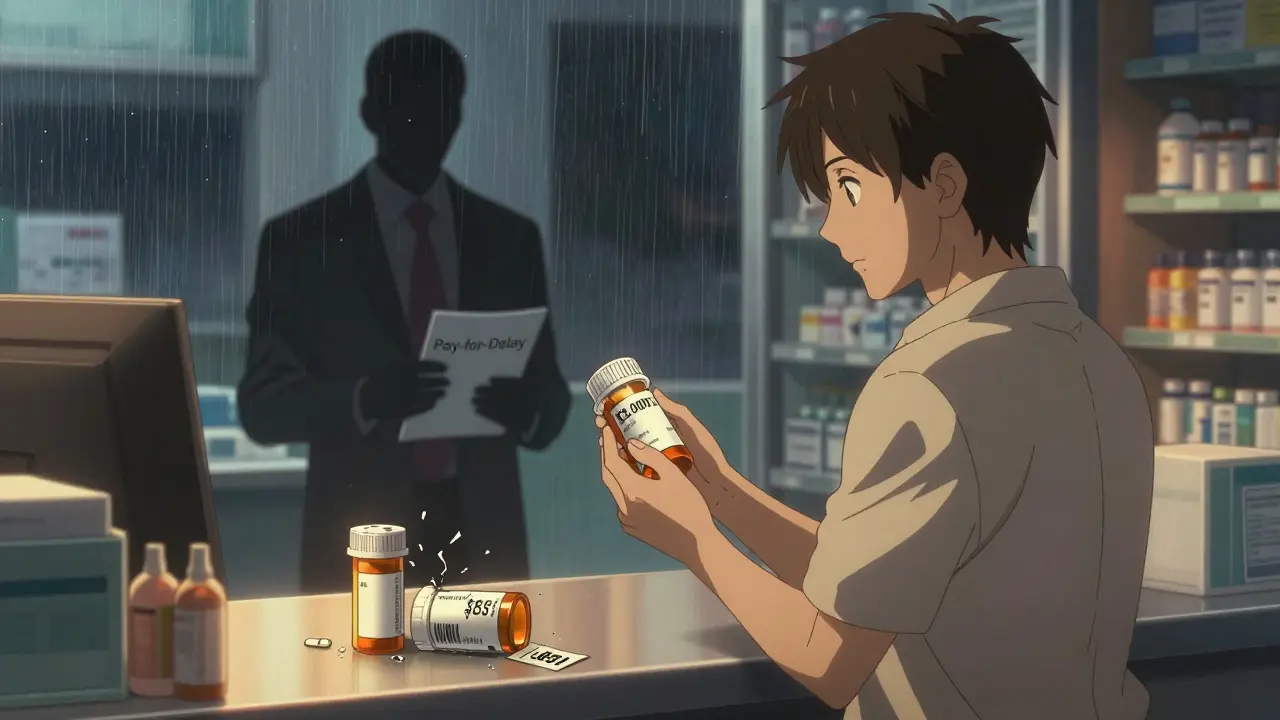
What Happens When Generics Finally Arrive?
When generics do show up, prices crash. Take Lipitor. Before generics, it cost $150 a month. Within a year of generic atorvastatin hitting the market, the price dropped 85%. The same thing happened with Gleevec. One patient on Reddit said he was paying $14,500 a month before generics. After, it was $850. That’s not a coincidence-it’s the power of competition. But for drugs without generics, prices stay high. A 2022 GoodRx analysis found that brand-name drugs with no generic alternatives cost 437% more than similar drugs with generics. Medicare beneficiaries taking these drugs spend over $5,000 a year out-of-pocket-more than double those who can switch to generics.What Can Patients Do?
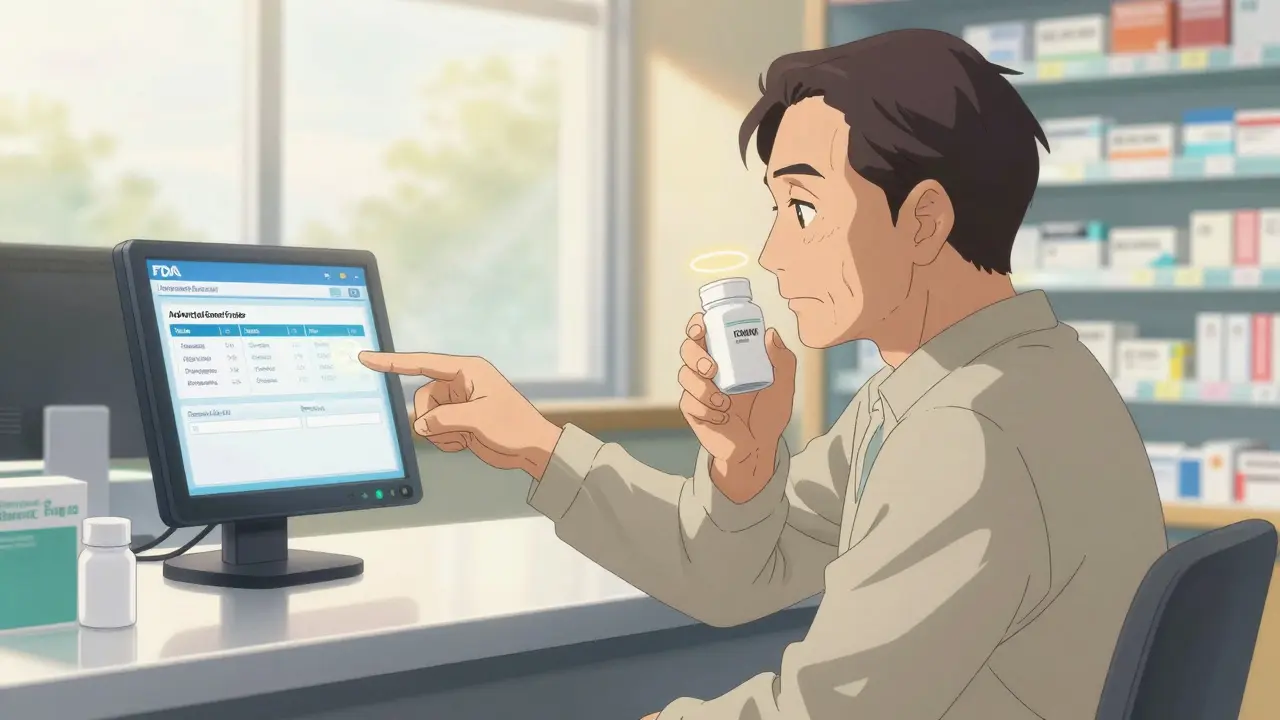
You can’t change the patent system. But you can be smarter about your meds. First, check the FDA’s Orange Book. It lists patents and exclusivity dates for every approved drug. If the patent expired five years ago and there’s still no generic, it’s likely a complex drug or a market with no incentive to copy. Talk to your pharmacist. They know when a drug has a biosimilar, a therapeutic alternative, or a lower-cost option that works just as well. For example, when Viibryd had no generic, pharmacists successfully switched 68% of patients to sertraline-a cheaper, generic antidepressant with similar effects. And don’t assume generics are unsafe. For most drugs, they’re identical. The FDA requires them to meet the same standards. But for drugs like thyroid meds, seizure drugs, or inhalers, small differences matter. If you feel different on a generic, tell your doctor. It’s not in your head-it’s real.The Future: More Competition, But Not Everywhere
The FDA is trying to fix this. The CREATES Act now forces brand-name companies to provide samples to generic makers for testing. The Generic Drug User Fee Amendments (GDUFA III) sped up reviews for complex generics. Biosimilar approvals are rising-from 32 in 2022 to an expected 75 by 2025. But some drugs will never have generics. Insulin formulations, orphan drugs for ultra-rare diseases, and biologics with complex delivery systems will likely stay branded until at least 2030. That’s not because they’re too hard to copy-it’s because no one has the money or incentive to try. The system isn’t broken. It’s working exactly as designed. But what it’s designed for isn’t always what patients need.Why don’t all drugs have generic versions even after patents expire?
Not all drugs can be copied easily. Some, like biologics or complex inhalers, require advanced manufacturing or have unknown active ingredients. Others are protected by multiple overlapping patents, or the market is too small for generic companies to justify the cost of approval.
Are generic drugs as safe and effective as brand-name drugs?
For most drugs, yes. The FDA requires generics to have the same active ingredient, strength, dosage, and bioequivalence as the brand. But for drugs with narrow therapeutic windows-like warfarin, levothyroxine, or epilepsy meds-even small differences can affect outcomes. If you notice a change in how you feel, talk to your doctor.
What is a biosimilar?
A biosimilar is a generic version of a biologic drug-like Humira or Enbrel. Unlike traditional generics, biosimilars aren’t exact copies because biologics are made from living cells. They must be highly similar and show no meaningful clinical differences. Approval takes longer and costs more than for regular generics.
Why do some generic drugs cost more than others?
It depends on how many companies are making it. If only one generic is available, prices stay high. Once three or more manufacturers enter, competition drives prices down. Complex drugs often have fewer manufacturers, so they cost more.
Can I ask my doctor to switch to a cheaper drug if my brand has no generic?
Yes. Many drugs have therapeutic alternatives-different medications that treat the same condition with similar effectiveness. For example, if you’re on a costly antidepressant with no generic, your doctor might switch you to sertraline, which is generic and far cheaper. Always ask.
Charlotte Dacre
February 14, 2026 AT 04:15And don’t even get me started on pay-for-delay deals. It’s like they hired a lawyer to write a villain monologue and then said, ‘Nah, let’s make it real.’
Mike Hammer
February 15, 2026 AT 05:02now i’m just mad that companies are gaming the system like it’s a video game with no cheat codes. also, why is my inhaler $500 but the generic version of the same chemical is $30? someone’s making bank off my asthma.
Erica Banatao Darilag
February 16, 2026 AT 22:29Kapil Verma
February 17, 2026 AT 02:51Meanwhile, my cousin in Delhi pays $3 for a drug that costs $1,200 here. That’s not a market failure. That’s a moral failure.
Betty Kirby
February 17, 2026 AT 13:14And you know what? The company that makes it? They just announced a 15% price hike. Again. Because they can. Because no one else will make the copy. Because the system is rigged. And we’re the ones paying.
Sarah Barrett
February 18, 2026 AT 20:09Esha Pathak
February 19, 2026 AT 08:47When a child with cystic fibrosis can’t afford their medicine because the patent was extended by a 0.3% formulation tweak… that’s not capitalism. That’s feudalism with a corporate logo.
Daniel Dover
February 20, 2026 AT 07:53Chiruvella Pardha Krishna
February 21, 2026 AT 07:57Our ancestors cured with herbs and wisdom. We cure with lawsuits and spreadsheets.
Joe Grushkin
February 21, 2026 AT 18:03Stop pretending this is a moral issue. It’s an economic one. And if you can’t afford it? Don’t take it. Simple.
Michael Page
February 23, 2026 AT 16:36Mandeep Singh
February 24, 2026 AT 08:48And you want generics for everything? Fine. Then tell me why your cancer drug should be free when the company spent 12 years, 300 scientists, and 17 failed trials to get it right?
Patents aren’t the villain. Ignorance is. You think this is a conspiracy? It’s math. And math doesn’t care about your feelings.
Kaye Alcaraz
February 26, 2026 AT 00:39Patients deserve transparency. They deserve affordability. And they deserve to know that their health is not a commodity to be auctioned off to the highest bidder.
Let us not wait for another crisis to act. Let us act now-with clarity, with courage, and with compassion.