
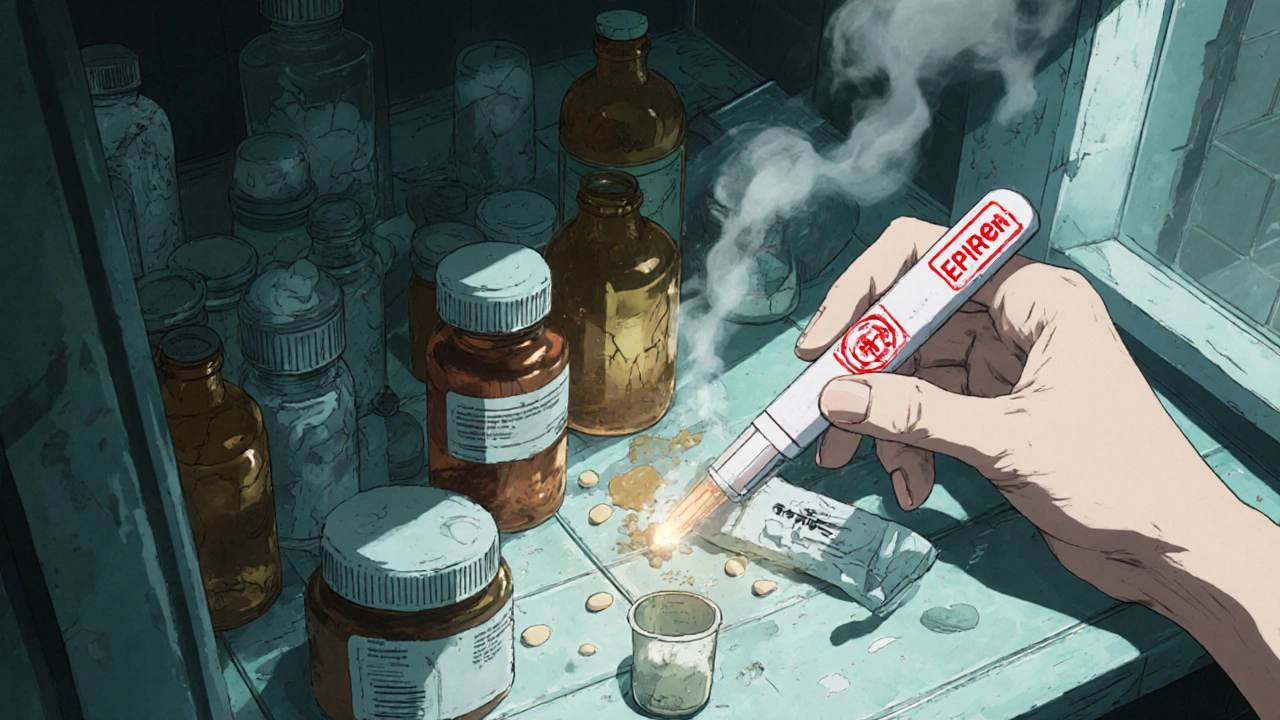
Every year, thousands of patients in the U.S. receive the wrong medication-not because of a doctor’s mistake, but because two pills look too much alike. A bottle of spironolactone sits next to spiramycin. A box of DOPamine is stacked beside DoBUTamine. At a glance, they’re nearly identical. And in a busy pharmacy, where pharmacists are juggling dozens of prescriptions at once, that tiny difference can disappear. The result? A patient gets the wrong drug. Sometimes, it’s harmless. Other times, it’s deadly.
According to the Institute for Safe Medication Practices (ISMP), about 18% of all medication errors reported in U.S. pharmacies involve look-alike or sound-alike (LASA) drugs. That’s roughly 10,000 errors each year. And it’s not just about names. Packaging plays a huge role. The FDA estimates that 20% of errors come from confusing labels, colors, fonts, or bottle shapes. This isn’t a rare glitch. It’s a systemic problem-and it’s fixable.
Start with a Risk Assessment
You can’t fix what you don’t see. The first step is to find out which drugs in your pharmacy are most likely to be mixed up. ISMP provides a free Tool for Evaluating the Risk of Confusion Between Drug Names. It’s simple: list all your high-volume medications, then cross-check them against ISMP’s updated List of Confused Drug Names (January 2024 version). That list now includes 17 new pairs, like buprenorphine and butorphanol, which were added after multiple dispensing errors in 2023.
Don’t just rely on the list. Look at your own dispensing history. Have you ever pulled the wrong bottle and caught yourself? Did a nurse ever question a drug you dispensed? Those are red flags. Talk to your staff. Ask them: “What drugs do you second-guess?” You’ll often hear the same names over and over. That’s your priority list.
Use Tall Man Lettering Everywhere
Tall Man Lettering (TML) isn’t fancy tech. It’s just capitalizing the different parts of similar drug names to make them stand out. DOPamine vs. DoBUTamine. HYDROmorphone vs. HYDROxyzine. Simple. Effective. Proven.
A 2019 ISMP analysis found that TML reduces selection errors by 47%. But here’s the catch: it only works if it’s used consistently. A 2022 survey showed only 68% of hospitals use standardized TML formats. That’s a problem. If your EHR system shows HYDROmorphone but the pharmacy label says Hydromorphone, you’ve just created confusion instead of preventing it.
Make sure every screen in your pharmacy-your dispensing software, your inventory system, your label printer-uses the same TML format. Work with your EHR vendor. Demand it. The FDA’s 2024 draft guidance now mandates standardized TML for 25 high-risk pairs. You don’t want to be caught behind.
Separate Look-Alike Drugs Physically
Technology helps, but humans still pick the bottles. And humans make mistakes when things are close together.
A 2020 study from the University of Arizona found that physically separating look-alike drugs reduces errors by 62%. That’s not a suggestion. That’s a game-changer.
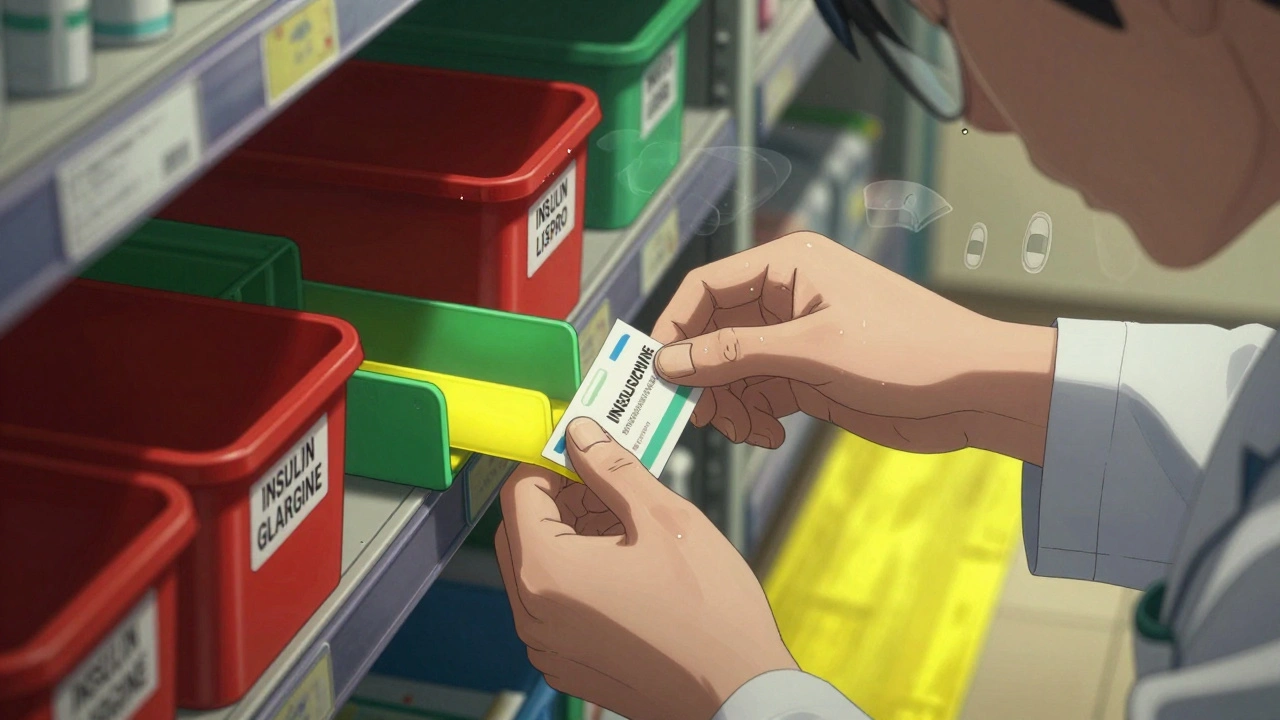
You don’t need a new storage room. Use shelf dividers. Buy plastic bins. Put red tape on the floor. Put insulin glargine and insulin lispro in completely different drawers. Keep heparin and saline on opposite sides of the counter. One pharmacy in Mayo Clinic did this and eliminated 100% of potential heparin-saline mix-ups in 12 months.
High-volume pharmacies say space is tight. That’s true. But even a few inches of distance makes a difference. One retail pharmacy in Bristol used $300 worth of colored bins and dividers to separate spironolactone, spiramycin, and sertraline. Within six months, wrong-drug claims dropped by 75%.
Implement Barcode Scanning-But Don’t Rely on It Alone
Barcode scanning is the most powerful tool in the toolbox. When done right, it cuts medication administration errors by 86%, according to the Agency for Healthcare Research and Quality (AHRQ).
But here’s what most pharmacies miss: scanning only works if staff actually scan. A 2021 study from UCSF found that 5-12% of staff bypass the scanner during busy hours. Why? Because it slows them down. So they swipe the barcode anyway-without scanning.
Don’t just install scanners. Change the culture. Make scanning non-negotiable. Add it to your daily checklist. Reward teams that hit 100% compliance. And never let someone override the system without a second verification. The cost? $15,000 to $50,000 per pharmacy. But Mayo Clinic’s 2023 analysis showed their program saved $287,000 a year in prevented errors. That’s a 6x return.
Train Staff to Think Like Detectives
Technology helps. But the last line of defense is always the person holding the bottle.
Train your staff to pause before dispensing. Ask: “Does this look right?” “Is this the same as last time?” “What’s different?”
One pharmacy manager in Ohio started a simple ritual: every time a new drug arrives, the pharmacist does a “look-alike check.” They compare the new package to everything already on the shelf. Is the font similar? Is the color close? Is the shape the same? In one case, they caught a new generic version of metoprolol that used the exact same bottle as metformin. They flagged it before a single pill was dispensed.
Use real examples in training. Show photos of past near-misses. Let staff talk about their own mistakes. Shame doesn’t help. Learning does.
Label with Clarity, Not Just Compliance
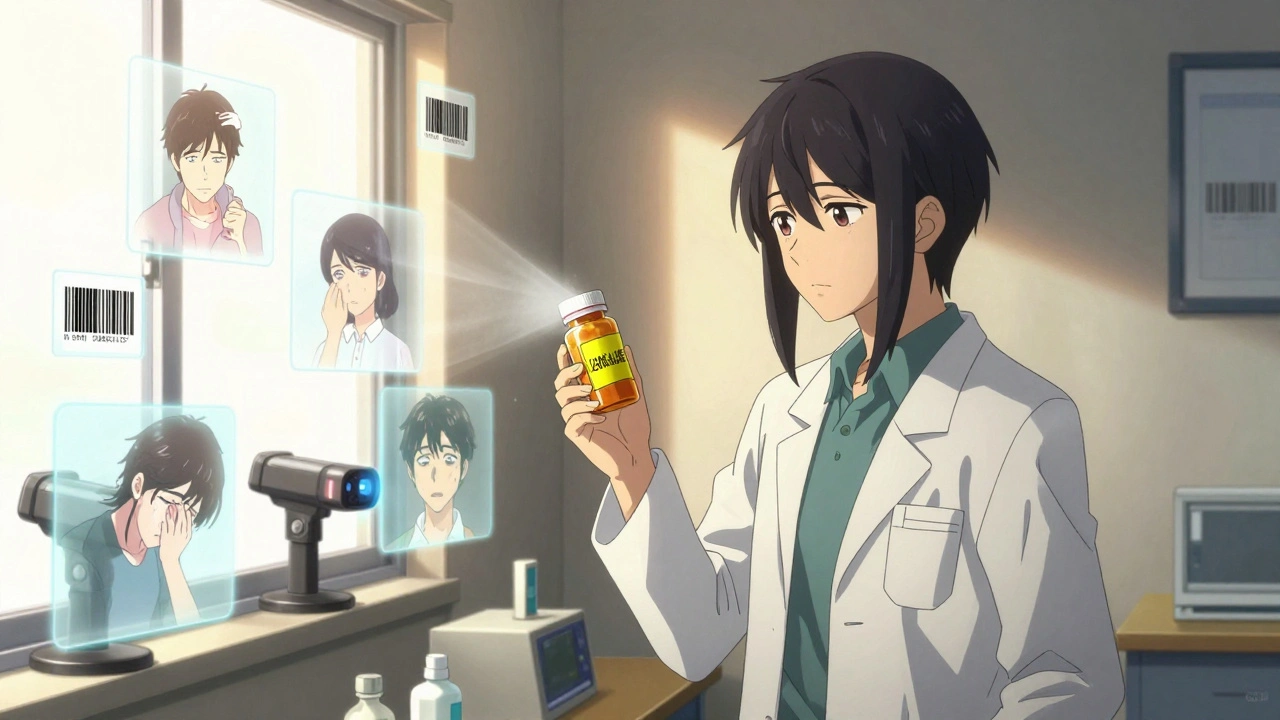
Just because a label meets FDA minimums doesn’t mean it’s safe. Many labels are cluttered, tiny, or use similar fonts and colors.
Go beyond the law. Add a bright yellow “LOOK-ALIKE” sticker to high-risk drugs. Use bold, sans-serif fonts. Increase the font size. Avoid using the same color for different drug classes. For example, don’t put all blood pressure meds in blue bottles. Use red for insulin, green for anticoagulants, orange for sedatives.
One community pharmacy in Bristol started printing custom labels with a warning: “CONFUSED WITH [DRUG NAME]. DOUBLE CHECK.” They didn’t need new software. Just a printer and a bit of courage. Their error rate dropped by 60% in four months.
Combine Strategies for Maximum Safety
No single fix works alone. The most effective pharmacies use all three: physical separation, TML, and barcode scanning.
A 2023 study in the American Journal of Health-System Pharmacy found that combining these three strategies reduced errors by 94%. That’s nearly complete prevention.
Start small. Pick one high-risk pair-say, clonazepam and clonidine. Separate them on the shelf. Add Tall Man Lettering to your system. Then require barcode scanning for both. Track your progress for 30 days. If errors drop, do it again with another pair.
It’s not about perfection. It’s about layers. One layer might catch a misread name. Another might catch a wrong bottle. A third might catch the person who skipped the scan. Together, they create a safety net.
What Happens If You Do Nothing?
Every year, about 7,000 people in the U.S. die from medication errors. Many of those involve look-alike packaging. The Joint Commission requires pharmacies to address this. The FDA is tightening rules. Insurance companies are starting to penalize hospitals for preventable errors.
But beyond compliance, think about the human cost. A patient gets the wrong drug. They have a seizure. They go to the ER. Their family blames the pharmacy. The pharmacist loses sleep. The trust is broken.
You don’t need a big budget. You don’t need new software. You need attention. You need discipline. You need to treat every bottle like it could be someone’s life.
The tools are there. The data is clear. The mistakes have been made before-and they’ve been fixed. It’s not about technology. It’s about choosing to do better.
What are the most common look-alike drug pairs in pharmacies?
The most frequent pairs include: hydralazine and hydroxyzine, DOPamine and DoBUTamine, hydromorphone and hydrocodone, spironolactone and spiramycin, clonazepam and clonidine, and insulin glargine versus insulin lispro. ISMP updates its official list quarterly, and in January 2024, they added 17 new pairs, including buprenorphine and butorphanol, based on recent error reports.
Does Tall Man Lettering really work?
Yes, when used consistently. Studies show Tall Man Lettering reduces selection errors by 47%. But it only works if every system-your EHR, your label printer, your inventory software-uses the same format. Inconsistent use creates confusion. The FDA now requires standardized TML for 25 high-risk pairs, and most major EHR vendors like Epic have adopted it. Still, only 68% of hospitals use it correctly, according to ISMP’s 2022 survey.
Can I prevent look-alike errors without spending a lot of money?
Absolutely. Physical separation costs almost nothing. Use shelf dividers, colored bins, or tape to create distance between similar drugs. Custom warning labels printed on a standard printer cost less than $500. Training staff to pause and double-check takes no money, just time. One community pharmacy reduced wrong-drug errors by 75% using only labels and better storage-no scanners, no software upgrades.
Why do barcode scanners sometimes fail to prevent errors?
Barcodes fail when staff bypass them. In busy times, pharmacists may swipe a barcode without scanning, or override the system because it’s “too slow.” A 2021 study found 5-12% of scans are skipped. To fix this, make scanning mandatory, track compliance, and reward teams that never skip it. Also, ensure the barcode system is linked to your EHR so it checks the right drug, dose, and patient.
How often should I review my pharmacy’s look-alike risks?
Review your high-risk drugs every time you add a new medication to your inventory. Also, check ISMP’s updated List of Confused Drug Names every quarter-it changes often. At minimum, do a full review twice a year. Many pharmacies schedule this during their annual inventory audit. Don’t wait for an error to happen before you act.
Shannara Jenkins
December 2, 2025 AT 12:05Love this breakdown. I’ve worked in retail pharmacy for 12 years, and I can’t tell you how many times I’ve almost grabbed spironolactone instead of spiramycin. Just last month, I caught myself because the bottle felt lighter-turns out, the generic had a different fill weight. Small things matter. Thanks for reminding us to slow down.
Rebecca M.
December 4, 2025 AT 00:46Oh wow. So the solution to preventing deaths in pharmacies is… *checks notes*… using CAPITAL LETTERS and tape on the floor? Brilliant. I’m sure the FDA will be thrilled we didn’t need AI or robots. Just… human effort. Who knew?
Meanwhile, my pharmacist is still scrolling TikTok while scanning my insulin.
Lynn Steiner
December 4, 2025 AT 12:59I’m crying. 😭
My aunt died because they gave her hydromorphone instead of hydroxyzine. She was 72. She didn’t even have pain. She had allergies. They didn’t even check the bottle. Just grabbed it. Like it was cereal.
Now I’m scared to go to the pharmacy. Every time I hand over a script, I hold my breath. And you want me to trust a sticker and some colored bins? I don’t trust ANYTHING anymore.
Alicia Marks
December 6, 2025 AT 01:50This is exactly what we need more of-practical, doable steps. No fluff. Just real fixes that work. Start with one pair. Do it right. Then move to the next. You got this, pharmacy teams!
Steve Enck
December 7, 2025 AT 20:08While the empirical data presented is compelling, one must interrogate the ontological assumptions underpinning the proposed interventions. The reliance on Tall Man Lettering presupposes a Cartesian separation between linguistic signifier and pharmacological signified-a fallacy, given that perceptual cognition is inherently contextualized within environmental and cognitive load variables. The 47% reduction metric, while statistically significant, fails to account for the phenomenon of normalization of deviance within high-reliability organizations. Moreover, the assertion that physical separation reduces errors by 62% conflates correlation with causation, as no control group was isolated for longitudinal analysis. A more rigorous epistemological framework is required before institutional adoption.
Jay Everett
December 9, 2025 AT 03:20Bro, this post is a whole vibe 🙌
I work in a hospital pharmacy, and we started using those $5 colored bins for high-risk drugs last year. We called it ‘The Rainbow Protocol.’ Now, if it’s not in a red bin, we don’t touch it. Heparin? Green. Insulin? Yellow. Clonidine? Purple. We even made little memes for the staff: ‘Don’t be the guy who grabs the purple one by accident.’
Errors? Down 80%. Morale? Up. We even got a shoutout from the hospital CEO. All for $400 and a printer. You don’t need a billion-dollar system-you need a little creativity and zero excuses.
Joel Deang
December 9, 2025 AT 21:04omg i just realized my local pharmacy still uses the same labels for dOPamine and doBUTamine… and they dont even have barcodes? i thought this was 2025??
also why is the font so tiny? i had to pull out my glasses to read the dose. my grandma almost got the wrong thing last week. she’s 84 and thinks all pills are the same. plz someone fix this.
Roger Leiton
December 11, 2025 AT 13:28What if we combined TML with color-coded QR codes that link to a short video of the pharmacist explaining the drug’s purpose? Like, scan the label and hear a 15-second audio clip: ‘This is hydralazine, not hydroxyzine. Used for blood pressure, not allergies.’
Would that be overkill? Or just the next step? I’m curious if anyone’s tried this. Maybe a startup could build it. 🤔
Laura Baur
December 12, 2025 AT 08:49It is deeply troubling that the medical establishment continues to treat this crisis as a matter of operational convenience rather than moral imperative. The fact that we are even debating whether to use tall man lettering-when the alternative is preventable death-is a grotesque indictment of our priorities. The FDA’s draft guidance is a start, but it is not a solution. It is a Band-Aid on a hemorrhage. We must demand regulatory enforcement with teeth. We must mandate third-party audits. We must hold executives accountable. And we must stop pretending that $300 in colored bins is sufficient when human lives are at stake. This is not a checklist. This is a civil rights issue.
Jack Dao
December 12, 2025 AT 16:00Let me be blunt: if your pharmacy can’t afford barcode scanners, you shouldn’t be dispensing medication. Period. This isn’t a ‘budget issue.’ It’s a negligence issue. You’re not a corner store. You’re handling life-or-death substances. If you’re cutting corners on safety, you’re not a pharmacist-you’re a liability. And yes, I’m talking to you, small-town pharmacy that still uses handwritten labels.
dave nevogt
December 14, 2025 AT 15:05I’ve been a pharmacist for 27 years. I’ve seen this cycle come and go. Every few years, there’s a new ‘solution’-TML, barcodes, color coding. And every time, the system forgets. Because the pressure to move faster never goes away. The real issue isn’t the labels or the bins. It’s the culture. We’ve turned pharmacy into a conveyor belt. And when you treat people like inventory, mistakes happen. The tools help-but only if we stop rushing. Take the breath. Look at the bottle. Ask yourself: ‘Would I want this given to my mother?’ If the answer isn’t a clear yes, don’t dispense it. That’s the only rule that matters.
Arun kumar
December 15, 2025 AT 14:56in india we dont have this problem much because most drugs are sold in blister packs with big names. but i saw a video of a pharmacy in delhi where they put spironolactone and spiramycin next to each other… same color bottle… same font… i was like… wow. this is universal. we all make same mistakes. good post. thanks for sharing.