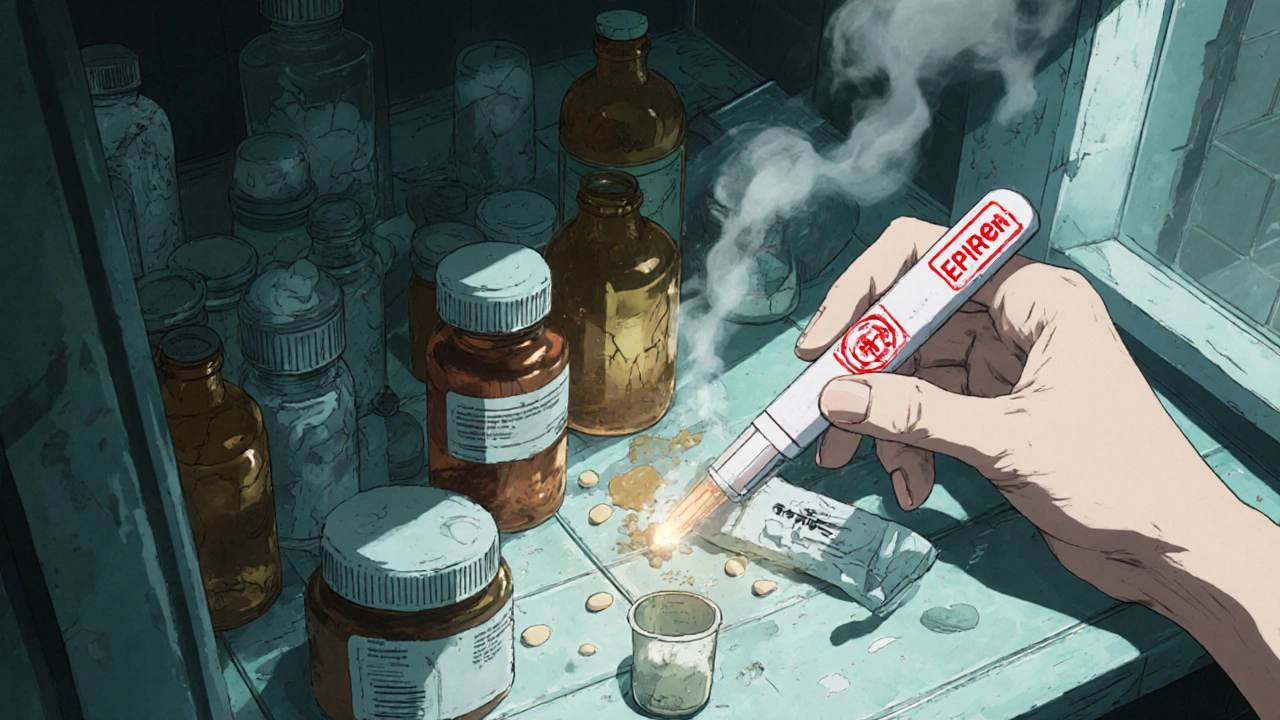
Most of us keep a medicine cabinet full of bottles and boxes-painkillers, antihistamines, creams, vitamins-and assume they’re still good. But if you haven’t looked inside in over a year, you could be holding onto something dangerous. Expired drugs don’t just lose their power-they can become risky. The FDA says using expired medications is unsafe and possibly harmful. And it’s not just about pills that are past their printed date. Some medications degrade fast, especially if they’ve been stored in a steamy bathroom or near a sunny window.
Why Expired Medications Are a Real Problem
It’s easy to think, “It’s only been a few months past the date-what’s the harm?” But the truth is, expired drugs don’t just stop working. Some change chemically. Tetracycline antibiotics, for example, can turn toxic after expiration. Liquid insulin, nitroglycerin, and epinephrine injections lose potency quickly. If you’re relying on an expired EpiPen during an allergic reaction, it might not save your life.
Even common painkillers like ibuprofen or acetaminophen can drop below effective levels. A Yale New Haven Health study found that humidity in bathrooms reduces drug potency by 15-25% in just six months. That means your headache relief might be working at 70% capacity-or less. And if you’re taking antibiotics that are too weak, you’re not killing the infection. You’re helping bacteria become resistant. Hospital data shows a 12-15% rise in antibiotic-resistant infections linked to people using old or improperly stored prescriptions.
Then there’s the risk of accidental ingestion. In 2022, poison control centers in the U.S. handled over 67,000 cases of children swallowing medications from home cabinets. Some pills come in bright colors or sweet flavors-easy to mistake for candy. And for older adults, cluttered cabinets increase the chance of grabbing the wrong pill, leading to dangerous drug interactions.
What to Check in Your Medicine Cabinet
Don’t just glance at the bottles. Take everything out. Lay it all on the counter. Check each item one by one.
- Expiration dates: Look at the printed date on the label. But don’t stop there. The National Kidney Foundation recommends tossing any prescription medication that’s over a year old-even if the label says it’s good for two more years. Why? Once a prescription is opened and taken out of the pharmacy’s controlled environment, its shelf life shortens.
- Appearance: Has the pill changed color? Is it cracked, sticky, or powdery? Has a liquid turned cloudy or separated? Does a cream smell rancid? If so, throw it out. These are signs of chemical breakdown.
- Unmarked containers: That little bottle with no label? Toss it. No one should be guessing what’s inside.
- Supplements: Vitamins and herbal supplements aren’t regulated like drugs, but they still degrade. If they’ve been sitting for more than two years, they’re likely useless. And if they’re clumped together or smell odd, they’re not safe.
- Medical supplies: Check your bandages, gauze, alcohol wipes, and thermometers. Expired bandages can harbor bacteria. Old thermometers might give false readings.
Where You Store Your Medicine Matters
Most people keep their medicine cabinet in the bathroom. Bad idea.
Humidity from showers and hot water causes moisture to seep into pills and creams. That’s why the National Kidney Foundation and Yale New Haven Health both warn against bathroom storage. Instead, keep medications in a dry, cool place-like a kitchen cabinet away from the stove or sink. Avoid direct sunlight. A drawer in your bedroom works fine too.
Temperature swings matter. Don’t store insulin in the car during winter or leave antibiotics on a windowsill. If you’re traveling and need to carry meds, keep them in your bag-not in the glove compartment. Heat and cold can damage them just like humidity.
How to Dispose of Expired Medications Safely
Don’t flush them. Don’t throw them in the trash without preparation. And don’t just dump them down the sink. There are better, safer ways.
The best option? Drug take-back programs. The DEA runs National Prescription Drug Take Back Days twice a year, and there are over 14,600 permanent collection sites across the country-pharmacies, hospitals, and police stations that accept unused meds year-round. You can find your nearest drop-off location by visiting the DEA’s website or calling your local pharmacy.
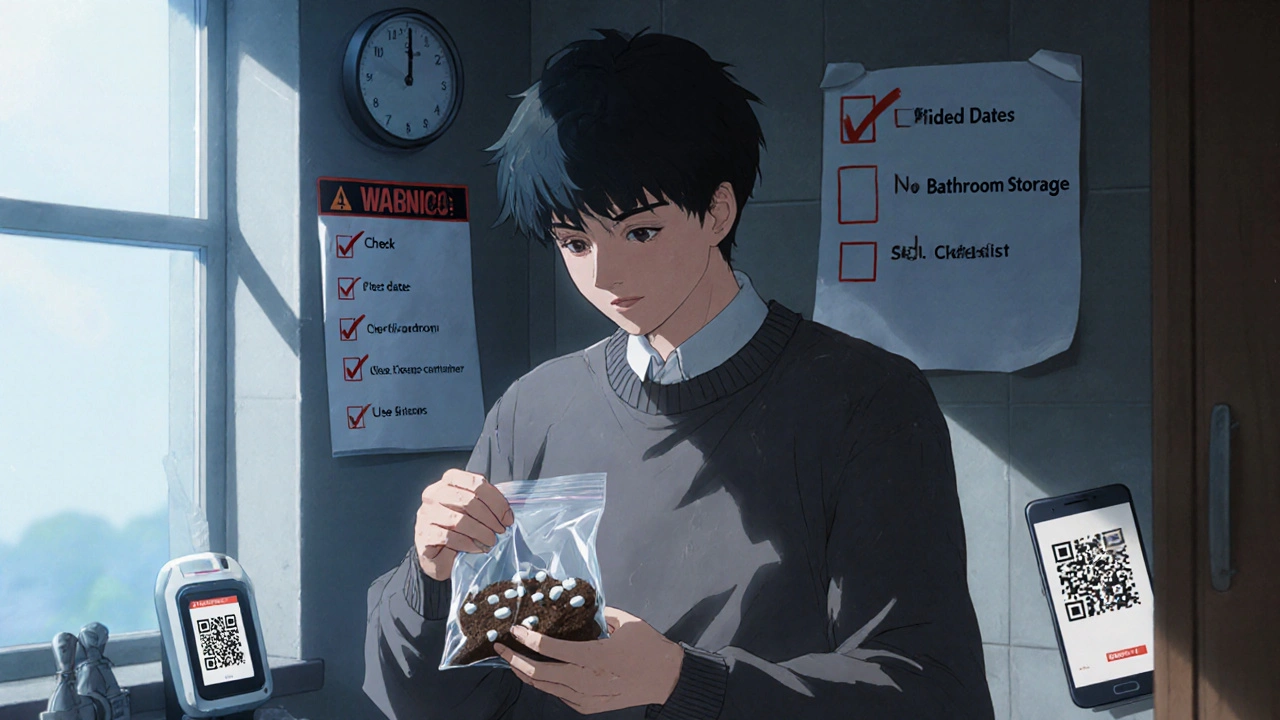
If you can’t get to a drop-off site, here’s the FDA-approved home disposal method:
- Remove pills from their original bottles.
- Mix them with something unappetizing-used coffee grounds, cat litter, or dirt. Use at least two parts filler to one part medication.
- Put the mixture in a sealed plastic bag or container.
- Scratch out or cover your name and prescription info on the empty bottle.
- Throw the sealed container in the trash.
For needles, syringes, or EpiPens: Use a sharps container. If you don’t have one, a sturdy 2-liter soda bottle with a tight lid works. Tape it shut, label it “SHARPS-DO NOT RECYCLE,” and toss it in the trash. Never put loose needles in the bin.
What to Keep in Your Medicine Cabinet
Once you’ve cleared out the junk, restock with essentials. You don’t need a pharmacy. Just the basics:
- Adhesive bandages (at least 20, assorted sizes)
- Gauze pads (10 or more)
- Medical tape
- Digital thermometer (non-mercury)
- Alcohol wipes (10 or more)
- Hydrogen peroxide (for cleaning minor cuts)
- Petroleum jelly
- Scissors
- Tweezers
Keep pain relievers like acetaminophen or ibuprofen on hand, but only buy what you’ll use in the next six months. Don’t stockpile. And always check the expiration date when you buy new ones.
Make It a Habit
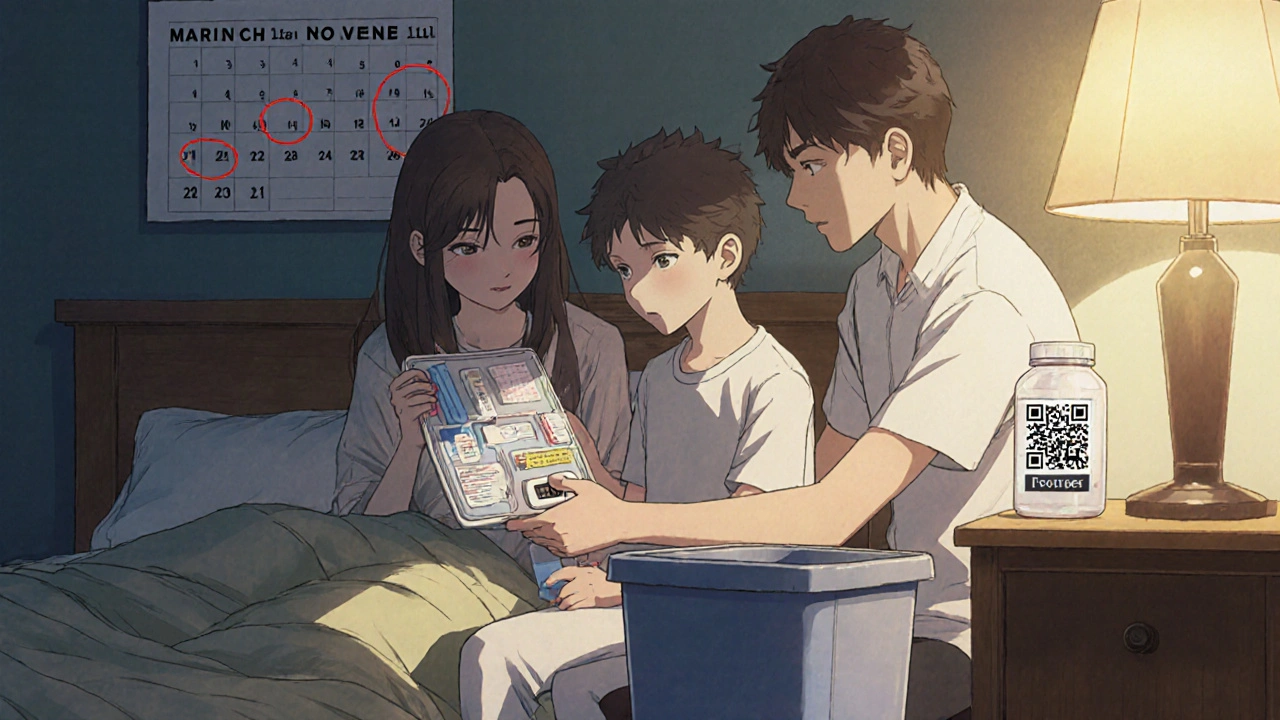
Checking your medicine cabinet shouldn’t be a one-time chore. Set a reminder. The easiest way? Tie it to daylight saving time. When you spring forward in March and fall back in November, take five minutes to empty your cabinet and refill it. It’s the same time most people check smoke detector batteries-so it’s already on your calendar.
And here’s a pro tip: Some households are now using QR code labels. Scan the code on a bottle with your phone, and it shows you the expiration date. A pilot program in Connecticut found this method improved compliance by 89%. You can print free QR labels online or use a simple app to track your meds.
Looking ahead, smart medicine cabinets are coming. Amazon and Google are testing humidity and temperature sensors that alert you if your meds are at risk. But you don’t need tech to stay safe. Just a little attention, twice a year.
Why This Matters More Than You Think
Unused and expired meds in the home are a major source of opioid misuse. The CDC reports that 70% of people who abuse prescription painkillers get them from family or friends’ medicine cabinets. By clearing out what you don’t need, you’re not just protecting your own health-you’re helping prevent addiction in your household and community.
And it’s not just about pills. It’s about peace of mind. Knowing your medicine cabinet is clean, organized, and full of safe, effective supplies means you’re ready when an emergency happens. No guesswork. No panic. Just the right thing, when you need it.
Can I still use medicine after the expiration date?
For most solid medications like tablets and capsules, they may still be safe for a short time after the date-but not guaranteed. For liquids, injectables, insulin, antibiotics, and nitroglycerin, never use them past expiration. They can lose potency or become toxic. When in doubt, throw it out.
Is it safe to flush expired pills down the toilet?
Only if the label or FDA guidelines specifically say to. Most medications should not be flushed because they can contaminate water systems. The FDA recommends drug take-back programs or mixing pills with coffee grounds and throwing them in the trash instead.
Where’s the best place to store medications at home?
A cool, dry place away from moisture and heat. Avoid the bathroom. A kitchen cabinet, bedroom drawer, or hall closet works best. Keep them out of direct sunlight and away from appliances like the stove or dishwasher.
How often should I check my medicine cabinet?
Twice a year-ideally in March and November, when you change your clocks for daylight saving time. This makes it easy to remember. Every healthcare provider we spoke to agrees: this frequency is critical for safety.
What should I do with old insulin or EpiPens?
Never use expired insulin or EpiPens-they can fail when you need them most. Dispose of them in a sharps container. If you don’t have one, use a thick plastic bottle like a 2-liter soda bottle. Seal it tightly, label it “SHARPS,” and throw it in the trash. Take unused ones to a pharmacy drop-off if possible.
Can I give my old medications to someone else?
Never. Even if the pill looks the same, dosages and medical needs are personal. Giving someone else your prescription is illegal and dangerous. Always dispose of unused meds properly instead.
Next Steps
Right now, open your medicine cabinet. Pull everything out. Check the dates. Look at the colors. Smell the liquids. If anything looks off, toss it. Then, find your nearest drug take-back location. If you can’t get there, prepare a coffee grounds mix and seal it up. Replace what you need-just enough for the next six months.
Do this in the next 48 hours. It takes less than 15 minutes. And it could prevent a serious mistake-or even save a life.
Sarah McCabe
November 28, 2025 AT 14:46Just did this today 🙌 turned my bathroom cabinet into a minimalist zen space. Tossed 12 bottles, 3 old EpiPens, and a jar of gummy vitamins from 2019 that looked like they were trying to grow mold. Feels good.
Mike Rothschild
November 29, 2025 AT 06:55Most people don’t realize how fast humidity kills meds. I used to keep mine in the bathroom till I saw a study showing 20% potency loss in six months. Now everything’s in a sealed container in my bedroom drawer. Simple fix, huge safety win.
Kenneth Lewis
November 29, 2025 AT 16:07lol i just threw out my ibuprofen because it smelled like old socks. turned out it was just the bottle. the pills were fine. still tossed em. better safe than sorry right
Asbury (Ash) Taylor
December 1, 2025 AT 09:34This is one of those tasks that feels trivial until it isn’t. A neighbor’s child swallowed a bottle of expired antihistamines last year. Took three days to diagnose. The fix is five minutes twice a year. Do it.
Jerrod Davis
December 2, 2025 AT 20:17While the intent of this article is commendable, the scientific basis for the assertion that all expired pharmaceuticals are inherently hazardous is not universally supported by peer-reviewed literature. The FDA’s own data indicates that many solid dosage forms retain potency well beyond their labeled expiration dates under proper storage conditions. The blanket recommendation to discard all medications over one year old lacks nuance and may contribute to unnecessary waste and economic burden.
Dominic Fuchs
December 4, 2025 AT 18:00So we’re supposed to throw out perfectly good pills because they’re 2 months past the date but it’s totally fine to keep that 10 year old jar of pickles in the fridge? 🤔
Kelsey Worth
December 5, 2025 AT 05:04the bathroom thing is real. i used to store my insulin there and once it got warm during a heatwave and i thought i was having a panic attack but it was just the med failing. now its in the fridge. no regrets
Nirmal Jaysval
December 6, 2025 AT 14:28u guys are overthinking this. if it looks fine and u dont feel sick after taking it then its fine. people in india still take meds past expiry for decades. u just need to be strong mentally
Emily Rose
December 8, 2025 AT 07:33Just checked mine. Found three expired antibiotics, two old EpiPens, and a bottle labeled ‘mystery pills’ from my grandma’s house. Tossed it all. Then I made a list of what I actually need and bought only what I’ll use in the next 6 months. If you’re reading this and haven’t done this yet - you’re one step away from being safer than 90% of people. Do it now.
Jim Daly
December 9, 2025 AT 14:59you know what’s worse than expired meds? people who think they know everything about medicine because they read one article. i took my grandpa’s blood pressure pills last week and i’m fine. stop scaring people
Benedict Dy
December 9, 2025 AT 21:37The emotional framing of this article is manipulative. The fear-based narrative around expired pharmaceuticals ignores the systemic issue of overprescribing and the pharmaceutical industry’s role in shortening expiration dates for profit. This checklist distracts from larger policy failures and encourages individual compliance over structural reform.