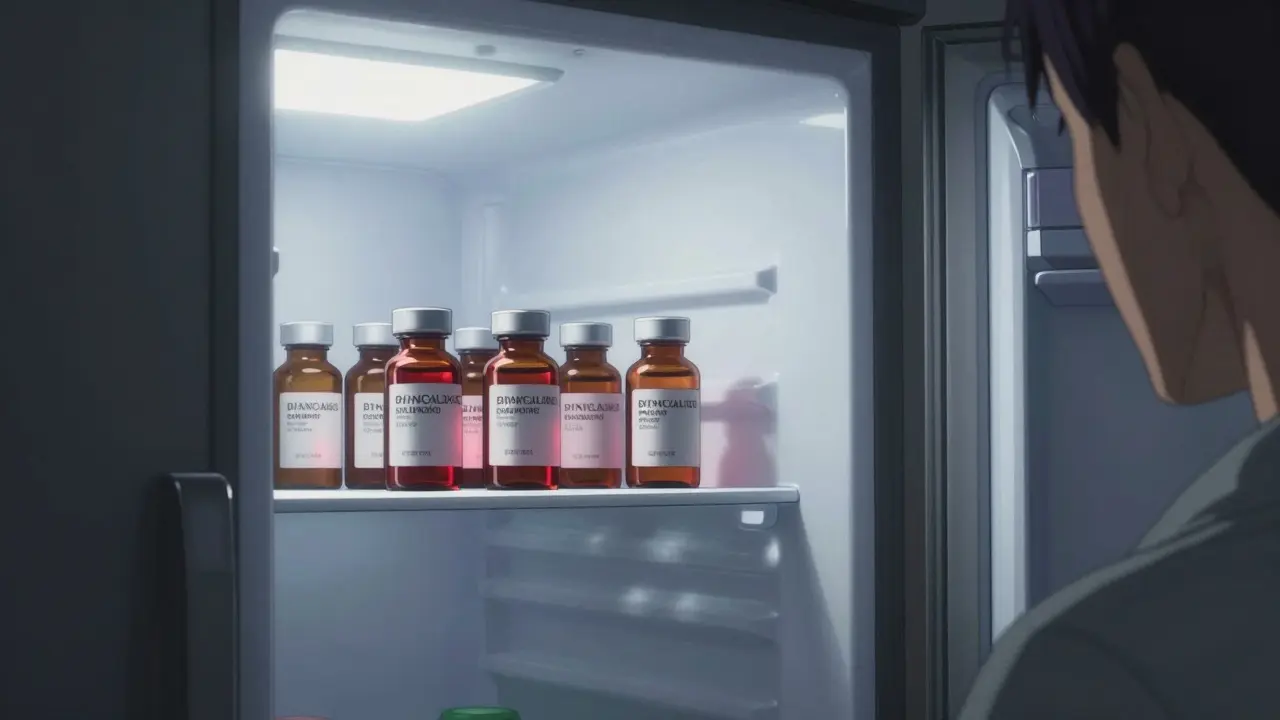
Imagine spending hundreds of dollars on a life-saving biologic drug, only to find it has lost half its potency because it sat in the refrigerator door for a week. It sounds unlikely, but for many people, this is a daily risk. When a medication requires refrigeration, it isn't just a suggestion-it is a chemical requirement to keep the drug from breaking down. If these sensitive compounds get too hot, they degrade; if they freeze, they can be permanently destroyed. Getting this wrong can lead to treatment failure, which in severe cases, like with insulin, can land someone in the hospital with diabetic ketoacidosis.
Quick Tips for Safe Medication Storage
- Target Temp: Aim for 2°C to 8°C (36°F to 46°F).
- Placement: Store on middle shelves, never in the door or freezer.
- Monitoring: Use a digital thermometer to check for "cold spots."
- Travel: Use validated insulated containers, not just a bag of ice.
- Rule of Thumb: If it was frozen or looks cloudy/clumpy, don't use it.
What Exactly Are Refrigerated Medications?
Not every drug is the same. Most pills you take are stable at room temperature, but Biologics is a class of complex medications derived from living organisms, such as proteins and antibodies, which are highly sensitive to temperature changes. Because they are made of proteins, they are fragile. If they get too warm, the proteins "unfold," and the drug stops working.
You'll most commonly see this with Insulin, used to manage diabetes, as well as various vaccines and medications for autoimmune disorders or cancer. According to recent data, about 15-20% of all prescriptions now require refrigeration, and that number is climbing as biologic therapies become the gold standard for chronic disease treatment.
The Golden Rule: The 2°C to 8°C Window
The U.S. Pharmacopeia (USP), specifically Chapter <1079>, sets the universal standard for refrigerated meds: 2°C to 8°C (36°F to 46°F). Why such a tight window? Because if the temperature drops below 0°C, the medication can freeze. For a biologic drug, freezing is often a death sentence; once the molecular structure is damaged by ice crystals, thawing it won't bring the potency back. On the other end, if the temp climbs above 8°C, chemical degradation speeds up. Some biologics can lose 50% of their strength in just 24 hours if left at a room temperature of 25°C.
| Feature | Refrigerated Medications | Room Temp Medications |
|---|---|---|
| Target Range | 2°C to 8°C (36°F to 46°F) | 15°C to 30°C (59°F to 86°F) |
| Common Examples | Insulin, Humira, Vaccines | Statins, ACE inhibitors, most pills |
| Primary Risk | Freezing or Heat Degradation | Humidity or Extreme Heat |
| Stability Window | Very Narrow (±1°C in pro units) | Broad and Forgiving |
How to Use Your Home Fridge Without Ruining Your Meds
Most of us use a standard kitchen fridge, but these are designed to keep milk cold, not to maintain pharmaceutical precision. Household fridges have "micro-climates." The door is the warmest spot, often averaging around 11.3°C, while the back of the bottom shelf can get dangerously close to freezing. To keep your medications requiring refrigeration safe, follow these practical steps:
- Pick the Middle Shelf: This is usually the most stable area. Avoid the very back (where items might freeze) and the door (where the temp swings every time you open the fridge).
- Avoid the Crisper: While it seems like a good spot, crisper drawers can sometimes have different humidity levels or temperature pockets that aren't ideal.
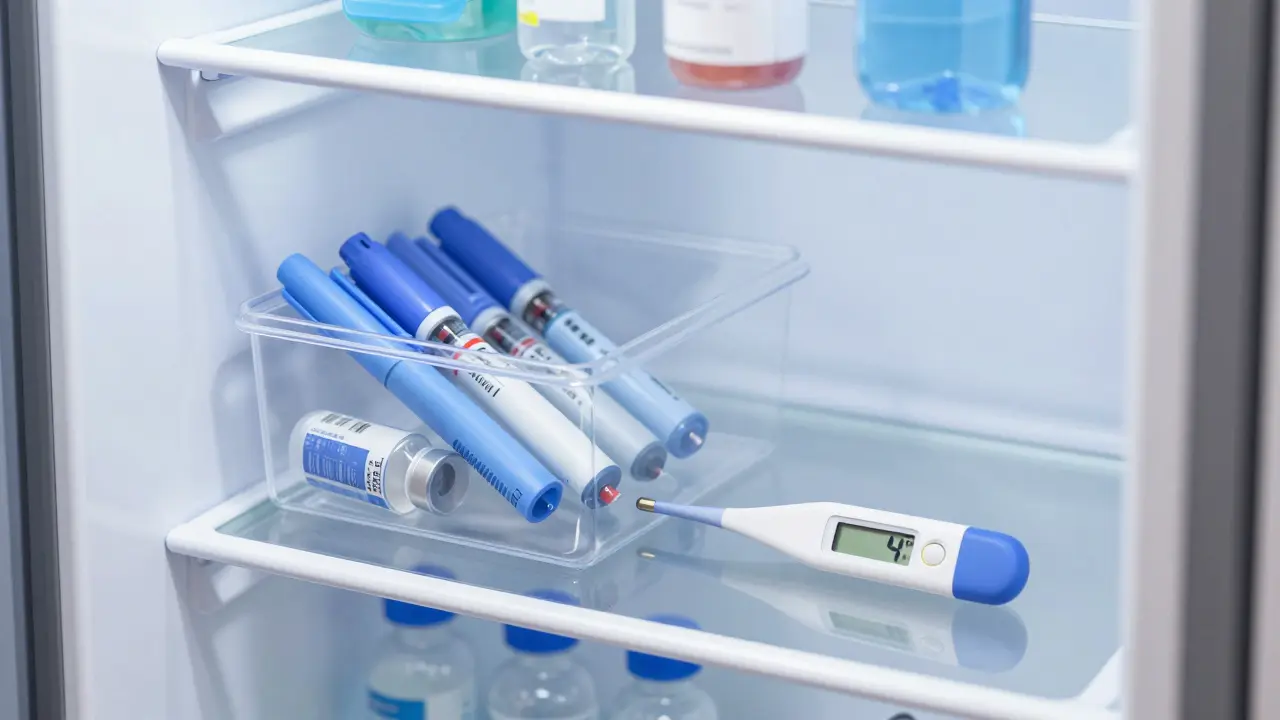
- Get a Digital Thermometer: Don't guess. A cheap digital thermometer with a "min/max" memory function lets you see if the fridge spiked overnight or dropped too low during a power dip.
- Separate Your Meds: Use a plastic bin to keep your medications together. This prevents them from getting lost behind a jar of pickles and makes it easier to move them all at once if you need to clean the fridge.
Special Cases: Insulin and Biologics
Not every refrigerated drug follows the same rules for the entire duration of its use. Insulin is a great example of a "hybrid" storage drug. Generally, unopened insulin must stay in the fridge (2°C to 8°C). However, once you start using a vial or pen, many brands can be kept at room temperature (up to 30°C) for about 28 to 30 days. This makes it easier to carry your dose throughout the day without needing a portable cooler.
Other biologics, like those used for Crohn's or rheumatoid arthritis, might have slightly different windows. For instance, some can stay at room temperature for a single period of up to six months, but you can't go past the original expiration date. Always check your specific medication guide, as generic versions may have stricter requirements than brand-name counterparts.
Handling Travel and Power Outages
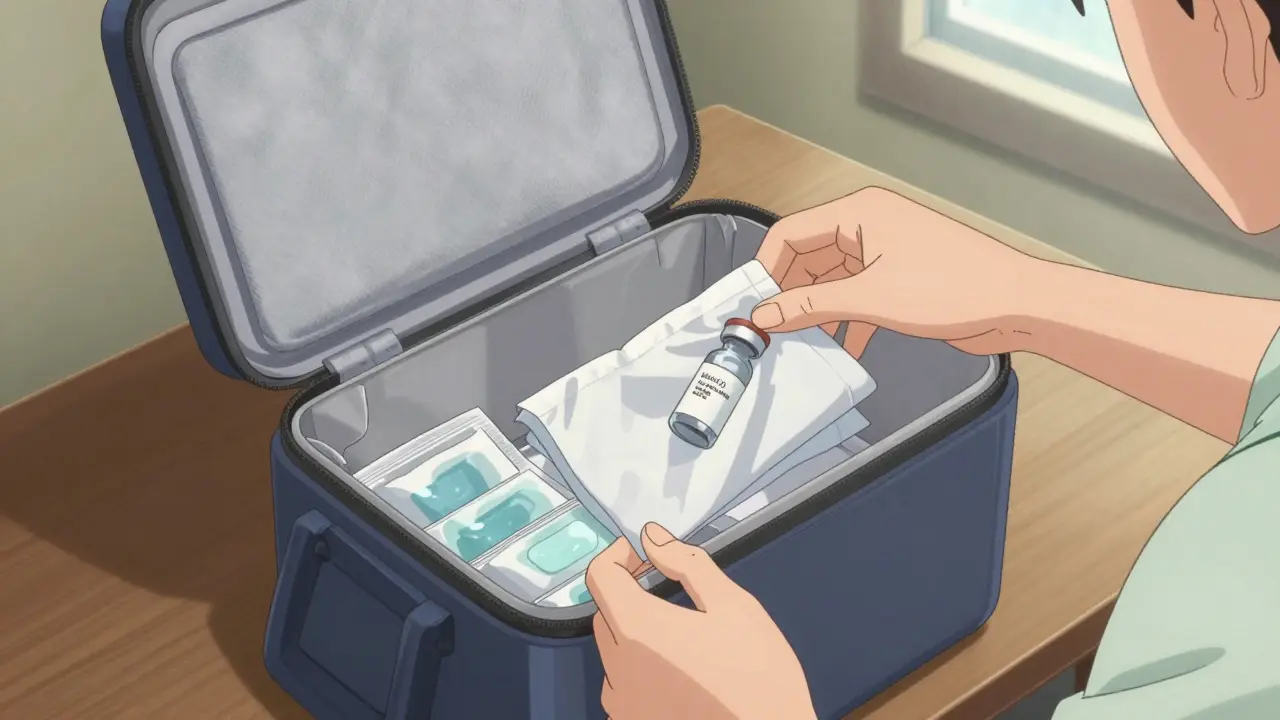
The biggest danger to refrigerated meds happens outside the fridge. Whether it's a weekend trip or a sudden blackout, a few hours of exposure can be critical. If you're traveling, skip the makeshift cooler bag with loose ice-ice can actually freeze your medication if the vial touches the pack directly. Instead, use a validated insulated container like a TempAid MediCool, which is specifically designed to keep meds between 2°C and 8°C for up to 48 hours.
In the event of a power outage, keep the fridge door closed. A closed fridge can maintain a safe temperature for several hours. If the outage lasts longer, move your medications to a cooler with pre-chilled gel packs, ensuring the meds are wrapped in a towel so they don't touch the frozen packs directly.
When to Toss Your Medication
How do you know if the medicine is still good? While some degradation is invisible, there are a few red flags. If an insulin solution looks cloudy when it should be clear, or if you see clumps or "frost" inside the vial, it's likely gone. If you realize your medication was left in a hot car (e.g., 37°C/98°F) for a day or two, the potency could have dropped by 30-40%. In the case of insulin, this can lead to unexplained blood sugar spikes. When in doubt, call your pharmacist. It is far safer to replace a vial than to inject a drug that no longer works.
Can I store my refrigerated meds in the freezer to keep them extra cold?
Absolutely not. Freezing is one of the fastest ways to destroy biologic medications and insulin. Even brief exposure to temperatures below 0°C can denature the proteins, making the medication ineffective. Once frozen, the damage is irreversible; thawing the medicine will not restore its potency.
Where is the worst place in the fridge to store medication?
The refrigerator door. Because the door is opened and closed frequently, it experiences the most temperature fluctuation. Studies show door shelves average around 11.3°C, which is well above the recommended 8°C limit for most refrigerated drugs.
What should I do if my medication was left out overnight?
First, check the medication's specific packaging or a drug database for its "room temperature stability" window. Some drugs are stable for a few days, while others degrade in hours. Look for physical changes (cloudiness or particles) and immediately contact your pharmacist or doctor to determine if the batch is still safe to use.
Do I need a special medical refrigerator for home use?
For most people, a standard household refrigerator is sufficient if you store meds on the middle shelf and monitor the temperature. However, if you have multiple high-cost biologics or a condition that requires extreme precision, a dedicated medication refrigerator (which maintains a strict ±1°C range) can provide peace of mind and better stability.
Why do some insulin products say they can stay at room temperature?
Many modern insulin formulations are designed to be stable at room temperature (up to 30°C) for about 28 days after the first use to allow for easier transport. However, the "unopened" stock must remain refrigerated to maximize the total shelf life of the product.
Next Steps for Safe Storage
If you are starting a new refrigerated medication, spend the first two weeks auditing your fridge. Place a thermometer where you plan to store your meds and check it twice a day to see how the temperature fluctuates. If you find your fridge is too inconsistent, consider investing in a small dedicated medical cooler or a digital data logger that alerts your phone if the temperature drifts. Always keep a travel-ready insulated pouch packed and ready to go so you aren't scrambling at the last minute before a trip.

Ajinkya Joshi
April 22, 2026 AT 18:59Oh wow, a whole tutorial on how to use a refrigerator. Truly groundbreaking stuff. I'm sure the world was collectively holding its breath wondering if the middle shelf was better than the door. 🙄
Amy Fredericks
April 23, 2026 AT 03:11This is actually such a helpful reminder for everyone. It's easy to forget how sensitive these biologics can be, and having a simple checklist like this can really prevent a lot of stress and health issues. Thanks for sharing!
Caroline Duvoe
April 23, 2026 AT 04:03obv you need a thermometer if you're spending thousands on meds 🙄 just common sense really 💅
Mike Arrant
April 23, 2026 AT 18:04Listen, if you're not using a dedicated medical fridge, you're basically gambling with your life. I've seen people mess this up and the results are pathetic. Just buy the right equipment or stop complaining when your meds stop working.
Sue Stoller
April 23, 2026 AT 23:15You guys! 🌟 Just remember that we're all doing our best to manage our health. If you're new to this, don't feel overwhelmed! Just take it one step at a time. You've got this! 💪💖
Dave Edwards
April 24, 2026 AT 14:13Absolutely ridiculous that the pharmaceutical industry makes these drugs so fragile in the first place! Why are we paying a premium for something that can be ruined by a slight breeze from a freezer vent? It's a scam! 😡
Anastasios Kyriacou
April 25, 2026 AT 23:03idk why ppl care so much i just leave mine in the fridge door and it seems ok lol
Mayur Pankhi Saikia
April 26, 2026 AT 11:37The sheer inadequacy of the average person's understanding of thermal dynamics is... staggering!!! One must realize that a standard compressor-based cooling system is fundamentally unsuitable for pharmaceutical stability... though I suppose most people are content with mediocrity...!!!
Odicha ude Somtochukwu
April 27, 2026 AT 23:15It is truly imperative that we follow these guidelines with utmost precision!!! The health of our community depends upon such diligent care,,, and I encourage everyone to share this knowledge with their neighbors to ensure collective well-being!!!
Saptatshi Biswas
April 28, 2026 AT 13:09While this guide attempts to be helpful, it completely ignores the systemic failure of healthcare infrastructure in developing regions like India! It is utterly delusional to suggest a 'digital thermometer' to people who struggle with consistent electricity! The arrogance of assuming a stable power grid is simply breathtaking! We are dealing with real-world crises while you suggest 'plastic bins' for organization! This is nothing more than a privileged perspective masquerading as medical advice, and it is frankly an insult to those of us fighting for basic survival in a volatile climate! Your 'golden rules' are useless when the grid fails for twelve hours straight! Get a grip on reality before posting such naive instructions!
Mel Glick
April 28, 2026 AT 18:35Exactly! Saptatshi is right! This guide is way too focused on the US luxury experience. We need actual solutions for people in heatwaves, not just 'buy a MediCool' which costs a fortune! Stop ignoring the global reality!