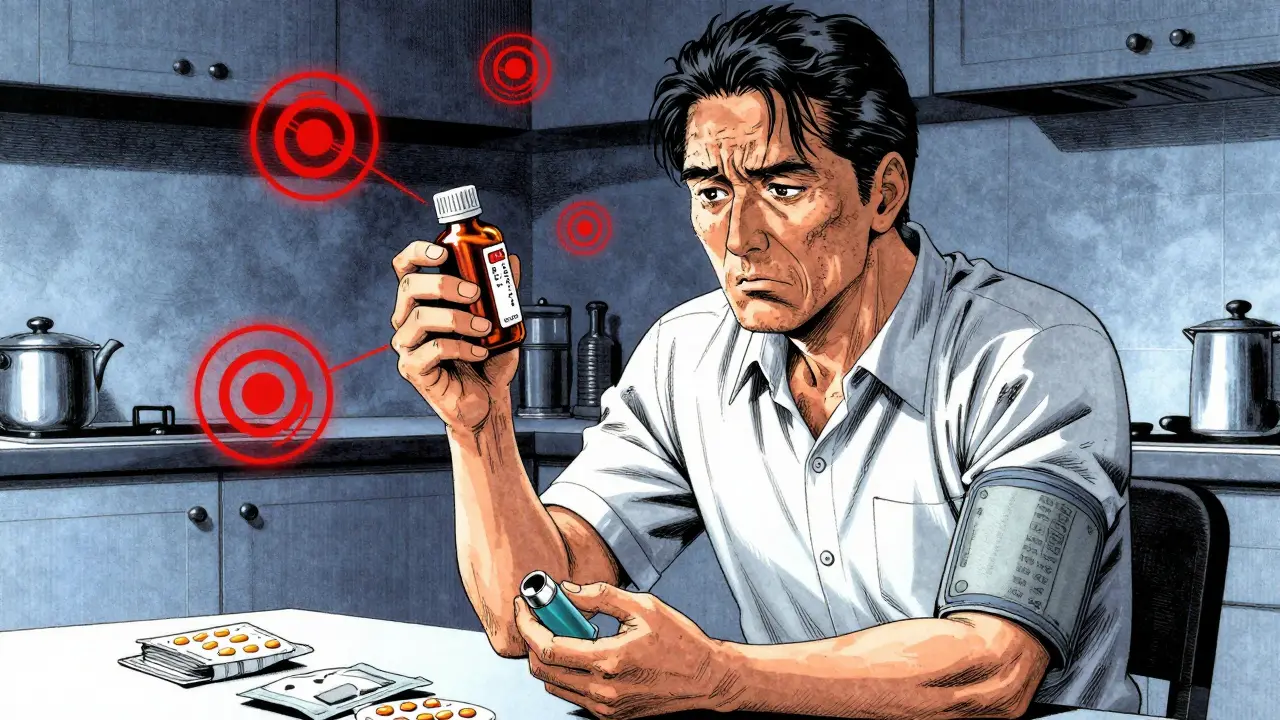
You take your blood pressure pill. You take your diabetes medication. You feel fine. But what if that blood pressure pill is quietly making your asthma worse? Or what if your diabetes drug is masking the warning signs of low blood sugar, leaving you vulnerable to a dangerous drop?
This isn't a hypothetical nightmare scenario. It’s a daily reality for millions of people living with more than one health condition. We call this a drug-disease interaction (DDSI). Unlike drug-drug interactions, which happen when two pills clash in your stomach or liver, a DDSI occurs when a medication meant to treat one problem actively worsens another existing health issue.
The stakes are high. The Agency for Healthcare Research and Quality (AHRQ) estimates that 5-10% of hospital admissions result from medication-related problems, many of which stem from these overlooked interactions. Understanding how your body’s conditions talk back to your medications is not just good medical trivia-it’s a critical survival skill for managing complex health.
What Exactly Is a Drug-Disease Interaction?
To understand the risk, we need to clear up a common confusion. Most people worry about mixing drugs-like taking ibuprofen with aspirin. That’s a drug-drug interaction. A drug-disease interaction is different. It happens when the pharmacotherapy used to treat Disease A causes the worsening of Disease B.
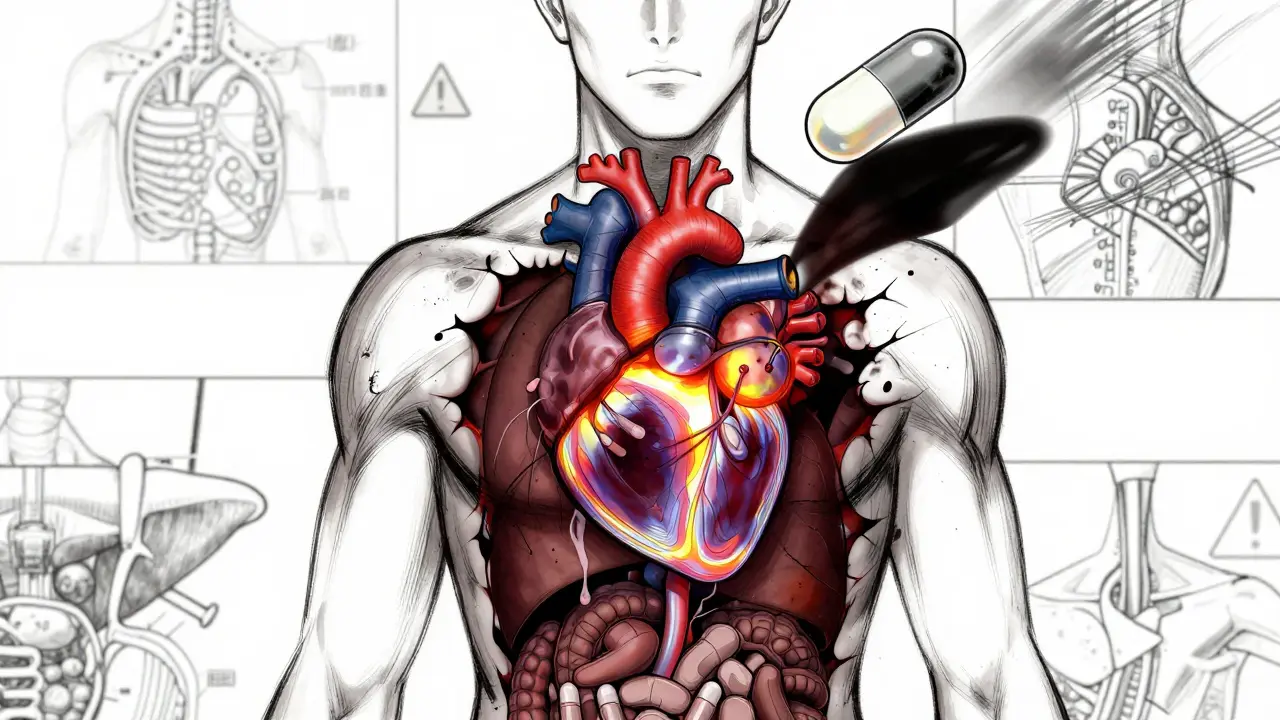
Imagine a patient with both heart failure and arthritis. They take an NSAID (non-steroidal anti-inflammatory drug) like naproxen for joint pain. The NSAID helps the arthritis but causes sodium retention. For someone with heart failure, that extra fluid puts massive strain on the heart, potentially triggering a crisis. The drug worked for the arthritis, but it attacked the heart failure.
These interactions gained formal recognition in clinical literature in the late 20th century, but they remain under-discussed. According to Mozayani and Raymon's Handbook of Drug Interactions, these are situations where treatment for one disease inadvertently harms another. The core value here is personalized medicine. Standard protocols assume a "average" patient, but most adults, especially older ones, are far from average. They carry multiple comorbidities that change how drugs behave.
How Your Body Fights Back: The Mechanisms of Harm
Drug-disease interactions don’t happen by magic. They follow specific physiological pathways. Knowing these mechanisms helps you spot red flags before they become emergencies. There are five primary ways this goes wrong:
- Pharmacodynamic Interference: The drug’s effect contradicts the disease’s nature. For example, beta-blockers like propranolol are great for heart rate control, but they cause bronchoconstriction. If you have asthma, this narrows your airways, making breathing difficult.
- Pharmacokinetic Alterations: The disease changes how your body processes the drug. Liver impairment slows down the metabolism of warfarin, causing it to build up to toxic levels and increasing bleeding risk.
- Masking Symptoms: The drug hides the warning signs of a disease. Beta-blockers can obscure the trembling and rapid heartbeat that usually signal hypoglycemia (low blood sugar) in diabetics. You might go into a dangerous low without realizing it.
- Exacerbating Complications: As mentioned with NSAIDs and heart failure, the drug worsens a complication of the secondary disease. Diuretics used for kidney issues can worsen gout by raising uric acid levels.
- Direct Organ Toxicity: The drug damages an organ already compromised by disease. Metformin, a standard diabetes drug, can cause lactic acidosis in patients with severe renal impairment because their kidneys can’t clear the drug efficiently.
A systematic examination published in PMC (2015) looked at type 2 diabetes guidelines and found 32 potentially serious interactions with other common conditions. Shockingly, 84% of those involved chronic kidney disease. This highlights why kidney function is often the linchpin of safe prescribing.
The High-Risk Zones: Which Conditions Are Most Vulnerable?
Not all diseases create equal risks. The American Society of Health-System Pharmacists identifies four major comorbidities that generate the bulk of clinically significant DDSIs, accounting for 78% of documented problematic interactions:
- Chronic Kidney Disease (CKD): Kidneys filter drugs. When they fail, drugs accumulate. CKD interacts dangerously with diabetes medications, antibiotics, and painkillers.
- Heart Failure: Fluid balance is delicate here. Drugs that retain salt or water (NSAIDs), or those that lower heart rate too much (beta-blockers without careful monitoring), can trigger decompensation.
- Liver Disease: The liver metabolizes most drugs. Cirrhosis or hepatitis means drugs stay in the system longer, leading to toxicity even at normal doses.
- Psychiatric Conditions: Depression and anxiety treatments, particularly SSRIs, carry bleeding risks, especially if the patient also has gastrointestinal issues or takes blood thinners.
Let’s look at depression specifically. A study on depression treatment guidelines revealed that 42% of potential DDSIs involved bleeding risks, largely due to SSRIs affecting platelet function. Another 28% involved lithium toxicity risks if kidney function was impaired. If you’re treating mental health, you must also monitor physical vulnerabilities.
| Condition | Problematic Drug Class | Potential Consequence |
|---|---|---|
| Asthma/COPD | Beta-Blockers (e.g., Propranolol) | Bronchoconstriction, breathing difficulty |
| Diabetes | Beta-Blockers | Masks hypoglycemia symptoms |
| Heart Failure | NSAIDs (e.g., Ibuprofen) | Sodium retention, fluid overload |
| Chronic Kidney Disease | Metformin | Lactic acidosis risk |
| Gout | Thiazide Diuretics | Increased uric acid, flare-ups |
Why Doctors Miss These Interactions (And How to Help Them)
If these risks are so well-documented, why do they still happen? The short answer: complexity and time. Dr. Paul Rolfe, Chair of the ACCP Drug Interaction Committee, notes that while 5-7% of hospital admissions are attributable to DDSIs, fewer than 15% of clinical guidelines adequately address them.
Electronic Health Records (EHRs) are supposed to help, but they have flaws. Epic’s Drug-Condition Interaction module flags 87% of high-risk interactions, but it also generates 42% false positives. This leads to "alert fatigue," where doctors start ignoring warnings because so many are irrelevant. Community pharmacists report spending nearly 13 minutes per patient just assessing these risks during therapy management, yet 68% say they lack sufficient time during routine dispensing.
There’s also a knowledge gap. Only 22% of patients with hypertension understood why decongestants like pseudoephedrine could worsen their condition, despite frequently receiving them. Patients often see specialists who focus on their own organ-the cardiologist cares about the heart, the dermatologist about the skin-but rarely does anyone step back to look at the whole picture.
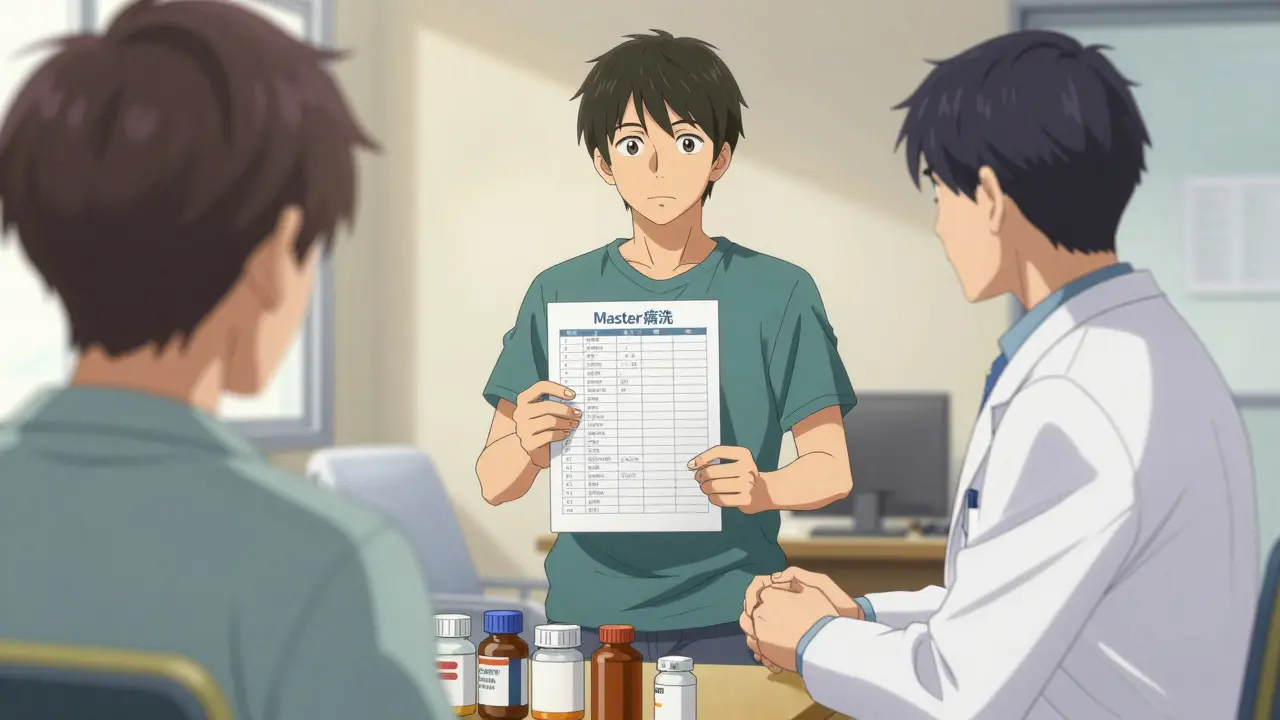
Action Plan: Protecting Yourself from DDSIs
You cannot rely solely on your healthcare team to catch every interaction. You are the constant variable in your care. Here is a practical checklist to manage your risk:
1. Maintain a Master Medication List
Keep a updated list of every prescription, over-the-counter drug, supplement, and herbal remedy you take. Include dosages. Bring this to every appointment, even if it’s just for a sore throat. Supplements like St. John’s wort are notorious; the Cleveland Clinic identifies it as one of the riskiest supplements due to its interaction with SSRIs, potentially causing life-threatening serotonin syndrome.
2. Ask the "Comorbidity Question"
Before starting any new medication, ask your doctor: "Given my history of [insert other condition, e.g., kidney disease], is this drug safe?" Specifically, mention your kidney and liver function tests. If you haven’t had blood work recently, request it before adding new meds.
3. Use Trusted Screening Tools
Resources like CredibleMeds.org document over 300 clinically significant DDSIs. While designed for providers, the principles apply. Be aware that the Beers Criteria, updated annually by the American Geriatrics Society, lists medications that are potentially inappropriate for older adults with certain conditions. For instance, anticholinergics are flagged for dementia patients because they worsen cognitive decline.
4. Monitor for Subtle Changes
Watch for symptoms that seem unrelated to your current illness but align with known DDSIs. New swelling in the ankles? Could be NSAIDs affecting your heart failure. Unexplained bruising? Could be an SSRI interacting with a blood thinner. Fatigue that doesn’t lift? Could be a drug buildup due to poor kidney clearance.
The Future of Personalized Safety
The landscape is shifting toward better prevention. The FDA’s Sentinel Initiative now monitors real-world data from 300 million patient records to catch emerging DDSIs faster. Recently, it identified a concerning link between SGLT2 inhibitors (diabetes drugs) and diabetic ketoacidosis risk in patients with chronic kidney disease.
Technology is also catching up. Machine learning algorithms developed at the University of Toronto can predict high-risk DDSIs with 89% accuracy by analyzing 157 clinical variables. The NIH’s "All of Us" research program is linking genomic data with health records to predict individual risks, showing a 38% improvement in prediction accuracy over standard methods.
Regulatory bodies are demanding more rigor. The European Medicines Agency now requires DDSI sections in all new drug applications. By 2030, experts project that integrated pharmacogenomic and comorbidity screening could prevent 120,000 hospitalizations annually in the US alone. Until then, vigilance is your best defense.
What is the difference between a drug-drug interaction and a drug-disease interaction?
A drug-drug interaction occurs when two medications interfere with each other’s effects, such as reducing efficacy or increasing toxicity. A drug-disease interaction (DDSI) occurs when a medication prescribed to treat one condition worsens a separate, pre-existing health condition in the patient. For example, an NSAID treating arthritis (drug) may worsen heart failure (disease) by causing fluid retention.
Which health conditions are most prone to drug-disease interactions?
The top four conditions generating clinically significant DDSIs are chronic kidney disease, heart failure, liver disease, and psychiatric conditions. These account for approximately 78% of documented problematic interactions. Kidney and liver issues are particularly critical because these organs are responsible for filtering and metabolizing medications.
Can over-the-counter medications cause drug-disease interactions?
Yes. Over-the-counter drugs like NSAIDs (ibuprofen, naproxen) can worsen heart failure and kidney disease. Decongestants like pseudoephedrine can raise blood pressure, posing risks for hypertensive patients. Always check with a pharmacist or doctor before using OTC meds if you have chronic conditions.
How can I check if my medications interact with my health conditions?
You can use online resources like CredibleMeds.org or consult with a pharmacist. However, the best method is to provide your full medical history and medication list to your prescribing physician. Ask specifically about your comorbidities. Electronic health record systems often flag these, but human review is essential to avoid alert fatigue errors.
Are drug-disease interactions common in older adults?
They are very common. Elderly patients average 4.7 chronic conditions and take 5.4 medications concurrently. This polypharmacy significantly increases the risk of DDSIs. The Beers Criteria provides a list of medications that should be avoided or used with caution in older adults due to higher risks of adverse outcomes.
What should I do if I suspect a drug-disease interaction?
Do not stop taking your medication abruptly, as this can cause withdrawal or rebound effects. Contact your healthcare provider immediately. Describe your new symptoms and when they started relative to starting the medication. Your doctor may adjust the dose, switch to an alternative drug, or order blood tests to check for toxicity.